Africa’s Eye-Care Push Reaches Nine Countries. The Glasses Gap Remains.
— Afridiaspo Health Desk
WHO reports eye-care progress in nine African countries. What Kenya’s screening figures show, why glasses access still lags and what to watch next.
A person may need an eye test and a pair of glasses, yet face a long journey to a clinic, the cost of an examination or no trained professional nearby. That ordinary gap in care sits inside a much larger problem: the World Health Organization (WHO) estimates that 140 million people in its African region live with vision impairment. The figure covers vision impairment broadly; it does not mean all 140 million need spectacles.
On 1 October 2026, WHO reported progress in nine African countries implementing its SPECS 2030 initiative. The effort aims to make quality refractive-error care—including eye examinations and appropriate glasses—more accessible. For Afridiaspo readers, the news is about more than a product: it concerns whether children can learn, adults can work and older people can remain independent without a preventable barrier to vision.
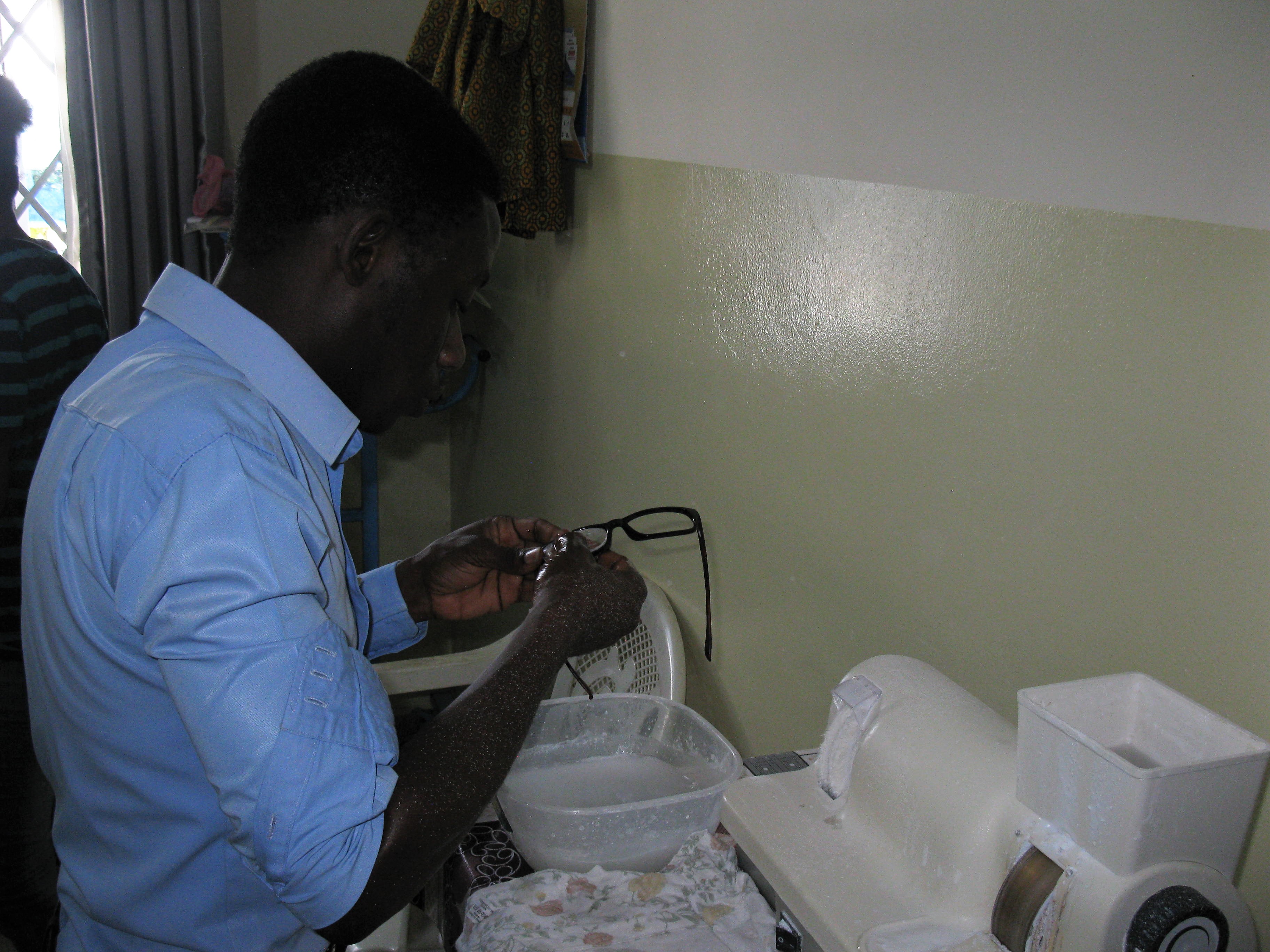
Featured photograph: A Ghanaian optician fitting a lens into a spectacle frame in 2017. This is an archival illustration of eye-care work, not a photograph of the 2026 WHO initiative. Photo: Gkbediako/Wikimedia Commons, CC BY-SA 4.0; unmodified.

What the new report actually shows
WHO says The Gambia, Kenya, Liberia, Malawi, Mauritania, Mozambique, Rwanda, South Africa and Zambia have been implementing SPECS 2030 since 2025. Work differs by country: it includes national planning, training eye-care workers, integrating eye health into primary care and improving the information systems that track who receives services.
| WHO-reported measure | What it means |
|---|---|
| 140 million | Estimated people living with vision impairment across the WHO African region; this is not a count of people needing glasses. |
| Nine countries | African countries identified by WHO as early SPECS 2030 implementers. |
| More than 1.5 million | People screened by implementing partners in Kenya since its April 2026 launch, according to WHO. |
| More than 120,000 | Pairs of eyeglasses dispensed by Kenyan implementing partners over that period, according to WHO. |
| 40 percentage points by 2030 | The global target for increasing effective coverage of refractive-error care, not a claim that the target has already been reached. |
Screening, receiving a prescription and obtaining suitable glasses are different steps. Kenya's screening and dispensing totals show activity at scale, but alone they do not establish how many people who needed correction obtained it, whether their glasses fit their needs or how access varies between counties. Those are the measures to watch as the programme grows.


The bottleneck is access, not just awareness
A public message telling people to get an eye exam has limited value if there is nowhere affordable to receive one. WHO identifies shortages of trained staff, limited domestic financing, equipment and maintenance gaps, transportation barriers and weak health-data systems as continuing obstacles. Its five SPECS priorities address services, personnel, education, cost and surveillance together.
The country examples reveal different parts of that system. WHO says Liberia is expanding refractive-error services through primary care. The Gambia is using vision centres and school-based programmes. Mauritania has launched a national eye-health strategy, while South Africa and Malawi are strengthening workforce capacity. Rwanda has recently launched its implementation. These are reported steps, not proof that the access gap has closed.


Why eyeglasses deserve health-system attention
Uncorrected refractive error can affect near or distance vision. A qualified eye-care professional can determine whether glasses are appropriate and whether another condition needs attention. WHO has described spectacles as a highly cost-effective intervention, but a supply of frames alone does not create reliable care: people also need examination, accurate prescriptions, affordable dispensing and follow-up when needed.
The ambition is measurable. WHO's global 2030 target is a 40-percentage-point increase in effective refractive-error coverage. “Effective” matters: it asks whether people receive correction that actually improves their sight, not simply whether a clinic recorded a visit. That distinction should guide reporting on future country results.
What to watch next
The strongest evidence of progress will be more local than a regional launch: services reaching rural and low-income communities; trained staff staying in place; children identified through schools receiving suitable correction; and countries publishing comparable coverage and quality data. WHO's latest report supplies encouraging early activity, especially in Kenya. It also names the financing and workforce barriers that could determine whether the initiative becomes routine care.
For anyone noticing a change in their vision, a local qualified eye-care professional or primary-care service can advise on an assessment. No news article can tell an individual whether glasses or another form of care is needed.
Sources: WHO Regional Office for Africa, 1 October 2026; WHO global eye-care targets; WHO explanation of refractive errors.
Africa’s Eye-Care Push Reaches Nine Countries. The Glasses Gap Remains.