AFRICA'S FARMING SHIFTS AS SPRAYING DRONES ENABLE PRECISION, SAVE LABOUR, AND PROTECT CROPS SUSTAINABLY
— Mary Ene
Across Africa, agricultural spraying drones are rapidly transforming how smallholder and commercial farmers manage their crops — enabling precision application of pesticides and fertilisers, reducing costly labour demands, and minimising environmental damage from chemical overuse. From Nigeria to S…
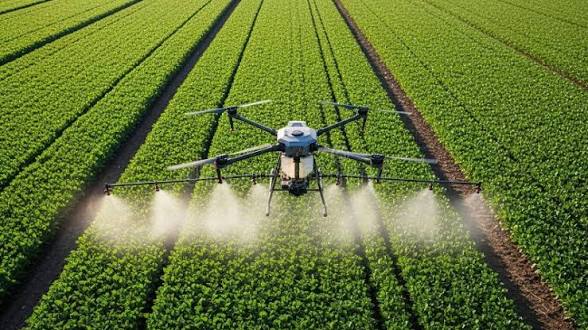
In fields across Africa, a quiet revolution is underway. Farmers who once bent their backs under the sun, manually spraying row after row of crops, are watching unmanned aircraft do the same work in a fraction of the time and doing it better.
Drones, once a futuristic concept confined to agricultural trade shows and research stations, are now emerging as a transformative everyday tool for East, West and Southern African agriculture.
Instead of wielding backpack sprayers under the sweltering sun, farmers can now operate drones to scan fields, monitor crop health, and precisely apply fertilisers and pesticides with centimetre-level accuracy. This shift is no longer a vision of the future it is a rapidly developing reality that is beginning to redefine the region's agricultural landscape, particularly for farmers battling rising input costs, climate volatility and chronic labour shortages.
The market context confirms the scale of the transformation. By 2026, the global agricultural drone market is projected to exceed $6.5 billion, driven by the rise of precision farming and the growing demand for data-driven management tools. Africa's share of that market is expanding quickly, powered by a confluence of factors: the continent has approximately 65% of its agricultural land suffering from soil degradation, over 60% of its population engaged in farming, and an urgent need to produce more food with fewer resources. Drone technology addresses all three pressures simultaneously.
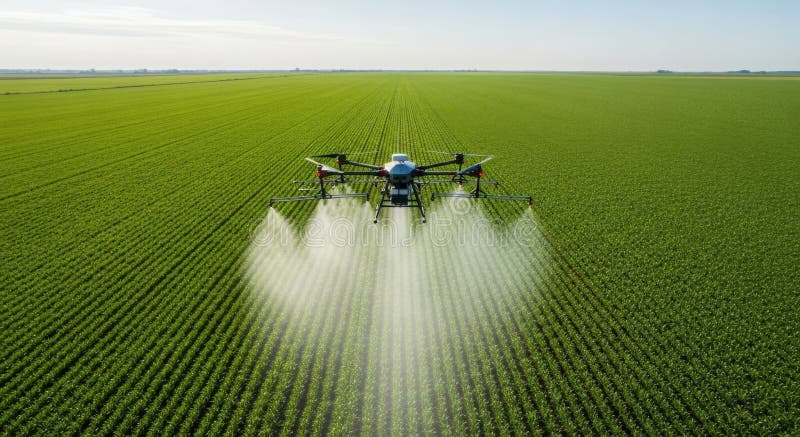
The precision advantage of drones over conventional spraying is well established by research. Drones equipped with multispectral sensors capture detailed imaging data including heat signatures and reflectance information that is critical for analysing plant health at the individual plant level. Advanced software enables the mapping of vast land areas with high precision, and AI-powered analytics can identify crop stress factors such as pest infestations or nutrient deficiencies before visible symptoms appear, allowing farmers to intervene weeks earlier than would otherwise be possible. The result is fewer crop losses, lower chemical usage, and higher yields.
In terms of spraying precision specifically, modern agricultural drones can achieve accuracy of up to five centimetres with each application payload. Unlike traditional tractor-mounted or backpack systems that apply chemicals uniformly across entire fields regardless of need, drone systems using variable-rate application technology can target only the areas that require treatment. This targeted approach reduces chemical waste, lowers input costs, minimises environmental runoff into soil and water systems, and significantly reduces the health risks associated with direct human exposure to agrochemicals a serious concern for smallholder farmers across the continent.
Across Africa's diverse agricultural landscape, drone applications vary by country and crop system. In Nigeria, drones equipped with light spectrometers are used to map and analyse soil, helping farmers optimise yields by assessing nutrient levels and moisture content. In Kenya, thermal cameras on drones detect pests and diseases in crops, facilitating timely interventions before infestations spread. In South Africa where farms often span vast and rugged terrain drones have evolved over the past five years from curiosities at agricultural shows into established management tools used for crop health monitoring, precision spraying, irrigation management and even livestock tracking. South African farmers note that during a time of rising input costs and increasing climate uncertainty, drones have gone from novelty to necessity.
The concern that agricultural automation inevitably destroys employment is being actively challenged by the drone economy emerging across Africa. Drone operations require trained pilots, data analysts, maintenance technicians and fleet managers creating a new agricultural skills economy. The African Union's Agenda 2063 recognises agriculture as a critical sector for achieving poverty and hunger eradication, and analysts note that the drone industry is projected to generate millions of jobs across the region as adoption scales. The AUDA-NEPAD has urged African countries to establish national UAV regulatory frameworks to capture this opportunity systematically.
The barriers to adoption are falling fast. Advanced pumps, lightweight batteries, AI-driven analytics and on-demand rental services are becoming mainstream.
Rental and subscription models are expanding access for small and medium-scale farmers, eliminating the need for large upfront capital investment and democratising a technology that was previously accessible only to large commercial operations. The agricultural drone market is projected to grow from an estimated $3.14 billion in 2025 to approximately $11.21 billion by 2032 a compound annual growth rate of nearly 20%.
Africa's farming future is taking flight and it is doing so one precise, targeted spray at a time. For a continent that feeds more than a billion people largely through smallholder agriculture, the ability to do so more efficiently, more sustainably and with less human cost is not a technology story. It is a food security story.