Africell’s $99.6 Million Bet on Angola’s Digital Backbone
— Afridiaspo Business & Innovation Desk
Africell receives a $99.6 million U.S.-backed loan for mobile network expansion in Angola. The financing aims for broader coverage and lower costs for users.
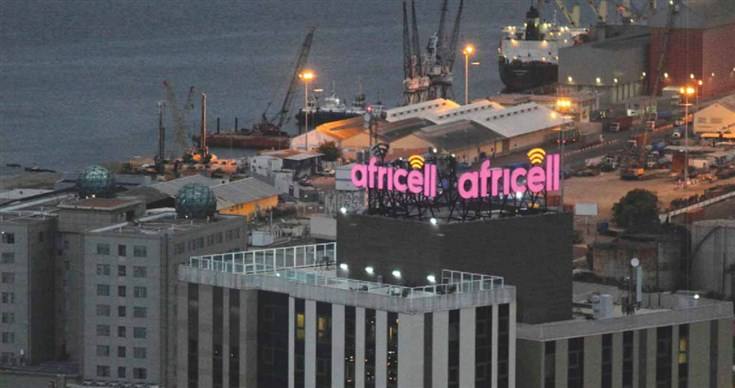
Nearly $100 million is moving into Angola’s mobile network infrastructure, but the most important number will not be the size of the loan. It will be whether people outside the best-connected districts receive a stronger signal, whether small businesses pay less for reliable data, and whether Angola gains more control over the systems carrying its communications and money.
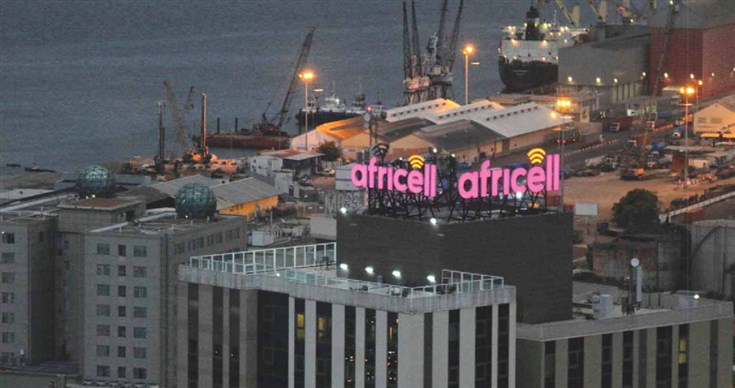
The Export-Import Bank of the United States has approved a $99.6 million direct loan to Africell for American and European mobile-network technology in Angola. Africell calls the financing a route to broader coverage, stronger competition and more secure infrastructure. Washington also sees it as a way to expand American technology in a market where Chinese supplier Huawei has a powerful position.

The deal in one view
| Question | What is known | What still needs disclosure |
|---|---|---|
| How much? | $99.6 million, described as a direct loan from U.S. EXIM. | Interest rate, maturity, repayment schedule and security package. |
| For what? | American and European mobile-network technology for Africell’s Angola operations. | Named suppliers, equipment mix, procurement timetable and local-content commitments. |
| Where? | Angola. Africell says it now covers six provinces and has expanded into Soyo in Zaire Province. | A public rollout map showing communities, dates and rural coverage targets. |
| Who benefits? | Africell says customers should see broader, more reliable connectivity and greater competition. | Measurable commitments on prices, speeds, outages, jobs and service quality. |
A fast-growing challenger now has government-backed capital
Africell entered Angola in 2022, becoming the country’s first new mobile operator in more than two decades. The company says its Angola business passed eight million customers in August 2026 and has more than 950 network sites. Across Angola, the Democratic Republic of Congo, Sierra Leone and The Gambia, Africell’s public website reports more than 15 million subscribers.
Those figures are company claims rather than independently audited subscriber counts available in the loan announcement. They nevertheless explain the commercial logic. A lender is not financing an experimental network. It is supporting a challenger that has already acquired scale and is now trying to extend its footprint.


Scale does not erase the access gap. The International Telecommunication Union’s Angola dashboard reports 33.4 active mobile-broadband subscriptions per 100 people in 2024 and mobile-phone ownership of 59.7 percent. Those indicators are not identical to unique internet users, but they show why adding subscribers is not the same as completing digital inclusion.
The World Bank’s regional digital programme places Angola among the first countries targeted for expanded broadband and digitally enabled services. That wider public effort and Africell’s private investment may reinforce each other—but only if infrastructure reaches people who are currently underserved rather than merely adding capacity in already-profitable urban corridors.
This is also an industrial-policy deal
U.S. EXIM exists to support American exports and jobs. Africell’s announcement is unusually direct about that purpose: the loan is intended to fund American and European equipment while strengthening U.S. technology leadership abroad. For Washington, Angola is both a telecom market and part of the Lobito Corridor, a strategic trade route linked to transport, digital infrastructure and critical minerals.
That makes the transaction different from an ordinary corporate loan. It is export finance being used as industrial policy. The United States is helping a U.S.-owned operator purchase U.S.-aligned technology, while positioning that equipment as a security alternative to Chinese-made systems.
Reuters reported that Huawei supplies an estimated 52 percent of Africa’s 5G infrastructure. U.S. officials have raised national-security concerns about the Chinese company; Huawei denies allegations that its equipment enables espionage. China’s embassy has argued that Chinese investment has supported African growth and has criticized attempts to frame African infrastructure mainly as a contest between Washington and Beijing.
Digital sovereignty is more than changing suppliers
Replacing one foreign vendor with another does not automatically give an African country sovereignty over its network. Angola’s real leverage depends on who can inspect the equipment, maintain it, update it, protect customer data and keep the network operating when commercial or diplomatic relationships change.
The loan announcement does not identify every vendor or publish its cybersecurity requirements. It also does not say how much knowledge will be transferred to Angolan engineers. Those omissions matter. A network can be secure at installation and still create long-term dependency if critical maintenance, software upgrades and spare parts remain controlled abroad.


What customers should be able to measure
The public case for the loan rests on better coverage, stronger competition and greater resilience. Those promises should become measurable outcomes. Over the next two years, five indicators deserve attention:
- Coverage beyond Luanda: new provinces, municipalities and rural communities connected, with maps that distinguish basic signal from usable broadband.
- Affordability: the effective cost of data and voice relative to income—not simply headline promotional bundles.
- Reliability: network availability, congestion, dropped connections and repair times published in a comparable format.
- Local capacity: Angolan engineering, cybersecurity, installation and maintenance jobs, alongside training that leaves expertise in-country.
- Competition: whether Africell’s expansion pushes rivals to improve price, speed and service rather than producing a new round of exclusive dependencies.
Africell’s expansion into Soyo illustrates the commercial opportunity. The northern port and energy centre links residents, traders, logistics operators and oil-sector workers. Better connectivity can reduce transaction friction, expand mobile-money access and help smaller firms participate in supply chains. But the value is created only when a reliable connection is affordable enough to use regularly.
Why the diaspora should care
Mobile networks are part of the infrastructure connecting Angola to its diaspora. They carry family calls, business instructions, digital payments, customer orders and information during emergencies. Network competition in Angola can therefore affect people far beyond the country’s borders—even if they never become Africell customers themselves.
The diaspora also has a role as a demanding audience. Investors, entrepreneurs and families sending money home can ask whether public-backed financing produces public evidence: coverage maps, service benchmarks, transparent privacy protections and local jobs. That is more useful than choosing a geopolitical team.
The Afridiaspo takeaway
The $99.6 million loan is significant because it gives a fast-growing operator the capital to challenge Angola’s established telecom market. It is also a test of a larger promise: that competition between global powers can be converted into better infrastructure for Africans.
Success should not be measured by whose flag appears on the equipment. It should be measured by the signal in Soyo and beyond; by the price paid for dependable data; by whether Angolan technicians can run and secure the network; and by whether customers gain real choice. If those outcomes arrive, the financing will have built more than towers. It will have strengthened Angola’s position in the digital economy.
Sources and further reading
- Africell: U.S. EXIM Bank lends Africell $99.6 million for technology investments in Angola
- Reuters: U.S. financing for Africell and the supplier-security debate
- Associated Press: Africell loan and U.S. technology strategy in Africa
- Africell: Soyo launch and Angola expansion figures
- International Telecommunication Union: Angola connectivity indicators
- World Bank: regional digital inclusion programme including Angola