Afro Fest Minnesota Is Building More Than a Festival
— Afridiaspo Editorial
Afro Fest Minnesota at Becker Park brought together culture, commerce, youth learning, and professional networks, showcasing the African diaspora building public space.
COMMUNITY FEATURE | MINNESOTA
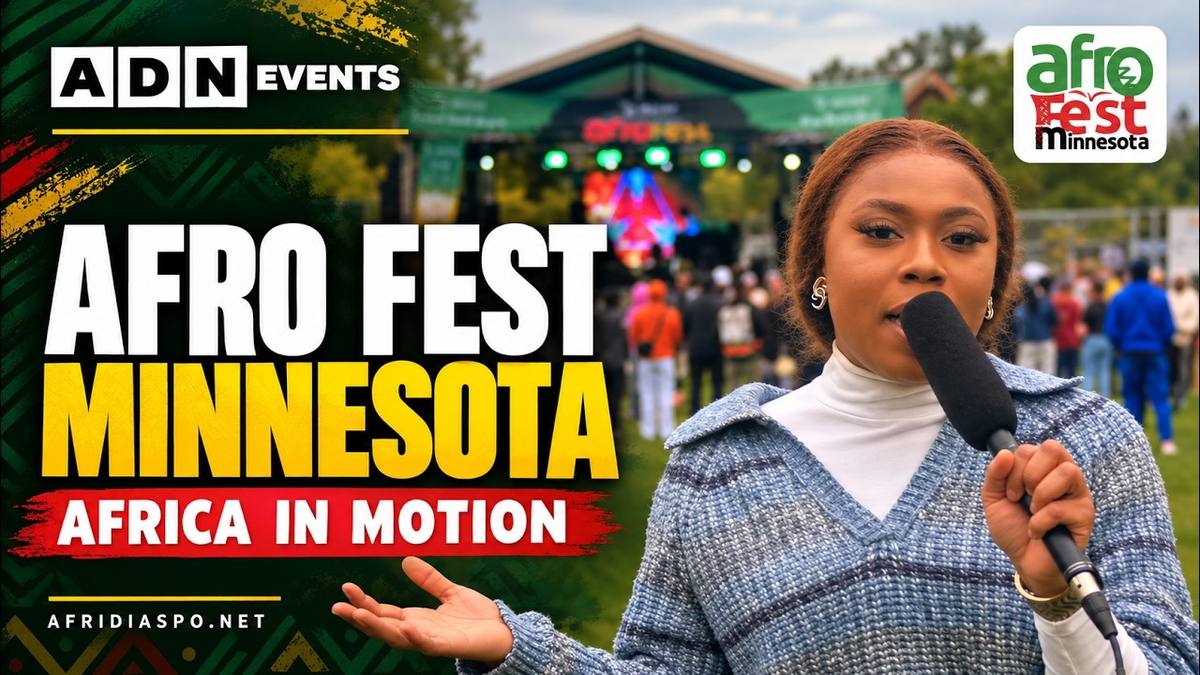
On Afridiaspo’s camera, Afro Fest Minnesota looks exactly like what a diaspora gathering should feel like: public, confident and alive. An on-camera host stands in front of the festival stage as families and performers move through Becker Park behind her. The image is celebratory, but the deeper story is organizational. This is not only a day of music and food. It is an attempt to turn culture into infrastructure.
Afro Fest Minnesota 2026 took place on Saturday, September 19, from 2 p.m. to 9 p.m. at Becker Park in Crystal. The official listing named Minneapolis Diversity Experience as the organizer. Local coverage described a program built around live performance, cuisine, education and shopping; the festival’s own media materials divided the site into distinct spaces for children, vendors, performers, community connectors and innovators.
That structure matters. A festival can entertain a crowd for an afternoon. A well-designed public platform can also help businesses find customers, children see their heritage in public, professionals find one another and a diaspora community become more visible to the wider region.
Watch Afridiaspo’s original field coverage: “Afro Fest Minnesota — Africa in Motion.” Video: Afridiaspo / ADN Events.
A festival designed like a public square
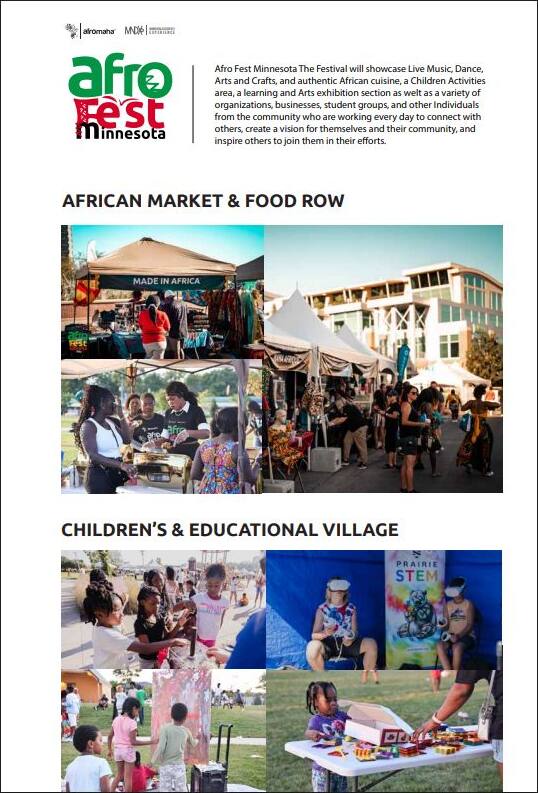
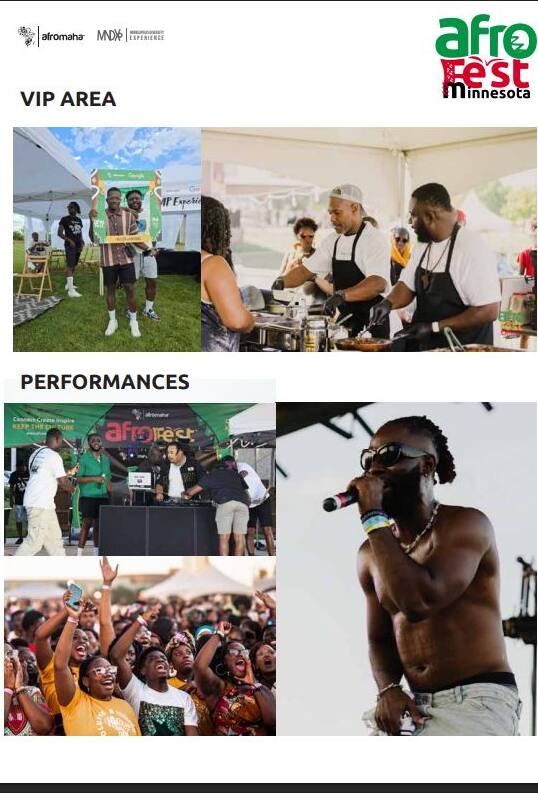
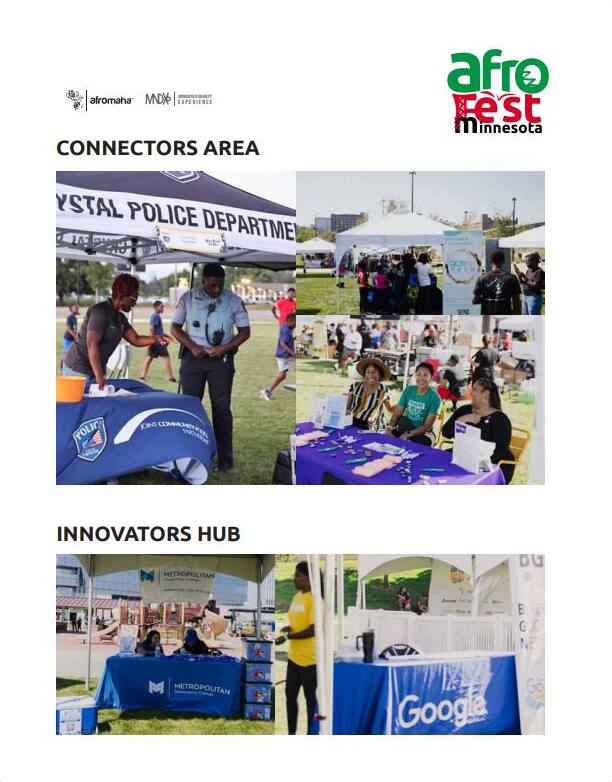
The strongest clue to Afro Fest Minnesota’s ambition is in the way the grounds were organized. The official media kit identified an African Market & Food Row, a Children’s & Educational Village, a performance area, a Connectors Area and an Innovators Hub. Each one answered a different community need.
| Festival space | What it offered | Why it matters |
|---|---|---|
| African Market & Food Row | Vendors, cuisine and cultural goods | Turns attendance into direct support for local enterprise |
| Children’s & Educational Village | Family learning and youth activities | Makes culture intergenerational rather than nostalgic |
| Performances | Music, dance and public expression | Gives artists a stage and audiences a shared cultural language |
| Connectors Area | Community groups and relationship-building | Helps residents discover services, organizations and one another |
| Innovators Hub | Ideas, education and emerging opportunity | Links cultural pride to skills, careers and future-building |
Culture and commerce were on the same map
For diaspora communities, cultural celebration and economic participation are rarely separate. Food vendors, designers, artisans and service businesses do more than fill out a festival program: they build customer relationships in an environment where cultural knowledge is an advantage, not an obstacle.
That commercial thread became even clearer through the inaugural EGA Pitch Competition, hosted during the festival by the Midlands African Chamber. The chamber described it as a live opportunity for Black-owned businesses, student-led ventures and emerging founders. “Ega” means money in the Mina language of Togo—a fitting name for a program that placed entrepreneurship inside a cultural gathering rather than in a distant conference room.
The result was a more complete picture of diaspora life. The same grounds could hold a performance stage, a family activity, a plate of food, a business conversation and a founder’s pitch. That combination is what makes Afro Fest more consequential than a one-day entertainment calendar entry.
The weekend began before the music
Afro Fest Minnesota’s 2026 footprint stretched across two days. On Friday, September 18, WeNetworkNow hosted Afro Fest Tech Day in Golden Valley in collaboration with MinnedeX. The free event brought together industry leaders, local businesses and young people for discussions on technology, professional development and community impact.
The program featured Mamady Konneh, a cybersecurity leader, AI adviser and founder of WeNetworkNow, alongside technology leader and author Steve Buchanan. The official description framed the event as an effort to bridge the digital divide and support socioeconomic growth within African and Afro-diasporic communities.
| Date | Program | Community function |
|---|---|---|
| September 18 | Afro Fest Tech Day, Golden Valley | Technology, careers, mentorship and professional networking |
| September 19 | Afro Fest Minnesota, Becker Park | Culture, commerce, education, performance and community visibility |
Read together, the two programs reveal a deliberate idea: celebration should not be disconnected from opportunity. The festival honored where people come from; Tech Day asked what tools and relationships they need to shape what comes next.
Why this matters in Minnesota
Minnesota’s African diaspora is not one community with one language, one migration story or one cultural tradition. Sahan Journal’s festival guide described Afro Fest Minnesota as bringing together African, Afro-Caribbean, Afro-Latinx, African American and other communities with African roots. That breadth is difficult to represent without flattening differences.
A public festival offers another possibility: unity without sameness. People can share a park and a platform while retaining distinct foodways, music, histories and identities. For children growing up in Minnesota, that visibility can be especially important. Culture is no longer something discussed only at home or preserved for private gatherings; it becomes part of the region’s public life.
There is also a practical civic effect. When community organizations, entrepreneurs, artists and families occupy the same space, information travels faster. A resident may come for a performance and leave knowing about a business, a professional network, a youth program or a new community organization. Those connections are difficult to measure in ticket counts, but they may be the festival’s most durable outcome.
Afridiaspo’s takeaway
The easy headline is that Afro Fest Minnesota celebrated African culture. The more important conclusion is that the festival treated culture as a platform from which other forms of power can grow.
The market supported commerce. The children’s village supported transmission. The stage supported expression. The Connectors Area supported relationships. The Innovators Hub and Tech Day supported professional mobility. Together, they formed a small but meaningful model of diaspora institution-building.
That is why Afridiaspo’s coverage matters. Diaspora festivals are often photographed for color and movement, then reduced to spectacle. But the stage, the vendor row, the youth activity and the networking table belong to the same story. Afro Fest Minnesota was Africa in motion—not only dancing, but organizing.
Sources and further viewing
- Afridiaspo / ADN Events: Afro Fest Minnesota — Africa in Motion
- Official Afro Fest 2026 event listing
- Minnesota Diversity Experience: Afro Fest Minnesota
- Official Afro Fest Minnesota media kit
- WeNetworkNow: Afro Fest Tech Day
- Midlands African Chamber: EGA Pitch Competition
- Sahan Journal: Minnesota’s African diaspora festival guide