She Heard Ga Growing Up. Now Raïssa Annang Is Building a Way Back
— Afridiaspo Editorial
UK-raised Raïssa Annang is building Authentic Gã with fluent Ga speakers in Ghana, turning her language journey into an app undergoing testing.
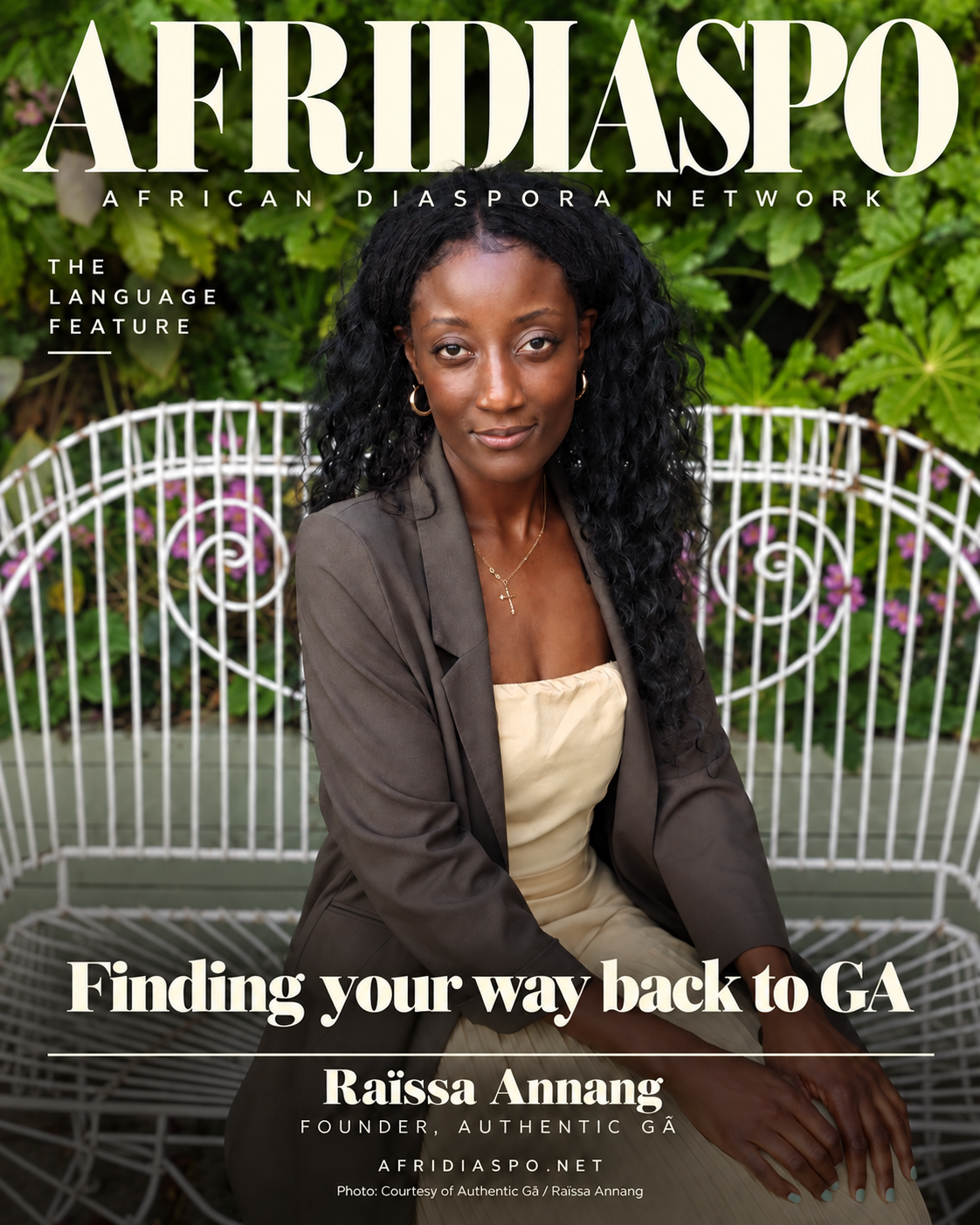
Raïssa Annang remembers an uncle in Ghana who would speak only Ga to her. As a child visiting from the UK, she found it frustrating. Looking back, she sees an opportunity she did not yet know how to value.
Her uncle has since died. So has her grandmother. In written materials supplied to Afridiaspo, Annang describes becoming increasingly conscious of conversations she could no longer go back and have: exchanges with relatives whose English could not carry everything she wanted to say, and whose language she had heard without learning to speak confidently herself.
That distance is the starting point for Authentic Gã, her independent language-learning project. Annang is building a route back to Ga through recorded speech, stories, transcripts and repeated listening. She remains a learner. The people providing the language are fluent and native Ga speakers in Ghana.
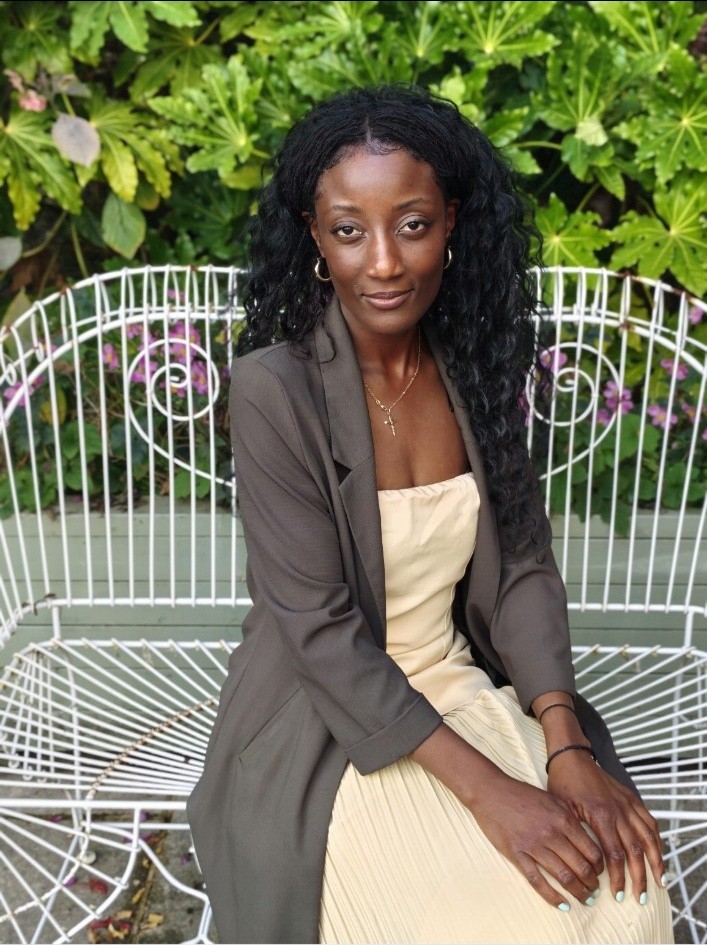
The difference between hearing a language and speaking it
Annang grew up in the UK with a Ga mother and an Ewe father. In her account, Ewe was largely absent from her childhood soundscape. Ga was more familiar: her mother speaking to family on the phone, an uncle visiting, trips to Ghana when she was young.
Familiarity, however, did not amount to fluency. As a child, she could return from Ghana believing the little she had picked up meant she could speak the language. Adulthood brought a less comfortable assessment. Without sustained immersion, or something that could recreate part of it, she was unlikely to reach the conversations she wanted.
Her story complicates an easy assumption about diaspora identity: that proximity to a language guarantees access to it. A child may recognise its sounds and know who speaks it while still lacking the words to participate. The emotional connection can survive even when the practical ability to answer does not.
For Annang, the resources around her also changed with time. Cousins and relatives moved abroad. Older family members died. Visits no longer offered exactly the same people or opportunities. Learning “when I next go home” depended on a version of home that was itself changing.
It began with her mother’s recordings
The project’s beginnings were small. Annang asked her mother to record basic sentence starters and everyday words for a TikTok channel. Her mother was busy; recordings could not always be produced on demand. Annang began searching for other Ga speakers and storytellers whose voices could give learners more material to return to.
She was also learning from existing resources. She credits Hunniah-Your-HighnessTV with helping her understand basic language mechanics, alongside lessons with her Ga teacher and Project 1957 Ga-speaking meet-ups. Authentic Gã therefore emerges from a learning community, rather than a claim that nobody had worked on the problem before.
What she felt was missing was a bridge between the basics and the speed of natural speech. Memorising isolated vocabulary did not give her enough meaningful language to listen to regularly. Watching television could offer immersion, but for a beginner it could also mean hearing far more than they understood.
In her October media pack, she describes spending the past two or three years working out how to build that bridge. Short stories, clear recordings, transcripts and repetition became the ingredients of a more manageable listening experience.
A learner builds the route; speakers supply the language
“I build the learning experience; their voices bring the language to life.”
— Raïssa Annang, written materials supplied to Afridiaspo
Annang’s distinction between product design and linguistic authority matters. She says she manages the concept, content structure, development workflow, testing and community-building herself, with encouragement and help from her mother. Freelance fluent and native Ga speakers contribute the recorded language.
She found collaborators through social media, Ga-focused communities and language-learning platforms. Fluency was essential, but so were delivery and storytelling: the ability to make a listener want to stay with a voice.
The credits name Beverly Neequaye and Carrie Asamoah as Ga voice contributors, and Raphael Mensah as a Ga language contributor. Beverly’s TikTok handle is @naa_kourkor; the supplied materials identify Carrie through Instagram and Raphael through italki. These are contributors to the project, rather than evidence of a large permanent staff.
For a diaspora technology story, that division of work is significant. The founder’s experience helps define what the learner needs; speakers in Ghana provide the language she cannot supply at the required standard herself. Cultural knowledge is part of the product’s substance, and the people providing it deserve visible credit.
What the testing build actually shows
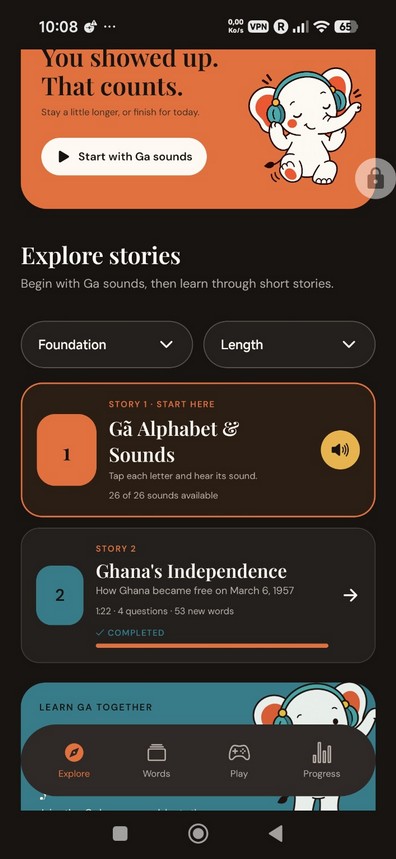
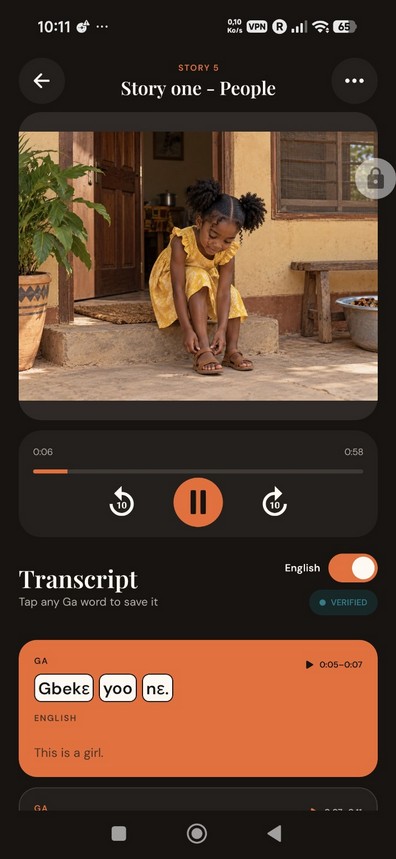
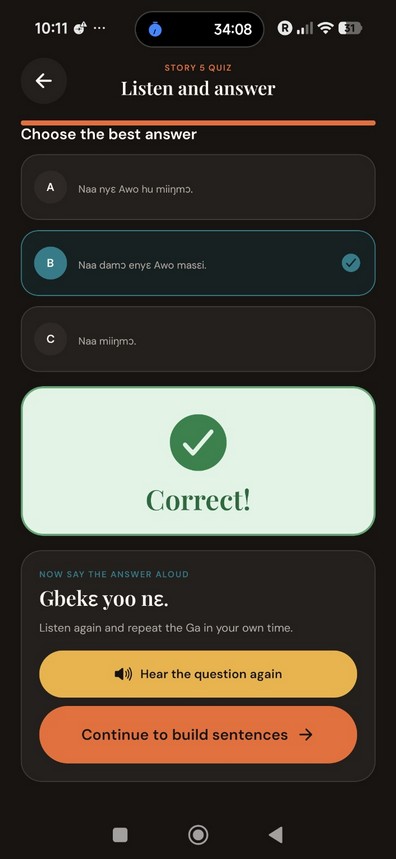
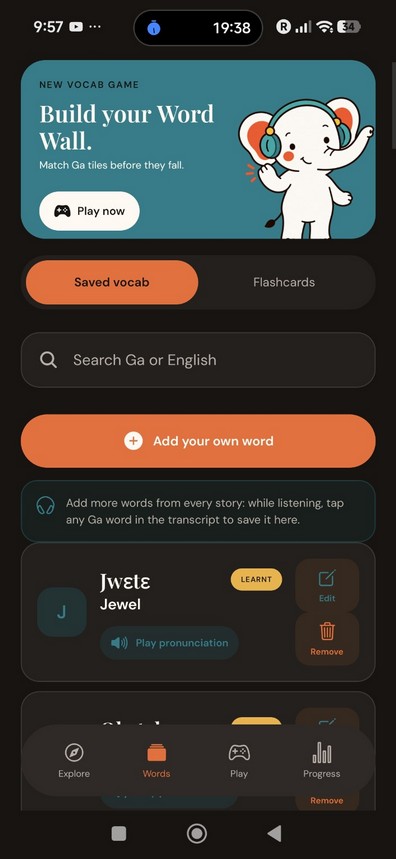
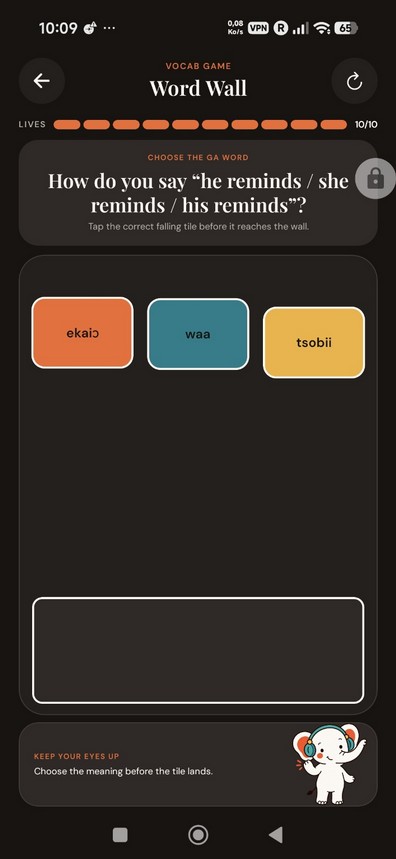
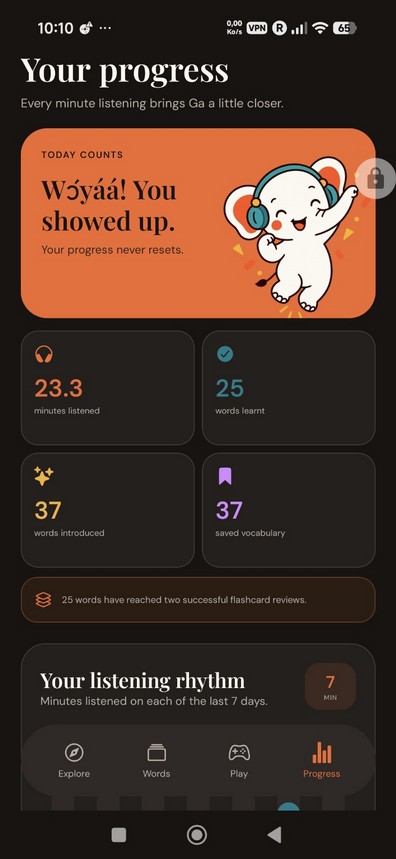
The screenshots supplied to Afridiaspo show an app organised around listening and returning to what has been heard. Users can move from sounds into short stories, follow Ga and English transcripts, answer comprehension questions and save vocabulary from a story. Other screens show pronunciation playback, flashcards, a Word Wall vocabulary game and progress tracking.
These images document a testing build, not a verdict on how effectively the app teaches. A progress display can show activity; it cannot, on its own, establish that someone has learned to hold a conversation. Annang’s own testing questions acknowledge that gap.
A closer look at the app
All six screenshots below were supplied by Authentic Gã and show its October 2026 testing build.
Authentic Gã: what is established
| Question | What the October materials say |
|---|---|
| Who is building it? | Raïssa Annang, an independent founder and Ga learner raised in the UK. |
| Who supplies the spoken language? | Freelance fluent/native speakers in Ghana, with named contributor credits. |
| What stage is it at? | First formal testing round; Android app testing and a web experience for iPhone participants. |
| When is the wider launch? | Early 2027 is the founder’s aim. No fixed public date is confirmed. |
| What remains unproven? | No independently verified learning outcomes, user totals or retention figures were supplied for this feature. |
The next test is usefulness
Annang wants to find out whether learners can move from hearing to understanding without feeling overwhelmed. She also wants feedback on transcripts, saved words, quizzes and sentence-building activities, and on the places where people leave lessons or encounter bugs.
One of her stated questions is whether progress tracking encourages regular listening rather than simply chasing a streak. That is a useful distinction for a language product. Returning to an app and becoming more confident in a language are related ambitions, but they are not interchangeable results.
At this stage, the proportionate story is a founder translating her own difficulty into a testable design. Whether the approach works for other learners, across different starting abilities and routines, is what the testing period is intended to discover.
According to her October account, Android users were testing directly and iPhone users could participate through the web experience. She hoped to move towards a wider launch in early 2027, without committing to a date. Readers can consult the official app information site for subsequent updates.
A route back, while there is still someone to answer
Authentic Gã places a personal story inside a larger practical question for Africans abroad: how do you make a language available in ordinary life when the relatives, journeys and informal encounters that once carried it are no longer close at hand?
An app cannot recreate Annang’s childhood visits or return the conversations she wishes she had shared with her grandmother. What it can attempt is to make more spoken Ga available for the next conversation: something to hear repeatedly, understand gradually and carry beyond a screen.
The project’s promise rests on that modest, demanding purpose. Not proof that technology has preserved a language, but an effort to give a learner another way to begin—and a reason not to keep putting that beginning off.
Reporting note: Based on written correspondence and October 2026 materials supplied by Raïssa Annang. Personal history and development details are attributed to her. Afridiaspo has not independently tested the app. All photographs, screenshots and brand assets appear with permission; credit: Courtesy of Authentic Gã / Raïssa Annang. Product screens show a testing build.
She Heard Ga Growing Up. Now Raïssa Annang Is Building a Way Back