Congo Starts Ebola Vaccinations—but a Critical Question Remains
— Afridiaspo Health Desk
Congo has begun vaccinating frontline workers during its Bundibugyo Ebola outbreak, while researchers study whether the Ervebo vaccine offers protection.
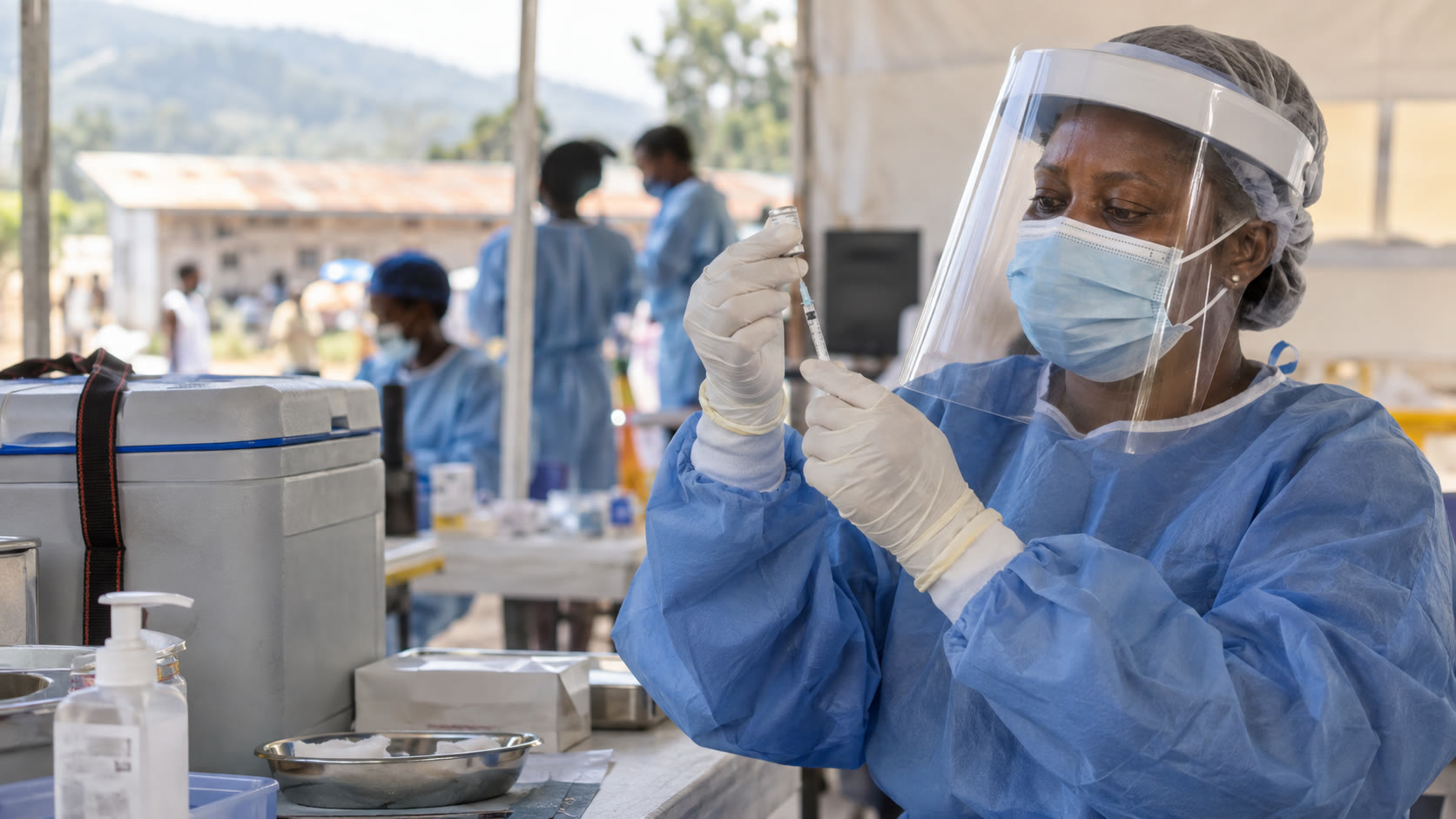
The Democratic Republic of the Congo has launched an Ebola vaccination campaign for frontline health workers in Bunia, the epicentre of an outbreak that has killed thousands. But the campaign comes with an important scientific uncertainty: the vaccine being deployed is licensed for a different Ebola virus species from the one driving the current crisis.
The campaign began on September 19 and is prioritising health workers in Ituri province, including Bunia and Mongbwalu, according to the Associated Press. Authorities aim to protect 20,000 frontline workers over six to nine months while researchers study whether the vaccine offers meaningful protection against the Bundibugyo virus.
Why the vaccine question matters
The vaccine, Ervebo, has a strong record against Zaire ebolavirus, the species responsible for several previous outbreaks. The present epidemic is caused by Bundibugyo virus. There is currently no licensed vaccine specifically proven against that species, and no approved treatment tailored to it.
That does not make the campaign meaningless. Frontline workers face intense exposure risk, and public-health authorities are using the available vaccine under a monitored programme while evidence is gathered. But it does mean officials must communicate clearly about what is known, what remains uncertain and why clinical research is continuing.
Reuters reported on September 16 that more than 3,000 frontline workers had already received Ervebo in affected areas. Congo’s National Institute of Biomedical Research and partners are preparing further studies, while candidate vaccines designed for Bundibugyo virus are also in development.
Progress in one province, danger in another
The national picture is mixed. Transmission has slowed in parts of Ituri, but the World Health Organization has warned that the outbreak is “far from over.” Cases have spread across multiple provinces, and high population mobility, insecurity and displacement complicate contact tracing and treatment.
According to AP’s September 19 report, Congo had recorded 7,541 confirmed cases and 3,639 deaths by the campaign launch. Those figures make this the country’s most lethal Ebola outbreak and demonstrate why declining transmission in one location cannot be treated as the end of the emergency.
The central lesson is that vaccination is only one part of outbreak control. The World Health Organization says effective response also depends on surveillance, rapid laboratory testing, contact tracing, infection prevention in health facilities, safe and dignified burials, clinical care and trusted community engagement.
What communities should know
Ebola is transmitted through direct contact with the blood or other body fluids of an infected person, or with contaminated materials. A person does not spread the disease before symptoms begin. Symptoms can appear two to 21 days after infection and may start suddenly with fever, severe tiredness, muscle pain, headache and sore throat, followed by vomiting, diarrhoea, abdominal pain or rash.
Those early symptoms can resemble malaria, typhoid fever and other infections, so laboratory confirmation is essential. Anyone in an affected area who develops symptoms after possible exposure should avoid close physical contact, follow local public-health instructions and seek professional medical care promptly.
For diaspora families, the responsible response is not panic or stigma. It is to share verified health guidance, support relatives working in affected areas and avoid spreading claims that a vaccine is either useless or fully proven when the evidence is still developing.
The bigger test
Congo’s campaign is a race to protect the people most exposed while scientists answer a question that should have been better resourced before this emergency: how well can the world respond when an Ebola species emerges without a matched licensed vaccine or treatment?
The answer will depend on transparent data, ethical research, regional manufacturing capacity and sustained investment—not only emergency attention after deaths rise.
Sources
- Associated Press: Congo begins Ebola vaccinations for health workers, September 19, 2026
- Reuters: Ebola response progressing but outbreak far from over, September 16, 2026
- World Health Organization: Ebola overview, symptoms, treatment and prevention
Image credit: Original AI-assisted editorial illustration created for Afridiaspo.
Congo Starts Ebola Vaccinations—but a Critical Question Remains