Dangote Refinery Leads Africa’s Fuel Supply Shift with Growing Global Impact
— Anita okhipo
Dangote Refinery is rapidly expanding and exporting fuel across Africa, reducing the continent’s dependence on foreign imports. Global supply disruptions have boosted its influence, positioning it as a major energy hub. However, tensions are rising in Nigeria over fears that exports could lead to l…
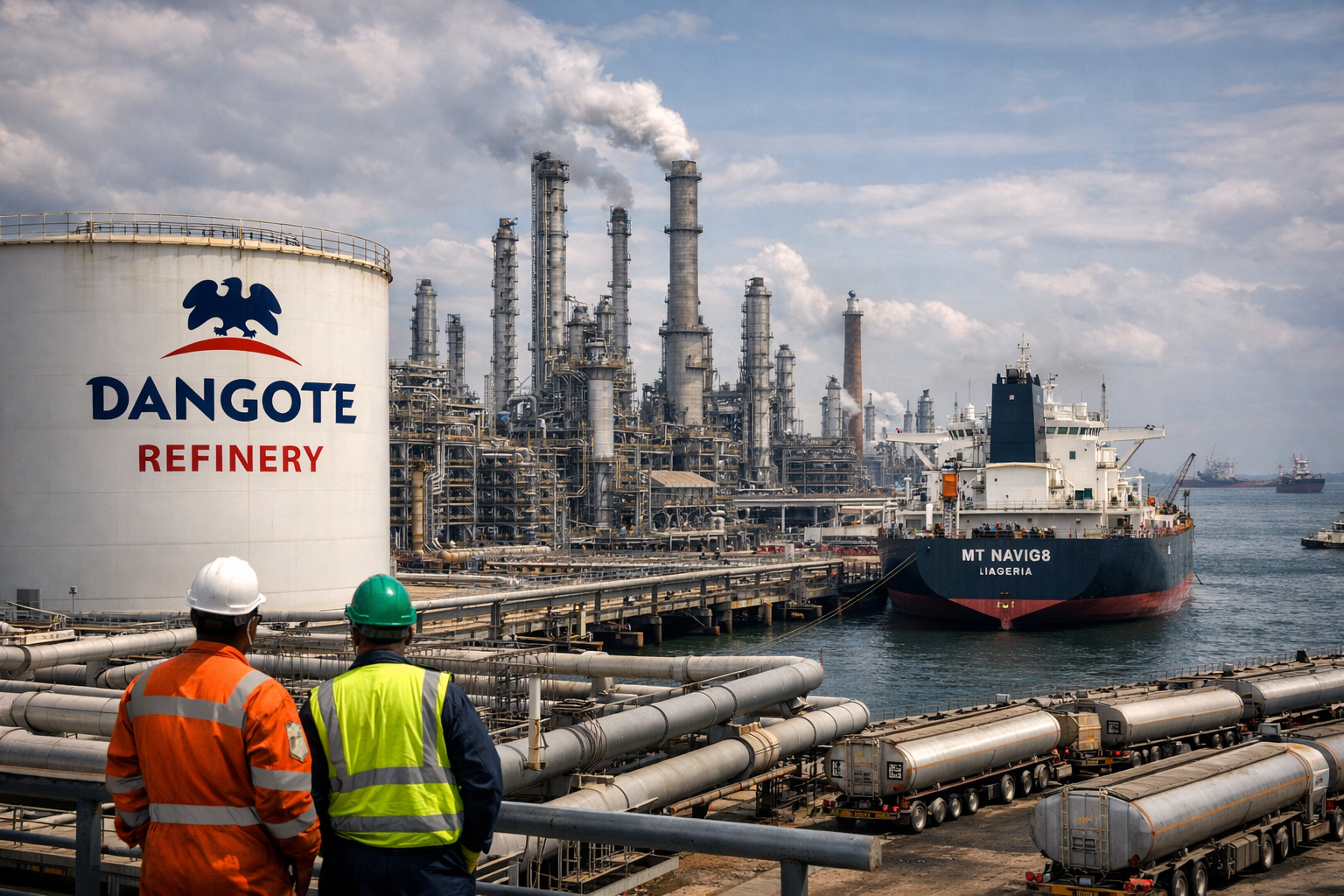
Dangote Refinery Expands Fuel Supply Across Africa, Reshaping the Global Energy World
Africa is no longer waiting for fuel imports to power its economies. A major shift is unfolding, and at the center of it is the Dangote Refinery in Lagos. What started as an ambitious industrial project is now becoming one of the most powerful forces in Africa’s energy landscape, quietly changing how fuel moves across the continent and positioning itself in the global energy world.
In recent days, the refinery has reached near full production capacity and has begun exporting refined petroleum products to multiple African countries. Shipments are already moving as far as Tanzania and across other regions, marking a historic turning point. For decades, African nations depended heavily on Europe and the Middle East for refined fuel. Today, that dependency is beginning to break as Nigeria shifts from importing fuel to supplying Africa.
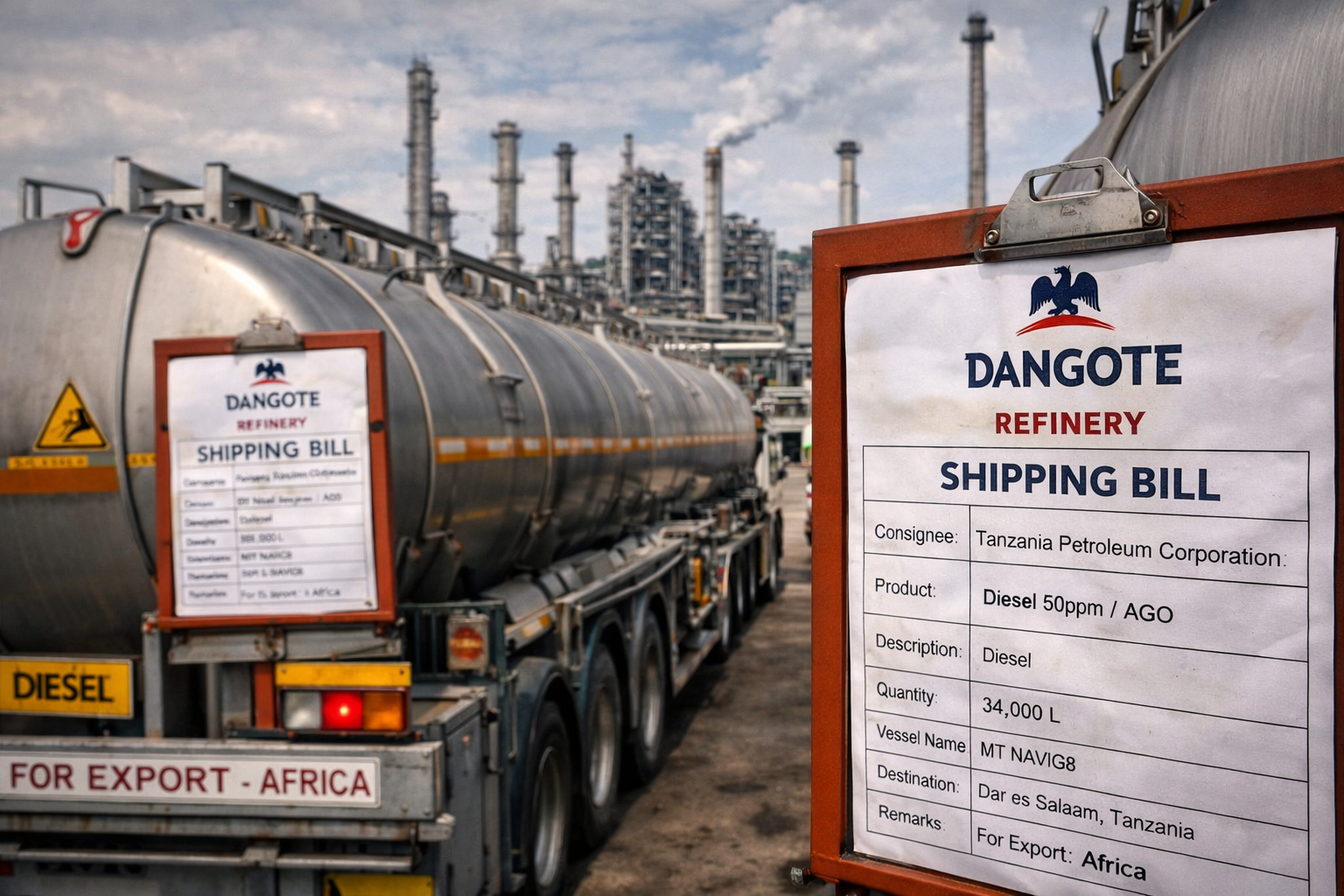
This rise is happening at a critical moment. The ongoing crisis in the Middle East has disrupted global oil supply routes, reduced access to cheaper imports, and pushed fuel prices higher. As traditional supply chains tighten, Dangote Refinery has stepped into the gap, offering a closer, more stable alternative. Analysts say the refinery is effectively leveraging this global disruption to accelerate its growth and dominance.
But while this expansion is a major win for Africa, it is creating tension within Nigeria. Reports suggest that a significant portion of the refinery’s output may be directed toward export markets instead of local distribution. This has raised concerns about potential fuel shortages, especially as local supply has recently covered only about 92 percent of demand.
The situation is further complicated by disagreements around pricing, fuel import licenses, and regulatory policies. These tensions are shaping how fuel is distributed within the country and could determine whether Nigeria experiences stability or scarcity in the months ahead. It highlights a deeper question: how does a nation balance global opportunity with local responsibility?
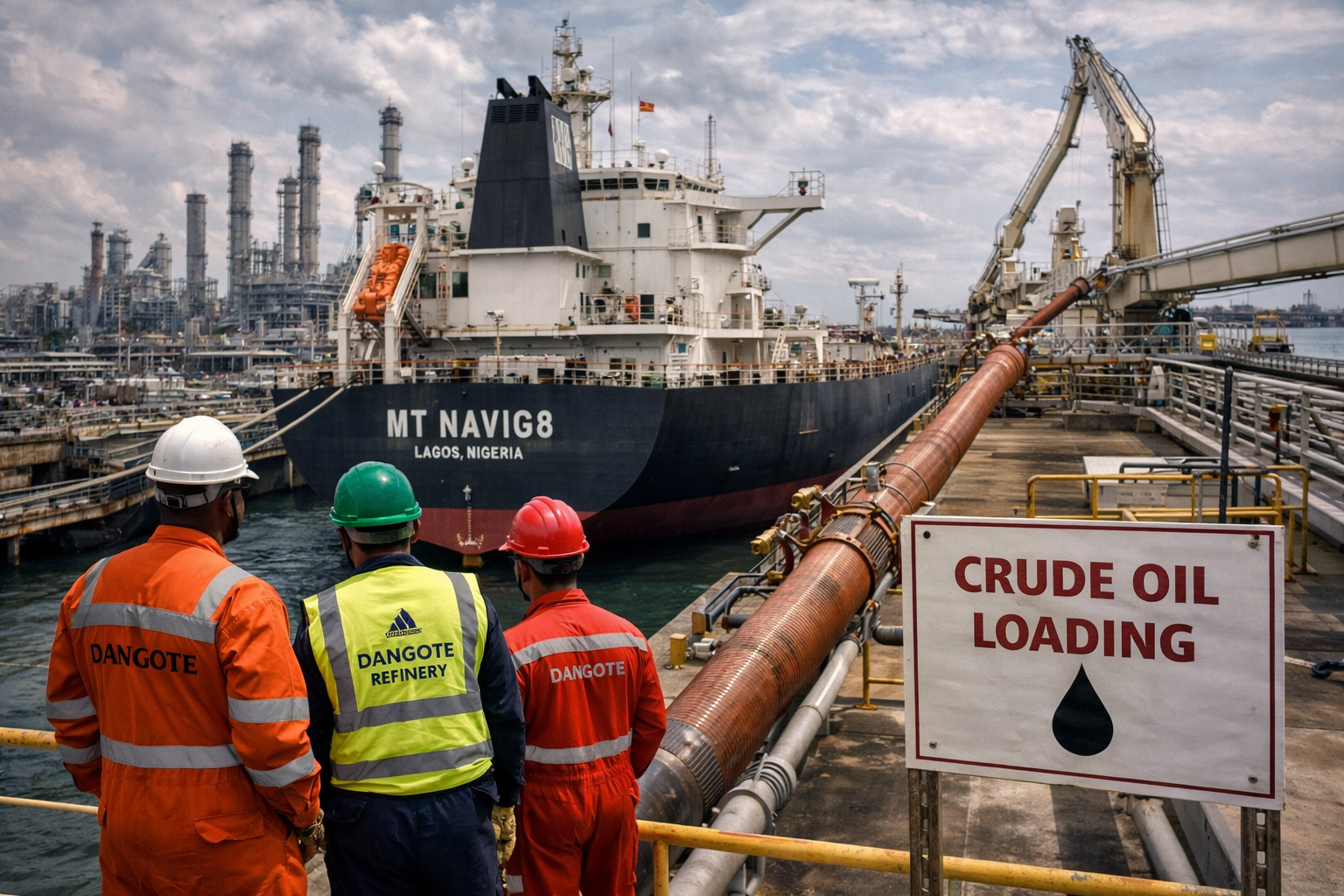
Behind the scenes, the refinery is scaling aggressively. It has secured 19 cargoes, totaling about 17.5 million barrels of crude oil from Nigeria, the United States, and other global suppliers in just one month. This level of coordination shows that the refinery is not only responding to demand but preparing to dominate it, ensuring continuous production and long-term supply stability.
What is becoming increasingly clear is that Dangote Refinery is no longer just a Nigerian project. With a current capacity of 650,000 barrels per day and expansion plans targeting up to 1.4 million barrels per day, it is positioning itself as one of the largest refining operations in the world. It is evolving into a regional energy hub with global ambitions.
For Africa, this moment represents more than fuel. It signals a shift toward self-reliance, industrial growth, and stronger economic control. For Nigeria, it presents both opportunity and tension. And for the world, it is a clear reminder that new energy powers are rising — and this time, they are coming from Africa.
Dangote Refinery Leads Africa’s Fuel Supply Shift with Growing Global Impact