Dangote’s Reported Threat Ignored as Nigeria Approves New Fuel Imports Amid Supply Concerns
Nigeria has approved new fuel imports despite Dangote Refinery’s growing production capacity. The move is aimed at preventing shortages amid global supply disruptions and local challenges. It highlights that Nigeria’s path to fuel self-sufficiency is still in progress, not yet complete.

Nigeria has taken a surprising turn in its fuel policy, approving new fuel import licenses despite the growing dominance of the Dangote Refinery. The decision comes at a time when many expected the country to transition fully into local refining, marking a moment of tension between ambition and reality in Africa’s largest economy. For months, the Dangote Refinery has been positioned as the solution to Nigeria’s long-standing fuel import dependency. With its massive production capacity, the refinery was expected to supply the entire domestic market and even export to other African countries. This created hope that Nigeria would finally achieve fuel self-sufficiency after decades of reliance on imports.
However, recent developments have shown that the transition is not as straightforward as anticipated. The Nigerian government has now approved several fuel marketers to resume importing petrol, a move aimed at stabilizing supply and preventing potential shortages. This decision signals that local production alone is not yet sufficient to guarantee full national demand.
At the center of the issue are ongoing global disruptions, particularly the crisis in the Middle East, which has affected fuel supply chains and pricing worldwide. These external pressures have created uncertainty in supply, forcing the government to take precautionary measures to ensure availability across the country.
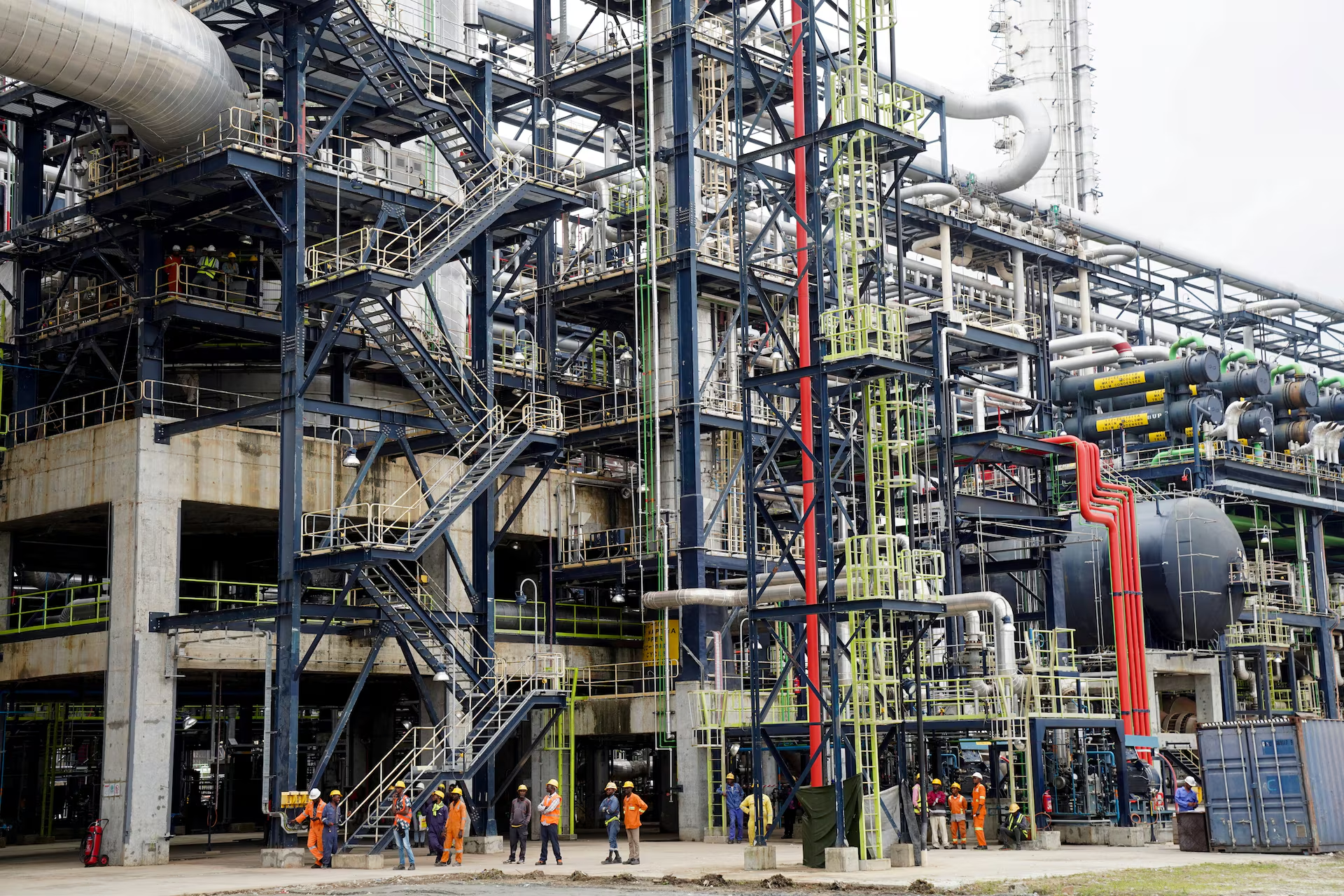
Reports also suggest that the Dangote Refinery has faced its own challenges, including foreign exchange losses, crude supply constraints, and pricing disagreements with regulators. These factors have contributed to a situation where the refinery, while highly productive, is not yet able to operate as a single, uninterrupted solution for the country’s fuel needs.
The approval of fuel imports has raised questions about Dangote’s position in the market. Earlier expectations suggested the refinery could dominate local supply, but the reintroduction of imports brings back competition and reduces the possibility of a fully controlled domestic market. It also creates a more complex pricing environment for consumers.
Despite this, Dangote remains a central player in Africa’s energy future. The refinery continues to export fuel to other African countries, positioning Nigeria as a regional supply hub even as it navigates internal supply challenges. This dual reality highlights the complexity of balancing local demand with continental opportunities.
For Nigeria, the decision reflects a pragmatic approach. Rather than risk shortages, the government has chosen to maintain a mixed system that combines local refining with strategic imports. This ensures stability, even if it delays the full realization of energy independence.
Ultimately, this moment represents a transition phase. Nigeria is moving toward self-sufficiency, but the process is still evolving. The approval of fuel imports, despite Dangote’s presence, is not a setback but a reminder that large-scale economic shifts take time. As systems stabilize, the balance between local production and global supply will continue to define the country’s energy landscape.
Dangote’s Reported Threat Ignored as Nigeria Approves New Fuel Imports Amid Supply Concerns