DELEGATIONS FROM CENTRAL AND WESTERN EQUATORIA STATES ARRIVE IN ROKON PAYAM FOR PEACE CONFERENCE
— Mary Ene
Senior delegations from Central Equatoria State and Western Equatoria State, each led by their respective deputy governors, have arrived in Rokon Payam for a two-day peace conference hosted by the Government of Central Equatoria State. The conference, held under the themes "Understanding the Confli…
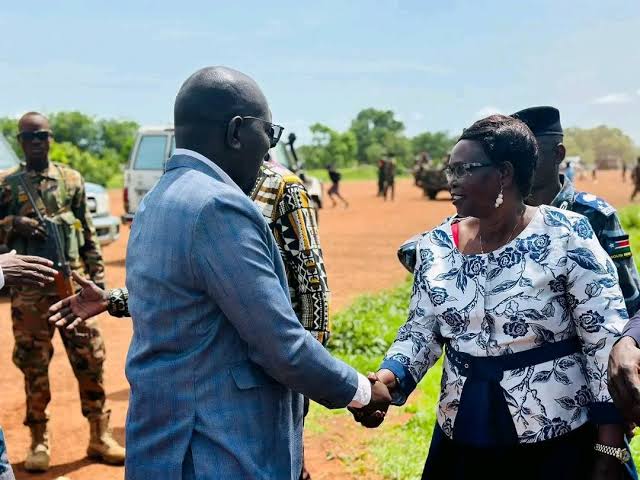
Two of South Sudan's most conflict-battered states have done something remarkably simple and desperately necessary: they sent their leaders to sit together and talk.
The Central Equatoria State delegation is headed by Deputy Governor Paulino Lukudu Obede. The Western Equatoria State delegation is led by Deputy Governor Justin Joseph Marona. The two deputy governors also jointly chair a mediation committee tasked specifically with leading peaceful resolution, de-escalating tensions and addressing outstanding cattle-related conflicts between communities living along the common border of the two states. On arrival in Rokon Payam, the delegations were received by Juba County Commissioner Samuel Emiliano Wani Pitia, alongside fellow county commissioners from Mundri East, Mundri West and Terekeka counties, signalling a broad representation of the affected administrative areas.
The conference themes, "Understanding the Conflict and Building Trust" and "Solutions and Agreements," reflect a two-stage approach: first, establishing a shared diagnosis of what is driving violence, and second, producing binding agreements that communities can hold their leaders to. Cattle-related conflicts between communities in the border areas of Central and Western Equatoria have been a persistent and deadly source of violence. Raids, counter-raids, revenge killings and displacement have destabilised communities on both sides of the border and contributed to the broader insecurity that has pushed over 497,000 people from their homes across South Sudan between January and September 2025 alone.
Central Equatoria Governor Emmanuel Adil Anthony has described cattle-related conflicts as a priority concern and committed to taking decisive action. His office framed the joint committee as a tool for community engagement, not just official negotiation, noting that the delegations are expected to engage directly with local communities in Rokon and issue a joint statement after completing their work. The involvement of county commissioners from multiple affected counties, alongside the two state deputy governors, suggests the conference is designed to produce locally anchored agreements rather than top-down declarations that communities have no ownership of.
The Rokon conference takes place against one of the most difficult political and security backdrops South Sudan has faced since 2018.
Fighting between SSPDF forces and SPLA-IO-aligned groups continues in Jonglei and Unity states. The African Union Peace and Security Council has called for an all-inclusive national political dialogue as a prerequisite for credible December 2026 elections. In that context, state-level peace initiatives like the Rokon conference carry weight beyond their immediate cattle-raiding mandate. They are among the only functioning conflict resolution mechanisms operating at the community level in a country where the national peace architecture is under severe strain.
DELEGATIONS FROM CENTRAL AND WESTERN EQUATORIA STATES ARRIVE IN ROKON PAYAM FOR PEACE CONFERENCE