Former Enemies Unite Against Abiy—Can Ethiopia’s Alliance Hold?
— Afridiaspo News Desk
Seven Ethiopian groups, including former foes TPLF and Fano, have united against Abiy Ahmed. Afridiaspo examines the alliance’s members, risks and fault lines.

Some alliances are built from trust. Ethiopia’s newest one has been built from a shared enemy.
Seven armed and political groups from across Ethiopia announced on September 20 that they had formed the Ethiopian Peoples’ Forces Alliance for Survival—the “Alliance for Survival”—with the stated goal of removing Prime Minister Abiy Ahmed’s government and replacing it with an inclusive transitional administration.
The headline is dramatic. The deeper story is even more consequential: the coalition includes the Tigray People’s Liberation Front and the Amhara Fano National Movement, forces whose constituencies stood on opposite sides of the devastating 2020–2022 Tigray war. It also brings together organisations rooted in Oromia, Somali, Afar and Benishangul-Gumuz.
That breadth gives the alliance symbolic weight. It does not yet prove that the members possess a unified command, a workable political programme or enough trust to survive their own unresolved disputes. Ethiopia has seen opposition coalitions before. The test is whether this one can become more than a declaration.
The story in five facts
- Seven groups signed the alliance statement.
- The alliance says it wants to remove Abiy Ahmed’s Prosperity Party government and create an inclusive transitional government.
- Its members span Tigray, Amhara, Oromia, Somali, Afar and Benishangul-Gumuz.
- The TPLF and Fano were wartime enemies during the Tigray conflict.
- As of Reuters’ September 21 report, Ethiopia’s federal government had not issued an immediate response to the announcement.
What the alliance announced
In a statement circulated by the Oromo Liberation Army’s media network and read publicly by Fano leader Zemene Kassie, the signatories accused the federal government of centralising power, marginalising regions and driving the country toward deeper instability. Those are the alliance’s allegations, not independently established findings.
The statement says the coalition will coordinate its “popular and organisational capacities,” resolve internal disagreements peacefully and pursue a transitional charter after the current government’s removal. It also appeals to civic groups, political organisations and members of the federal security forces to join it.
Reuters independently confirmed the alliance announcement and reported that spokespeople for Abiy and the federal government did not immediately respond to requests for comment. A prime-ministerial adviser had previously dismissed the prospect that such a coalition could overthrow the state, saying it would cause disruption but fail to take power.
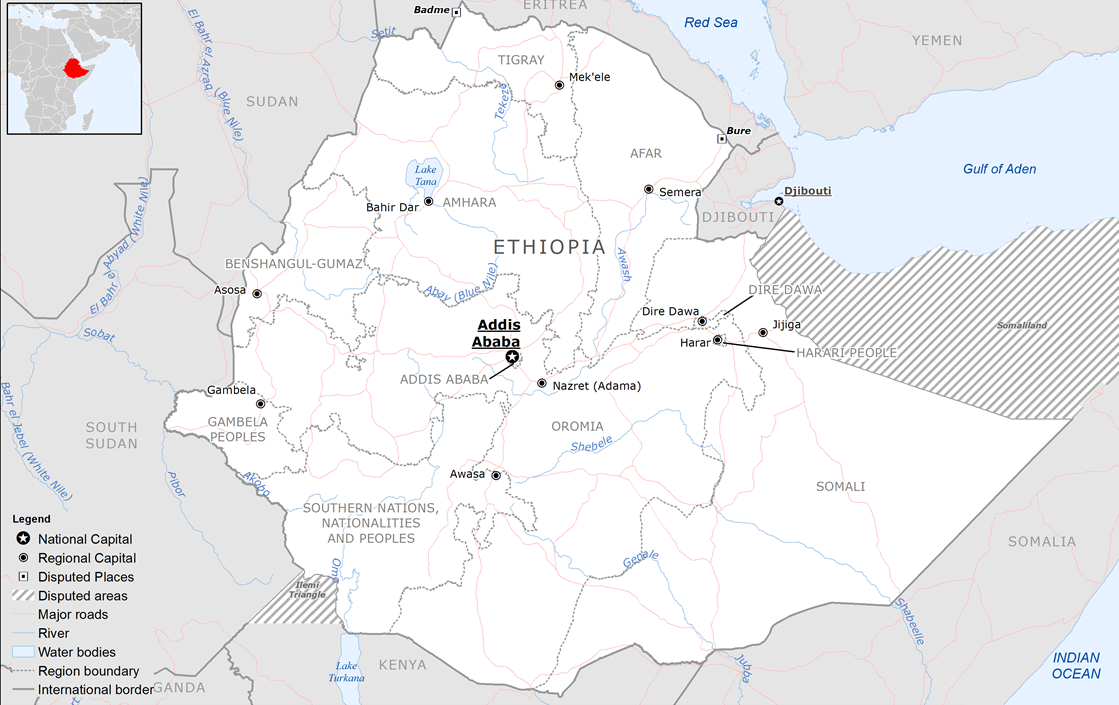
Who joined: seven groups, six regional constituencies
| Member | Primary constituency | Why its inclusion matters |
|---|---|---|
| Amhara Fano National Movement | Amhara | Fano forces backed the federal side against the TPLF during the Tigray war, then rebelled against the federal government in 2023. |
| Oromo Liberation Army (OLF–OLA) | Oromia | It represents a long-running armed challenge in Ethiopia’s most populous region. |
| Tigray People’s Liberation Front | Tigray | The former dominant force in Ethiopian politics fought the federal government from 2020 to 2022 and signed the Pretoria peace agreement. |
| Ogaden National Liberation Front | Somali Region | Its participation broadens the alliance eastward and raises questions about the future of earlier peace arrangements. |
| Afar Revolutionary Democratic Unity Front (Ugugumo) | Afar | It adds a constituency from a strategically important region linking Ethiopia to Djibouti and the Red Sea corridor. |
| Benishangul Peoples’ Liberation Movement | Benishangul-Gumuz | Its inclusion extends the coalition to Ethiopia’s western frontier. |
| Gumuz Peoples’ Democratic Movement | Gumuz communities | It gives the alliance another voice from a region marked by local conflict and displacement. |
Important: the alliance statement establishes that these organisations signed a common declaration. It does not, by itself, establish the size of their forces, their operational control, the unity of every faction using a similar name or their capacity to conduct coordinated national action.
The most surprising partnership: TPLF and Fano
The alliance’s central contradiction is also its biggest headline. During the Tigray war, Fano fighters and Amhara regional forces supported the federal government against the TPLF. The war became one of the deadliest conflicts of the century; researchers cited by Reuters estimate that hundreds of thousands died through direct violence, hunger and the collapse of health services.
After the 2022 peace agreement, the political map shifted again. Fano rebelled against the federal government in 2023, while relations between Addis Ababa and the TPLF deteriorated. A common opponent has now placed former battlefield enemies under the same political umbrella.
But the territorial dispute between Amhara and Tigray—especially around areas commonly referred to as Western Tigray or Welkait—has not disappeared. That means the coalition’s promise to settle disagreements peacefully will be tested by a question tied to land, displacement, identity and wartime loss.
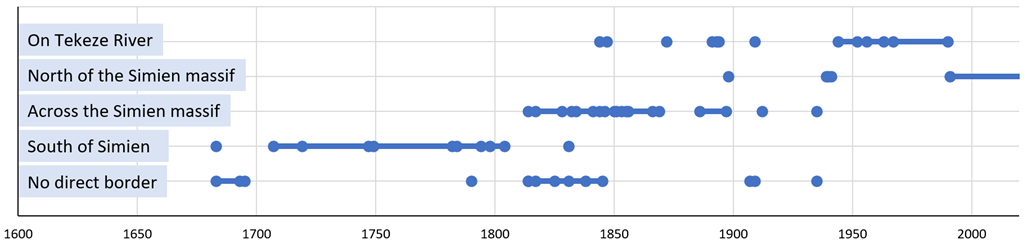
How Ethiopia reached this moment
| Date | Development | Why it matters now |
|---|---|---|
| November 2020 | War begins between federal forces and the TPLF-led authorities in Tigray. | Fano and the TPLF fight on opposing sides. |
| November 2022 | The federal government and TPLF sign the African Union-mediated Pretoria cessation-of-hostilities agreement. | It stops full-scale war and creates an interim political framework for Tigray. |
| 2023 | Fano’s relationship with the federal government collapses into armed conflict in Amhara. | A former federal ally becomes an insurgent opponent. |
| May 2026 | The TPLF restores its pre-war legislative council and installs Debretsion Gebremichael as regional president, creating rival authorities. | Reuters describes the move as a breach of a key provision of the Pretoria framework. |
| September 20, 2026 | Seven groups announce the Alliance for Survival. | Separate regional rebellions are presented as a common national challenge to Abiy’s government. |
The Pretoria peace framework is under severe strain
The African Union hailed the November 2022 agreement as a foundation for ending hostilities, restoring services, reopening humanitarian access and beginning reconciliation. It also created an interim administration for Tigray pending a longer political process.
That framework has weakened. In May 2026, the TPLF restored its pre-war legislative council and selected its chairman, Debretsion Gebremichael, as regional president. Reuters reported that the move created two competing regional authorities. The TPLF accused the federal government of violating the agreement; Reuters said it could not independently verify those allegations, and the federal government had not directly answered them.
Recent skirmishes, reported drone strikes and claims that nearly 300 Tigrayan fighters surrendered have increased fears of another escalation. Each assertion requires careful attribution. The federal military announced the surrender figure. Conflict-event data cited by Reuters recorded drone strikes. The federal government had not commented on the reported strikes when Reuters published.
What is known—and what is still missing
Verified
- Seven named organisations issued a joint statement.
- The statement calls for Abiy’s government to be removed and a transitional government formed.
- The coalition includes former wartime enemies.
- Tensions between the federal government and TPLF have risen in 2026.
Not yet established
- Whether the alliance has a joint military command.
- How many fighters or territories each member controls.
- How members would resolve the Tigray–Amhara territorial dispute.
- Who would lead a transition or how power would be shared.
- Whether the coalition can sustain cooperation beyond opposition to Abiy.
Why this matters beyond Ethiopia
Ethiopia is the Horn of Africa’s second-most populous country, the headquarters of the African Union and a central diplomatic and economic actor in the region. A wider internal war would not remain a domestic story. It could deepen displacement, interrupt trade corridors, intensify pressure on neighbouring states and complicate already fragile regional relationships.
Eritrea is part of that risk picture. Ethiopia has accused Eritrea of supporting insurgent groups including the TPLF and Fano; Eritrea denies the allegation. The accusation is significant, but it is not proof that the new alliance is an Eritrean project or that a regional war is inevitable.
For Ethiopians abroad, this is also a moment when diaspora influence can either clarify or inflame. Fundraising, social-media advocacy and political networks outside the country can shape narratives and material support. The responsible standard is to distinguish verified reporting from partisan claims, refuse ethnic dehumanisation and remember that civilians will carry the heaviest cost of any renewed war.
What to watch next
- A formal federal response: whether Addis Ababa treats the alliance as a political challenge, a security threat or both.
- Evidence of coordination: joint leadership, command structures, shared financing or synchronized operations.
- A territorial formula: whether TPLF and Fano can publicly address the dispute dividing their constituencies.
- Humanitarian safeguards: whether all sides make credible commitments to protect civilians and aid access.
- A renewed African Union role: whether mediation focuses on repairing the Pretoria framework before another full-scale war becomes harder to prevent.
A coalition can announce unity; history will test it
The Alliance for Survival matters because it connects conflicts the Ethiopian government has largely faced as separate regional crises. If the members can coordinate, they could create a broader political and security challenge than any one group could produce alone.
But opposition to one government is not the same as agreement on Ethiopia’s future. The coalition’s members carry competing histories, territorial claims, political ideologies and memories of war. Their most important promise may therefore be the least dramatic line in their statement: that they will resolve their differences peacefully.
That promise must be judged before, not only after, a transfer of power. Ethiopia’s people have already paid too much for political leaders to discover their incompatibility on the battlefield.
Sources and image credits
- Reuters: Seven Ethiopian armed groups announce anti-government alliance, September 21, 2026
- Alliance for Survival statement, September 20, 2026 (primary partisan source; claims are identified as the alliance’s own)
- Reuters: TPLF restores pre-war regional government, May 5, 2026
- African Union: Pretoria cessation-of-hostilities agreement press release, November 2, 2022
- Ethiopia base map: European Commission JRC/ECHO, CC BY 4.0
- Tigray–Amhara historical-border graphic: Jan Nyssen, CC BY-SA 4.0
Featured image: Original AI-assisted Afridiaspo editorial illustration showing seven symbolic paths joining into one uneasy route. It is an illustration—not a photograph, map or depiction of an actual meeting, military movement or place.
Former Enemies Unite Against Abiy—Can Ethiopia’s Alliance Hold?