Exim Credit Bank (ECB): Strategic Trade and Corporate Finance Solutions from Dubai
— Afridiaspo Partner Content
Explore Exim Credit Bank’s trade and corporate finance solutions for importers, exporters and businesses conducting international transactions.

FEATURED BUSINESS | PARTNER CONTENT
In the complex and fast-paced world of international commerce, having the right financial partner is not just an advantage; it is a necessity. Exim Credit Bank (ECB) has established itself as a specialized, non-deposit-taking financial institution dedicated to powering global trade, corporate growth, and investment.
Headquartered in the dynamic business hub of Dubai, ECB bridges geographical and financial gaps, offering bespoke solutions to importers, exporters, and corporations navigating the global marketplace.
International trade can create enormous opportunities, but turning those opportunities into completed transactions requires more than a willing buyer and seller. Businesses must consider working capital, payment timelines, international documentation, transportation, foreign suppliers and the financial obligations attached to each agreement.
An importer may nee
d to purchase machinery, inventory or raw materials before those assets begin generating revenue. An exporter may need to manufacture and ship an order before receiving payment. A contractor bidding for an international project may be required to provide financial or performance guarantees before work can begin.
ECB operates at the point where these commercial opportunities meet the need for financial structure. By bringing together trade-finance instruments, corporate-finance solutions and transaction-focused support, ECB helps businesses move from negotiation to execution.
Core Specialization: Non-Deposit-Taking Financial Institution
Unlike traditional commercial banks that rely on customer deposits, Exim Credit Bank operates as a specialized financial entity. This unique positioning allows ECB to focus entirely on providing dedicated capital and financial instruments for specific trade and corporate finance needs without the constraints of retail banking operations.
ECB’s core competencies lie in:
International Trade Finance
Corporate Finance
Investment Solutions

This specialized structure allows ECB to concentrate on business transactions rather than everyday retail-banking services. Its focus is on understanding the underlying commercial opportunity, identifying the financial requirements surrounding it and determining which instruments may be appropriate for the transaction.
International Trade Finance
ECB’s international trade-finance services are designed to support the movement of goods, services and payments across borders.
Trade finance can help address the timing gap between purchasing, production, shipment and final payment. It can also provide a documented structure that gives buyers and sellers greater clarity about their responsibilities.
Through Letters of Credit, Standby Letters of Credit, guarantees, import financing, export financing and structured facilities, ECB helps eligible businesses create payment arrangements connected to the commercial transaction.
Corporate Finance
International growth frequently requires more than financing a single shipment. Businesses may need capital to expand production, purchase equipment, enter new markets, strengthen working capital or undertake a major commercial project.
ECB’s corporate-finance services are intended to support companies evaluating these broader financing requirements. The objective is to connect the company’s capital needs to its commercial strategy and expected growth.
This may be relevant to established corporations, expanding businesses, commodity companies, project developers and organizations preparing for cross-border investment.
Investment Solutions
ECB also identifies investment solutions as one of its core competencies.
For businesses considering expansion, investment or international partnerships, financial decisions must be supported by a clear understanding of the opportunity, the risks involved and the expected return.
ECB’s investment-focused services are intended to help businesses evaluate opportunities and identify financial structures that support their longer-term objectives.
Empowering Importers and Exporters
For businesses engaged in cross-border trade, managing cash flow and mitigating risk are constant challenges. ECB acts as a strategic partner, providing the financial structure necessary to succeed.
For Importers: Exim Credit Bank enables businesses to secure the goods, equipment, and raw materials they need from international suppliers. Through financial instruments such as Letters of Credit (LCs) and structured payment facilities, ECB helps importers:
Manage cash flow more effectively.
Reduce payment risk.
Complete transactions securely and on time.
Import financing can be especially valuable when a company must place an order before it has generated revenue from the goods being purchased.
A retailer may need inventory for a new market. A manufacturer may require raw materials to fulfill confirmed orders. A growing company may need specialized equipment from an international supplier. In each case, the business must determine how the supplier will be paid without placing unnecessary pressure on its working capital.
A structured import-finance solution can connect the payment arrangement to the commercial agreement, shipment schedule and documentation required for the transaction.
This can give the importer a clearer payment process while giving the supplier greater confidence in the transaction.
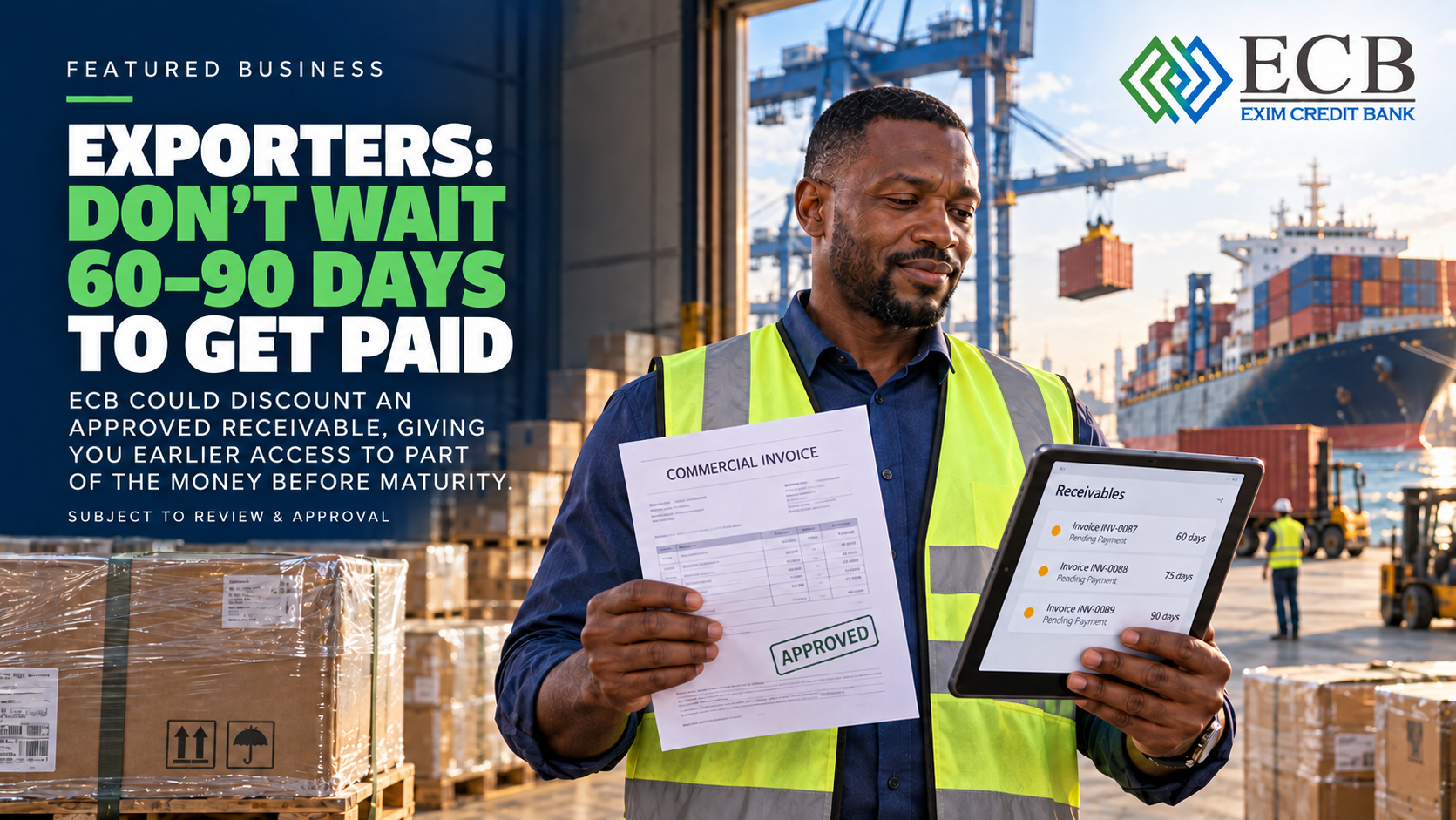
For Exporters: ECB supports exporters in expanding their reach into new global markets by ensuring they receive payment securely while offering competitive terms to their buyers.
Exporters face the opposite side of the cash-flow cycle. They may need to purchase materials, manufacture products, prepare documentation and ship goods before receiving final payment.
When an exporter enters a new market or begins working with an unfamiliar buyer, the payment structure becomes especially important. The exporter needs to understand when payment will be made, what documents must be presented and what happens if the buyer does not meet the agreed obligation.
ECB’s export-financing services are designed to help businesses structure international sales, manage working-capital requirements and pursue new markets with greater financial clarity.
This support may be relevant to manufacturers, agricultural exporters, commodity businesses, suppliers and companies providing services
to international clients.
A Comprehensive Suite of Trade Finance Tools
Exim Credit Bank does not offer a "one-size-fits-all" approach. Instead, they provide tailored solutions designed to meet the specific needs of each client transaction.
Their extensive portfolio of services includes:
Letters of Credit (LCs) & Standby Letters of Credit (SBLCs)
Bank Guarantees
Export and Import Financing
Commodity Finance
LC Discounting
Structured Trade Facilities
By leveraging these instruments, businesses can conduct secure, efficient, and compliant cross-border transactions, ensuring supply chains remain robust and operations continue to scale.
The appropriate instrument will depend on the transaction itself. The parties involved, the goods or services being exchanged, the payment timetable, the shipment route and the contractual obligations can all influence how the financing should be structured.
Letters of Credit
A Letter of Credit creates a documented payment arrangement between the buyer and seller.
The transaction normally begins when the parties agree on the product, price, shipment terms and documents required for payment. The importer then applies for a Letter of Credit in favor of the exporter.
After the exporter ships the goods, the required documents are presented and examined against the agreed terms. Payment proceeds according to the conditions stated in the instrument.
This structure gives the importer a payment process connected to the transaction while giving the exporter greater clarity about what must be presented before payment.
Letters of Credit can be particularly useful when businesses are working with new counterparties or operating across jurisdictions where distance, documentation and payment risk require additional structure.
Standby Letters of Credit
A Standby Letter of Credit generally provides secondary support when a party does not meet an agreed payment or performance obligation.
Unlike a commercial Letter of Credit, which may form part of the normal payment process, an SBLC is commonly designed to operate as a backup.
It can provide additional assurance to a supplier, contractor, lender or other beneficiary participating in the transaction.
Bank Guarantees
A Bank Guarantee can support a specified financial or contractual obligation.
In international commerce, guarantees may be required when one party needs greater confidence that another party will fulfill the responsibilities stated in an agreement.
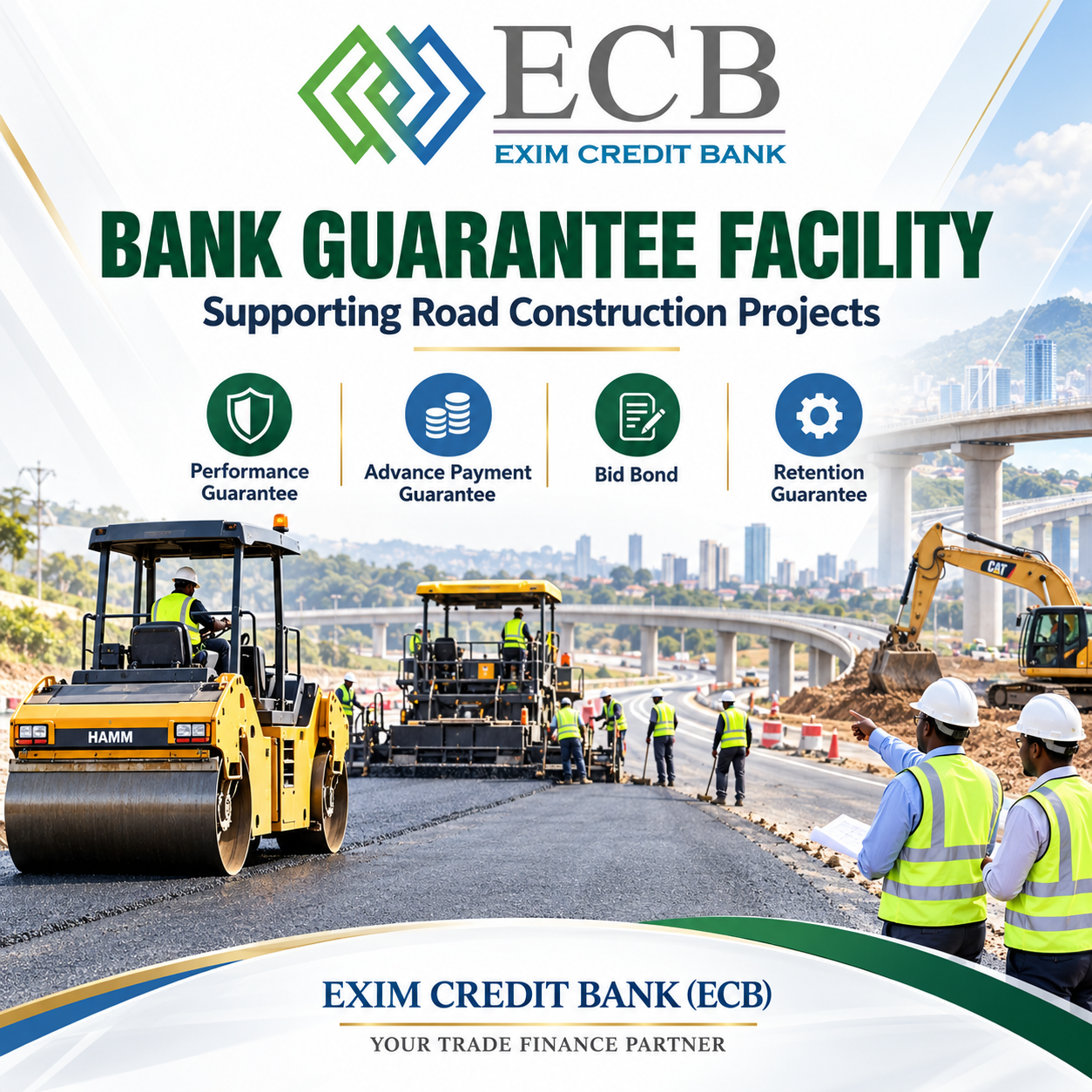
ECB’s portfolio also includes Performance Guarantees, which can support obligations connected to the delivery of goods, completion of work or performance of a contract.
These instruments may be particularly relevant to construction companies, project developers, suppliers, contractors and businesses participating in international procurement.
Export and Import Financing
Export and import financing helps businesses manage the cash-flow demands created by international trade.
Importers may require financing to purchase inventory, equipment or raw materials. Exporters may need working capital to manufacture, prepare and ship goods before receiving payment from the buyer.
ECB says its financing solutions are structured around the needs of the underlying transaction, helping eligible businesses manage the period between commercial commitment and final settlement.
Commodity Finance
Commodity transactions often involve large volumes, long supply chains and several parties operating across different countries.
Financing may be required for production, purchasing, storage, transportation or the period between shipment and payment.
ECB’s commodity-finance services are intended for producers, traders, importers and exporters operating in physical commodity markets.
The financing structure can be connected to the goods, contracts and expected cash flows supporting the transaction.
LC Discounting
An exporter or supplier may hold an eligible Letter of Credit that provides for payment at a later date while needing working capital immediately.
LC discounting can allow the business to receive value from the eligible receivable before its final payment date, subject to the agreed terms and transaction requirements.
This can help businesses continue production, purchase materials or fulfill additional orders without waiting for the original payment cycle to end.
Structured Trade Facilities
Some transactions are too complex for a standard financial product.
They may involve several counterparties, different jurisdictions, commodity movements, staged payments or multiple forms of security.
ECB’s structured trade facilities are designed around the particular transaction. The structure may consider the contracts, goods, payment flows, risks and expected source of repayment.
The objective is to build a financing arrangement that reflects how the commercial transaction will operate in practice.
Cash Liquidity and Performance Solutions
ECB’s trade campaign also highlights Cash Liquidity Solutions and Performance Guarantees.
Cash-liquidity solutions can help eligible businesses address short-term financial requirements connected to purchasing, production, shipment and commercial payment cycles.
Performance Guarantees may provide assurance that a supplier or contractor will fulfill specified obligations under an agreement.
Together with Letters of Credit, Standby Letters of Credit and Bank Guarantees, these services give businesses several tools for addressing the financial and performance requirements attached to international contracts.
Serving Businesses Across Global Markets
ECB’s services are designed for companies actively participating in international commerce.
Potential clients may include:
Importers purchasing goods, equipment or raw materials from overseas suppliers.
Exporters entering new international markets.
Manufacturers fulfilling cross-border orders.
Commodity producers, traders and buyers.
Contractors participating in international projects.
Companies seeking working capital connected to trade receivables.
Corporations evaluating international growth or investment.
Businesses requiring financial or performance guarantees.
ECB’s focus is not limited to a single industry or transaction type. Its tailored approach allows the institution to examine the specific commercial need before recommending a potential financial structure.
Dubai as a Gateway to International Commerce
Dubai’s position between Africa, Asia, Europe and the Middle East has made it an important center for international business, logistics and investment.
For businesses operating across these regions, Dubai provides access to major trade corridors and commercial networks connecting suppliers, buyers, investors and project partners.
From its Dubai headquarters, ECB positions its services around companies whose transactions cross national and regional boundaries.
This positioning may be particularly relevant to African businesses and diaspora-led companies with suppliers in Asia or the Gulf, buyers in Africa, and investors or commercial partners in Europe and North America.
By connecting businesses with trade-finance and corporate-finance solutions, ECB aims to help clients move beyond geographical limitations and participate more confidently in international markets.
Trade, Trust and Long-Term Growth
ECB’s campaign is built around the idea that successful international trade requires more than identifying an opportunity. Businesses must also have the financial structure required to act on that opportunity.
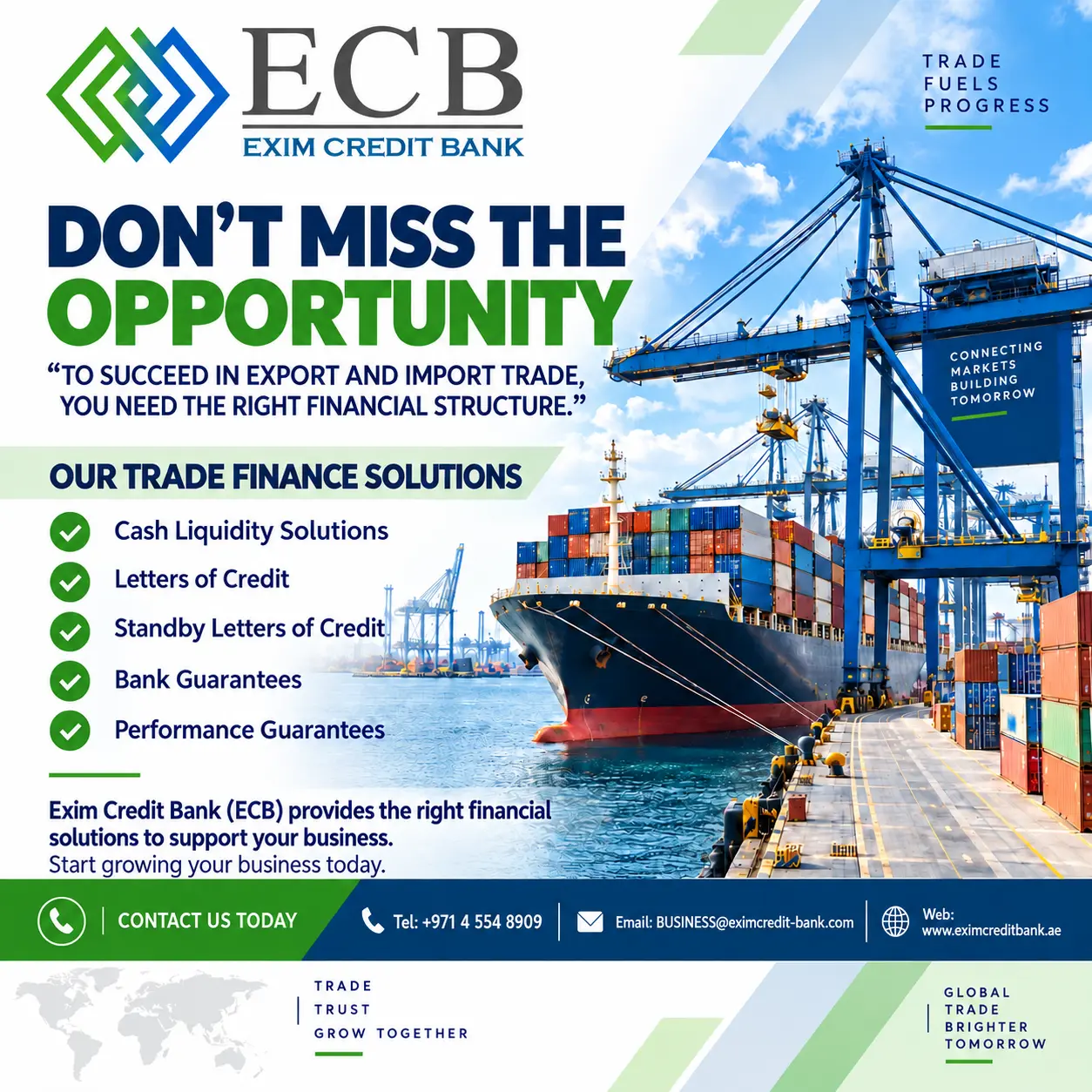
Under the headline “Don’t Miss the Opportunity,” ECB highlights Cash Liquidity Solutions, Letters of Credit, Standby Letters of Credit, Bank Guarantees and Performance Guarantees.
The campaign also features the themes:
“Trade Fuels Progress.”
“Connecting Markets, Building Tomorrow.”
“Trade, Trust, Grow Together.”
“Global Trade, Brighter Tomorrow.”
These messages reflect ECB’s view that trade finance can help businesses connect markets, build commercial relationships and transform international opportunities into sustainable growth.
For importers, exporters and corporations preparing their next transaction, the process begins with understanding the commercial agreement.
The business should be prepared to explain what is being purchased or sold, who the counterparties are, where the goods are moving, when payment is expected and what form of financial support the contract requires.
ECB can then assess the proposed transaction and discuss the solutions available to the business.
Contact Exim Credit Bank
To learn more about how Exim Credit Bank can structure a financial solution for your business, reach out to their Dubai headquarters via the contact details below:
Tel: +971 4 554 8909
Email: Business@eximcredit-bank.com
Brand: EXIM CREDIT BANK — ECB
Visit the Exim Credit Bank website or contact ECB directly to discuss your next import, export, corporate-finance or cross-border transaction.
EXIM CREDIT BANK — ECB Contact ECB
Company descriptions, services and campaign messages in this Featured Business profile are based on information supplied by Exim Credit Bank. Product availability, eligibility and transaction terms depend on the individual business and proposed transaction.
Exim Credit Bank (ECB): Strategic Trade and Corporate Finance Solutions from Dubai