FROM AID TO INVESTMENT: AFRICA REDRAWS THE TERMS OF PARTNERSHIP WITH EUROPE
— Mary Ene
A new report by the African Political Outlook declares that the era of traditional foreign aid between Europe and Africa is over, replaced by a relationship increasingly defined by mutual strategic interest. EU foreign policy chief Kaja Kallas visited Nigeria and Ghana in March 2026, signing a land…
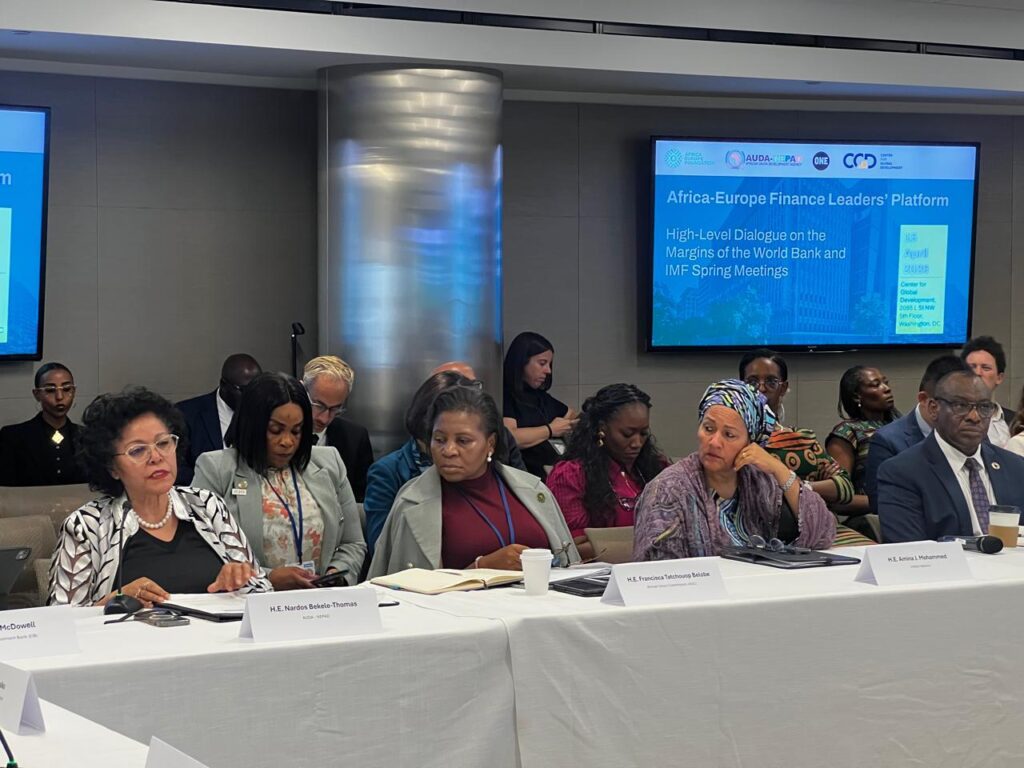 Europe is no longer coming to Africa with a cheque and a set of conditions. It is coming with a deal — and Africa is finally in a position to negotiate the terms.
The African Political Outlook's "State of African Governance: Forces of the Future" report is blunt about what has changed. For decades, Europe shaped its Africa relationship around aid, governance conditionality and development frameworks designed in Brussels. That model is collapsing under the weight of its own contradictions most visibly in the wave of coups that swept Mali, Burkina Faso, Guinea, Gabon, Niger, Guinea-Bissau and Madagascar between 2020 and early 2026, driving out French-led military forces and dramatically diminishing Paris's once-dominant influence across the Sahel and beyond.
Into that vacuum, Europe is trying to insert something different. Kallas's March 2026 visits to Lagos and Accra were the most concrete expression of this pivot. The EU-Ghana Security and Defence Partnership, signed in Accra, focuses on counter-terrorism and maritime security in the Gulf of Guinea. It is the first such bilateral security agreement the EU has signed with any African country — a deliberate signal that Brussels is willing to engage Africa on defence and security as an equal partner rather than a donor-funded bystander. In Nigeria, the €288 million package covering healthcare, agriculture, finance, climate and digital infrastructure signals an investment logic rather than an aid logic.
Energy is where the strategic calculus is most nakedly visible. Italy has moved aggressively to increase gas imports from Algeria. Nigeria continues to supply liquefied natural gas to southern Europe, including Portugal. As the Iran war disrupts Gulf supply chains and drives European energy security up every government's agenda, Africa's gas producers have acquired leverage they did not previously possess. The pipeline running from Africa's hydrocarbon wealth to Europe's energy needs is redefining who needs whom and African governments are beginning to price that leverage accordingly.
Renew Europe has proposed an EU-Africa Industrialisation Pact as the next step, a framework designed to ensure that African raw materials are processed on the continent rather than exported raw, creating industrial jobs in Africa while giving Europe diversified and sustainable supply chains for its green and digital transitions. The proposal represents a structural departure from extractive economic patterns and, if implemented seriously, would mark the most significant rebalancing of the EU-Africa relationship since independence.
The honest tension in all of this is that Europe's renewed interest in Africa is driven primarily by European needs energy security, migration management, critical minerals for the green transition, counterterrorism. African governments are navigating that reality with growing sophistication, insisting on deals that deliver tangible domestic benefits rather than strategic access dressed up as partnership. The era of aid dependence may be ending. Whether what replaces it is genuine partnership or a more sophisticated form of extraction will depend on whether Africa holds the line in every negotiation that follows.
FROM AID TO INVESTMENT: AFRICA REDRAWS THE TERMS OF PARTNERSHIP WITH EUROPE