From Oil Crisis to Food Security: Why Africa Must Invest in Itself Now
— Anita okhipo
The U.S.–Israel–Iran conflict is driving up global oil prices, putting pressure on African economies. South Africa’s food industry and airline sector are struggling, while Ghana faces tomato supply issues after Burkina Faso’s export halt. As nations turn to local solutions like the Dangote refinery…
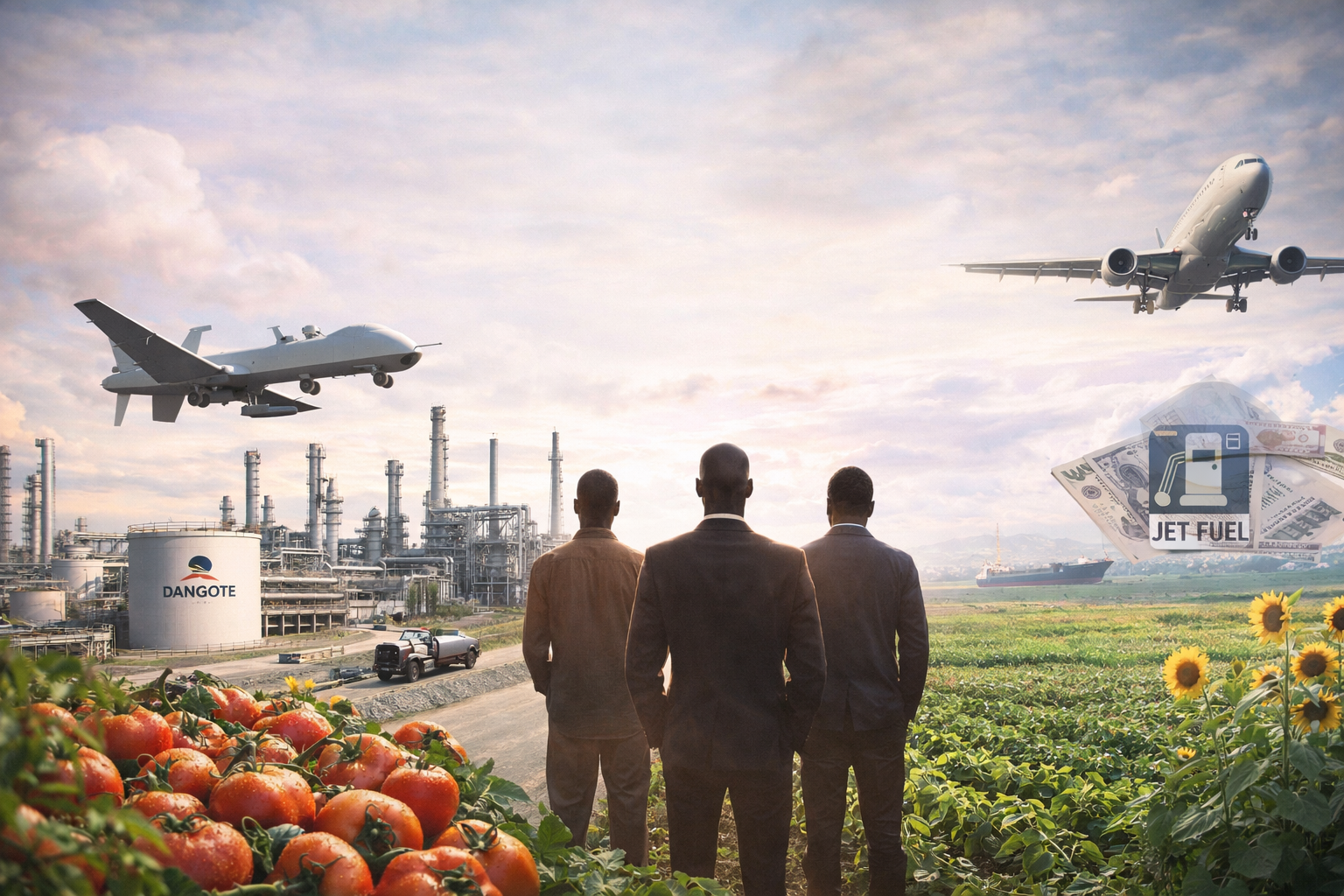
The ongoing U.S.–Israel–Iran conflict has sent shockwaves through global oil markets. With tensions disrupting the flow of oil through the Strait of Hormuz, prices have surged. African nations, heavily reliant on imported fuel, are feeling the strain. In South Africa, rising fuel costs have begun to threaten the food industry, increasing transportation and production expenses across the board.
But it’s not just food. The impact of costly fuel is spilling into Africa’s skies. Airlines across the continent have hiked ticket prices, adding surcharges to cope with soaring jet fuel costs. As travel and trade become more expensive, the continent’s connectivity—and economy—is under strain. Meanwhile, Ghana faces its own crisis: a tomato shortage after Burkina Faso stopped exports, showing how vulnerable African food supply chains can be.
In this crisis, many African nations are turning to local solutions. The Dangote refinery in Nigeria is increasingly seen as a beacon of hope, offering a regional source of fuel and reducing reliance on distant global markets. But a refinery alone won’t solve everything.
The real lesson is clear: Africa must build its own infrastructure. Despite abundant resources, much of Africa’s infrastructure—whether in fuel or agriculture—is still owned or developed externally. To weather future shocks, African countries must invest in their own refineries, transport networks, and food processing facilities.
Our soils are fertile, and our resources are plentiful. Ghana’s tomato crisis is a reminder: if Africa doesn’t build infrastructure, others will control the flow of resources. Burkina Faso’s export halt impacted Ghana’s food supply—but with the right investments, Ghana could be self-sufficient.
This is Africa’s moment to pivot. If we harness our resources, build local refineries, strengthen agricultural systems, and own the infrastructure, Africa will not just weather crises—it will be in a position to feed and fuel the world. Now is the time to invest back into our continent—so that Africa’s future is in African hands.
As Africa moves toward self-reliance, the U.S. has deployed MQ-9 drones and personnel to Nigeria to support counterinsurgency. The question remains: as African countries look to Dangote for fuel, could external powers now have an eye on Nigeria’s infrastructure? Africa’s path to strength lies in owning its future—free from external influence.
From Oil Crisis to Food Security: Why Africa Must Invest in Itself Now