HOW ONE IDEA TURNED POST-HARVEST LOSS INTO A THRIVING AGRIBUSINESS IN DODOMA
— Mary Ene
Tanzania loses between 30 and 40 percent of its annual harvest to post-harvest challenges including poor storage, inadequate handling and weak logistics — a crisis that costs the country hundreds of millions of dollars in lost food, income and export potential each year. In Dodoma, a quiet agribusi…
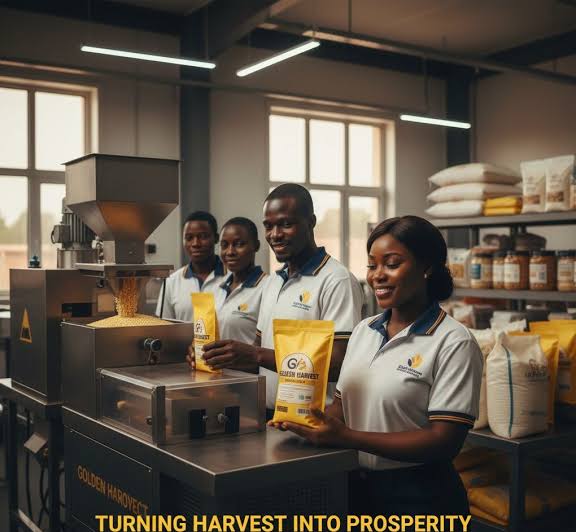
In Tanzania, the harvest is not the end of the farmer's battle it is often where the losing begins. But in Dodoma, some farmers and entrepreneurs have found a way to make the post-harvest period not a season of loss but a source of profit.
Tanzania's agricultural sector produces impressive volumes. The country has achieved 128 percent food self-sufficiency and is one of Africa's significant maize producers. Yet behind those headline numbers lies a stubborn crisis: up to 40 percent of harvested food never reaches a consumer.
For cereals like maize and rice the staple crops of millions of Tanzanian households losses occur at every stage after harvest: in drying, in storage, in handling, in transportation. For more perishable horticultural crops, the losses are even more severe, sometimes reaching 70 percent. Tanzania loses an estimated $800 million to $1.2 billion annually in food, income and export potential to these post-harvest failures.
In Dodoma, the problem is well known. The region is part of Tanzania's central dry zone, where erratic rainfall already makes farming precarious. When farmers lose a third or more of what they manage to grow, the consequences for household food security are immediate and severe.
It is in this context that entrepreneurs and development programmes have introduced multi-crop threshing machines known as MCT machines as a transformative solution. These machines can thresh and clean more than nine crops, including maize, common beans, sorghum, pigeon peas, sunflower, soybeans, finger millet, cowpeas and lablab, replacing days of back-breaking manual labour with hours of mechanical precision.
The significance of MCT machines goes beyond efficiency. They reduce what researchers describe as labour drudgery a burden that falls disproportionately on women who manage multiple household and farm responsibilities simultaneously. They improve grain quality by reducing damage and contamination during threshing. And crucially, they create employment and business opportunities.
The machines are not just farm tools they are the foundation of service enterprises, with operators offering threshing services to neighbouring farmers on a fee basis. Women and youth have made up 80 percent of beneficiaries in programmes distributing MCT machines at subsidised rates, reflecting a deliberate targeting of groups historically excluded from the economic benefits of agricultural technology.
The RE-GAIN programme, convened by AGRA in Dodoma in February 2026, brought together implementing partners and stakeholders to launch a coordinated initiative aimed specifically at reducing post-harvest food losses while strengthening climate resilience. AGRA Tanzania Country Director Vianey Rweyendela set out the ambition clearly: to turn post-harvest challenges into opportunities for increased productivity and resilience. The programme operates on a consortium approach, bringing together multiple organisations around shared monitoring standards, grants management systems and accountability frameworks an acknowledgement that the post-harvest problem is too systemic to be solved by any single actor.
One Dodoma-based company, Imara, has taken the MCT concept further, building a commercially viable agribusiness from the technology and opening showrooms in Dodoma and Songwe. Their machines have been sold to farmers across Tanzania, Kenya, Uganda, Burundi, Rwanda, Malawi, Zambia, Zimbabwe and the Democratic Republic of Congo. What began as a solution to one farmer's problem has become a regional enterprise, creating dozens of direct jobs and empowering young and women entrepreneurs across Eastern and Southern Africa.
The government has recognised the post-harvest challenge as a structural national priority. The Ministry of Agriculture's target is to reduce post-harvest losses from 30–40 percent to just 5 percent by 2030 under the Agricultural Sector Development Programme Phase II. Achieving that target requires exactly the kind of ground-level entrepreneurship emerging in Dodoma not just policy documents and seminars, but people with ideas, machines and the will to build something lasting out of what others were losing.
HOW ONE IDEA TURNED POST-HARVEST LOSS INTO A THRIVING AGRIBUSINESS IN DODOMA