Europe Is Walking Away From Infantino. Africa Is Holding the Line.
— Afridiaspo Editorial
Europe’s support for Gianni Infantino is fracturing while CAF’s 54 associations remain united behind him. Afridiaspo examines the votes, money and governance stakes.
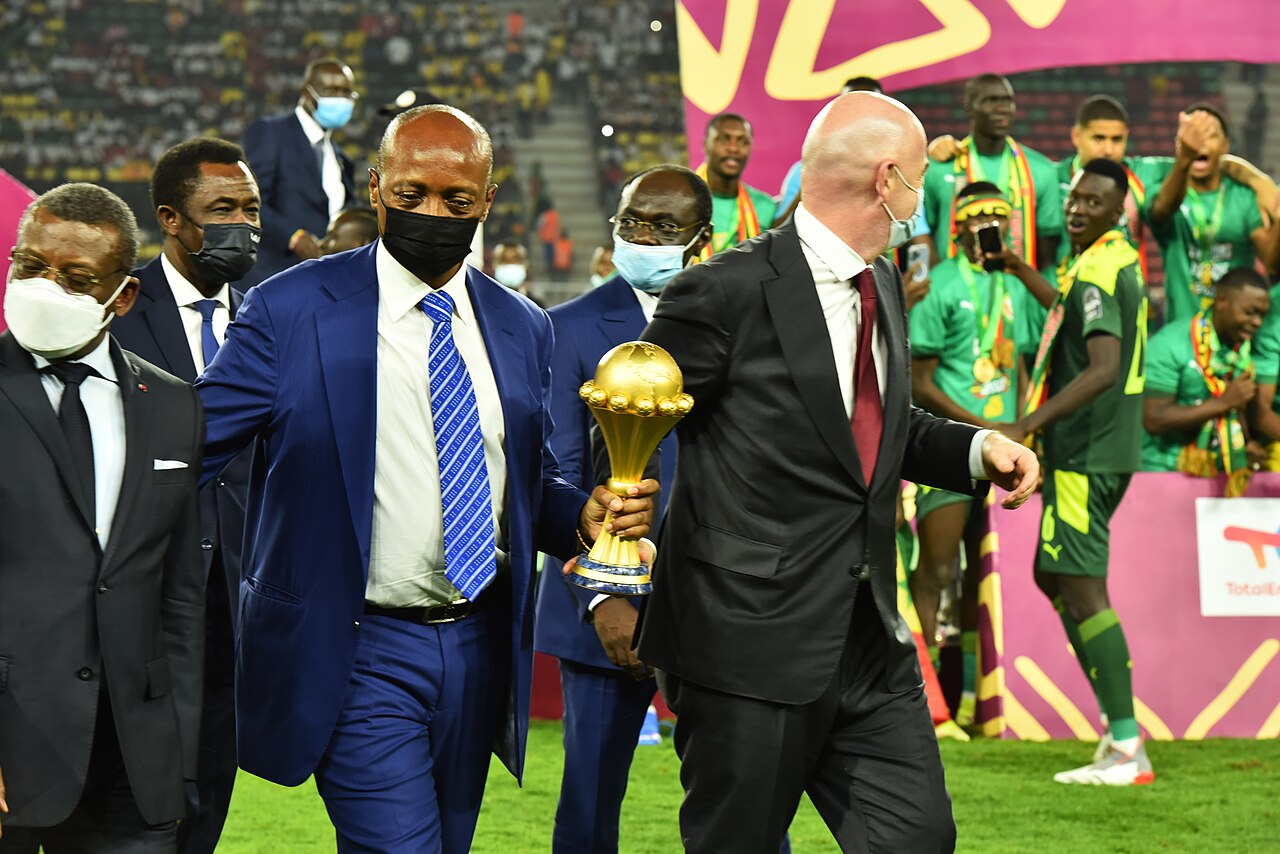
Gianni Infantino has lost the endorsement of the football association in his own country. Africa, meanwhile, is still standing behind him.
On September 30, the Swiss Football Association announced that it had withdrawn the support it gave Infantino’s 2027 FIFA presidential campaign in June. The decision followed what the association described as a comprehensive reassessment of recent developments in FIFA leadership, governance, transparency and decision-making. Switzerland joined a growing group of European associations—including England, Wales, France and Serbia—that have stepped away from the incumbent.
The contrast with Africa could hardly be sharper. In April, the Confederation of African Football said its 54 member associations had unanimously agreed to support Infantino for the 2027–2031 term. After a bruising summer dispute over FIFA’s abandoned commercial-investment proposal, CAF’s executive committee reconfirmed that support unanimously on August 6.
This is no longer simply a personality contest. It is a test of what Africa receives from football’s global system, what its leaders are prepared to demand, and whether solidarity with FIFA’s president will translate into greater influence—or merely preserve an old dependency.
The split in one table
| Actor | Current position | Why it matters |
|---|---|---|
| Swiss Football Association | Withdrew its Infantino endorsement on September 25; announced September 30 | A symbolically powerful rejection from Infantino’s home association |
| Several European associations | Have withdrawn support amid governance concerns | Creates space for an opposing candidate before the nomination deadline |
| CAF’s 54 member associations | Unanimously endorsed Infantino in April; CAF’s executive committee reconfirmed support in August | Represents just over one quarter of FIFA’s 211-member Congress |
| UEFA and Concacaf leadership | Seeking an independent reserve analysis and at least $10 million for each FIFA member during 2027–30 | Turns the governance dispute into a direct argument about development money |
| FIFA | Reviewing the funding proposal; no payout has been approved | The response will show whether reform pressure changes resource allocation |
Why Africa’s bloc matters
FIFA is not governed like a corporate board in which the largest markets automatically control the most votes. Under FIFA’s statutes, each member association has one vote at Congress. Nigeria and Morocco formally carry the same single vote as Germany or Switzerland.
That gives Africa unusual collective weight. CAF’s 54 associations account for roughly 25.6% of FIFA’s 211 members. A unanimous bloc cannot elect a president on its own, and an endorsement months before an election is not the same as a ballot cast. But no candidate can comfortably ignore a quarter of the electorate—especially if Europe is divided.
Key numbers
- 211: FIFA member associations.
- 54: CAF member associations backing Infantino in April 2026.
- 1: vote for each association at FIFA Congress.
- $10 million: minimum additional 2027–30 allocation proposed for every member by UEFA and Concacaf leaders.
- $540 million: the simple total that 54 CAF associations would receive if that proposal were approved and applied evenly. It is not an approved commitment.
The arithmetic explains why this conflict cannot be reduced to “Europe versus Infantino.” African associations have their own material interests: training centres, pitches, women’s leagues, youth academies, refereeing systems, administration and national-team logistics all depend on sustained investment. FIFA says its Forward 3.0 programme made around $8 million available to each association during the 2023–26 cycle, subject to programme rules and oversight.
For federations whose domestic commercial markets are smaller, global development funding can determine whether a project exists at all. That makes the relationship with FIFA both valuable and politically sensitive.
Support should not mean silence
CAF has thanked Infantino for his support for African football, and there are tangible reasons many associations may value the relationship. FIFA has increased development distributions during his presidency, expanded the men’s World Cup to 48 teams and widened Africa’s access to the tournament. African leaders also gained prominent places within FIFA’s political structure.
But gratitude is not a governance standard. The most consequential question is whether CAF’s endorsement came with clear, public conditions: stronger auditing, transparent commercial decisions, equitable competition revenue, independent oversight and measurable delivery in all 54 associations.
CAF’s August statement said it remained committed to global best practices in governance, transparency and auditing. That principle becomes meaningful only when African football leaders are prepared to apply it to an ally as firmly as they would to an opponent.

The money question has moved to the centre
The political pressure intensified after FIFA abandoned a proposal known as FIFA Forward Enterprise, which would have sought outside investment connected to FIFA competitions and commercial assets. Critics complained about limited consultation and questioned why an organisation projected to hold about $6 billion in reserves needed a private-capital structure to increase football-development funding.
UEFA president Aleksander Čeferin and Concacaf president Victor Montagliani then proposed that FIFA make at least $10 million available to every member association during the 2027–30 cycle, on top of existing Forward commitments. Their plan would cost about $2.1 billion. Infantino ordered a review and said no commitment should be made without verified financial modelling and formal approval.
For Africa, this debate should be about more than the headline amount. Equal distributions can be valuable, but equal cheques do not automatically create equal outcomes. The continent needs transparent project selection, public reporting, independent audits, protection from political interference and consequences when money fails to reach footballers and communities.
A timeline of the confrontation
| Date | Development |
|---|---|
| April 29, 2026 | CAF says all 54 member associations unanimously support Infantino’s re-election. |
| April 30 | Infantino formally announces his candidacy at FIFA Congress in Vancouver. |
| August 6 | CAF’s executive committee reconfirms support after controversy over the abandoned investment proposal. |
| September 18 | UEFA and Concacaf leaders request a reserve review and a $2.1 billion total distribution proposal. |
| September 25 | The Swiss association’s executive body votes to withdraw its endorsement. |
| September 30 | Switzerland publicly announces the decision as European opposition grows. |
| 2027 | FIFA’s 211 member associations are scheduled to elect the president for the 2027–31 term. |
What African associations should demand now
- Publish the terms of political support. Fans deserve to know which governance and development commitments informed CAF’s endorsement.
- Separate funding from loyalty. Associations should receive development resources under transparent rules, not because they backed an incumbent.
- Track every major project publicly. Budgets, contractors, deadlines and completion evidence should be accessible.
- Protect dissent inside CAF. A unanimous announcement should not prevent individual associations from reassessing new evidence before the ballot.
- Demand African influence beyond election season. Support should produce a stronger voice on calendars, player welfare, women’s football, commercial rights and competition design.
The Afridiaspo takeaway
Africa’s football vote is powerful precisely because it is not decorative. The continent can help determine who leads FIFA, shape the terms of global development funding and force governance questions onto the agenda.
That power is weakened when unity becomes automatic loyalty. Europe’s withdrawals do not prove that every criticism is correct, just as CAF’s endorsement does not prove that Infantino has earned another term. The responsible position is more demanding: examine the record, publish the conditions, protect the independence of every association and make the candidate earn all 54 votes again when the ballot arrives.
Sources
- Swiss Football Association: withdrawal of support, September 30, 2026
- CAF: unanimous member-association endorsement, April 29, 2026
- CAF executive committee statement, August 6, 2026
- FIFA: Infantino announces 2027 candidacy
- FIFA Statutes: each member has one vote at Congress
- Reuters: Swiss association withdraws endorsement
- Reuters: FIFA funding review and $2.1 billion proposal
Europe Is Walking Away From Infantino. Africa Is Holding the Line.