Kente Deserves More Than a Colour Match
— Afridiaspo Editorial
Afridiaspo’s Fashion Police explores kente craftsmanship, provenance and styling, with archival textile images and a practical buying checklist.
Fashion Police | Afridiaspo commentary
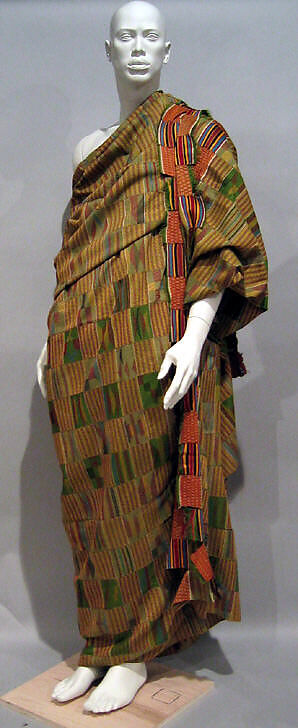
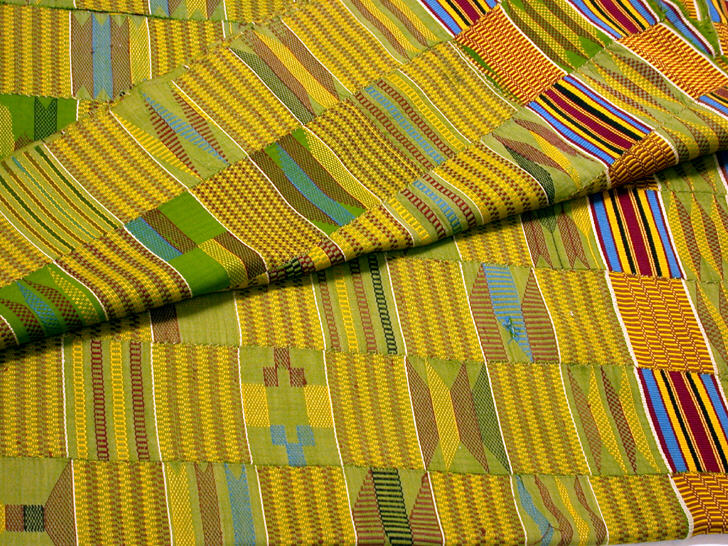
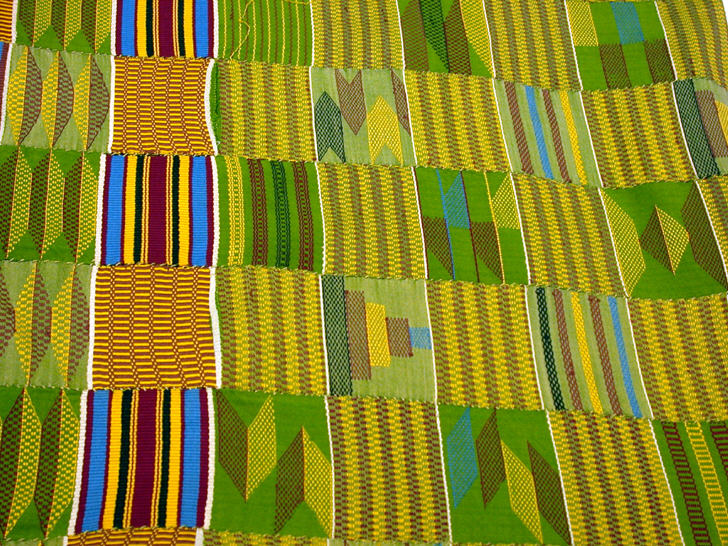
A nineteenth-century kente cloth in New York’s Metropolitan Museum of Art offers a useful way to judge an outfit: look past the first burst of colour. Its design is built from narrow woven strips joined into a larger cloth. The beauty belongs to the construction as well as the pattern.
That distinction should matter when African heritage becomes the centrepiece of a contemporary look. A bright geometric surface can make a strong fashion statement. But what, exactly, are we wearing—and whose work are we recognising?
For this Sunday’s Fashion Police, the verdict begins with a request: give the cloth as much attention as the photograph. A successful look can be imaginative, playful and modern while remaining precise about its materials and origins.
The heritage is a craft, not a colour palette
Ghana’s craftsmanship of traditional woven textile kente entered UNESCO’s Representative List of the Intangible Cultural Heritage of Humanity in 2024. The inscription concerns a living practice; it is not a new announcement this week.
UNESCO describes cloth woven in strips on horizontal looms from silk, cotton or rayon. Designs and finished textiles can carry names drawn from proverbs, sayings and social situations. Knowledge travels through families, apprenticeships and educational institutions. The recognition therefore points to skills and relationships, as well as finished objects.
Our editorial reading is straightforward: if a garment is being sold through a heritage story, its description should tell us something about the people and processes behind it. A generic “African-inspired” label leaves too much unexplained.
One tradition cannot stand in for a continent
The Met’s nineteenth-century Asante-Akan example is catalogued as cotton and silk and associated with Kumasi, Ghana. A separate Ewe cloth dated around 1930–50 demonstrates another strand of kente practice. Its museum description draws attention to evenly constructed strips and an intricate repertoire that includes fish, elephants, a camera and interlocking hands.
Those records are a reminder to resist an all-purpose reading of “African print”. Be specific where evidence permits: the textile tradition, the maker or label, the material, and the place of production. If those details remain unknown, leave them unknown rather than assigning an invented cultural meaning.
The Met’s early-twentieth-century Asante prestige cloth also uses silk and cotton, but its curatorial discussion centres on the technique producing an undulating white design. Even within a tradition, a different cloth can ask the eye to do different work.
Our styling verdict: give the textile room
For a look built around a complex textile, we would begin with silhouette. Choose where the eye should land: an uninterrupted panel, a carefully shaped sleeve, a wrap, or a single accent. Then ask whether the cut helps that choice read clearly.
This is a styling preference, not a rule forbidding exuberance. Pattern mixing can be excellent. The question is whether the proportions and placement feel intentional. Several busy surfaces deserve a stronger compositional decision than simply adding more accessories.
Next, test the outfit in motion. Sit down, walk, lift your arms and check the closure. Inspect how a seam crosses the design and whether the garment pulls where you want it to fall cleanly. A good photograph should be the result of a wearable outfit, rather than the only position in which it works.
Before buying or commissioning: ask better questions
| Check | Ask | Editorial reason |
|---|---|---|
| Construction | Is the design woven into the textile, printed onto it, or produced by another process? | Describe the object accurately before judging its heritage claim. |
| Attribution | Who made the cloth, and who designed or tailored the garment? | Keep different kinds of creative labour visible. |
| Material | What fibres are listed, and what care does the maker recommend? | Plan for wearing the garment beyond one occasion. |
| Fit and placement | Can I see the front, back, seams and garment in movement? | Assess the cut as well as the photograph. |
| Meaning | Who supplied the pattern’s name or interpretation? | A cultural explanation deserves a traceable source. |
This checklist is an editorial starting point, not an authentication certificate. A photograph alone cannot establish a maker, fibre content or production method. Seek a clear description and supporting information from the seller or maker.
A printed interpretation can still be attractive and honestly described. The problem arises when its presentation claims a weaving process or a provenance that has not been established. Style and accuracy should be able to share the same label.
What diaspora dressing can carry forward
For readers assembling a wardrobe across countries and cultures, provenance can become part of the outfit’s story. Keep the maker’s name, a material description and any explanation they provide. Credit the designer when sharing photographs. When commissioning a look, discuss the cloth before agreeing on the cut.
That approach leaves space for new shapes and personal expression. Heritage does not require us to dress identically. It asks us to take the source material seriously enough to know what we are transforming.
Our final verdict: the most convincing heritage look is one you can explain with the same care you used to put it together. Let the cut draw attention. Let the credit tell the rest.
Reporting note: This is original fashion commentary grounded in UNESCO and museum documentation, not a review of a named contemporary designer or seller. Historical images are labelled and credited throughout. Sources checked October 4, 2026.