Malawi Bans Raw Mineral Exports to Boost Local Processing and Economic Growth
Malawi has banned the export of raw minerals to promote local processing and increase economic value. The policy aims to create jobs, boost revenue, and reduce reliance on foreign processing systems. It reflects a wider shift across Africa toward value-added production and industrial growth.
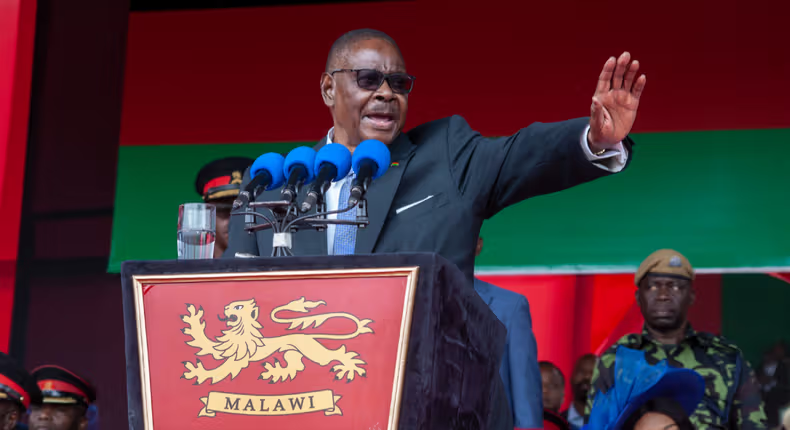
Malawi has taken a bold step toward economic transformation by banning the export of raw minerals, a move aimed at strengthening local processing and increasing the value of its natural resources. The decision signals a shift in strategy as the country joins a growing list of African nations seeking to move beyond raw material exports. The policy, announced by the Malawian government in 2026, targets key minerals including gemstones, rare earth elements, and other extractive resources that have historically been exported in unprocessed form. For years, Malawi, like many African countries, has exported raw minerals while the real value was captured abroad.
The ban answers a critical question: why now? Global demand for processed minerals is rising, especially with the growth of technology and renewable energy industries. Malawi is positioning itself to benefit more from this demand by ensuring that minerals are processed locally before being exported. What does the ban mean in practice? Mining companies operating in Malawi will now be required to establish or partner with local processing facilities. Instead of shipping raw materials out of the country, they must refine, cut, or process minerals within Malawi’s borders. Who is affected by this policy goes beyond large corporations. Small-scale miners, exporters, and traders will also need to adjust to the new system. While this may create short-term challenges, the long-term goal is to build a stronger, more sustainable mining sector that benefits local communities.
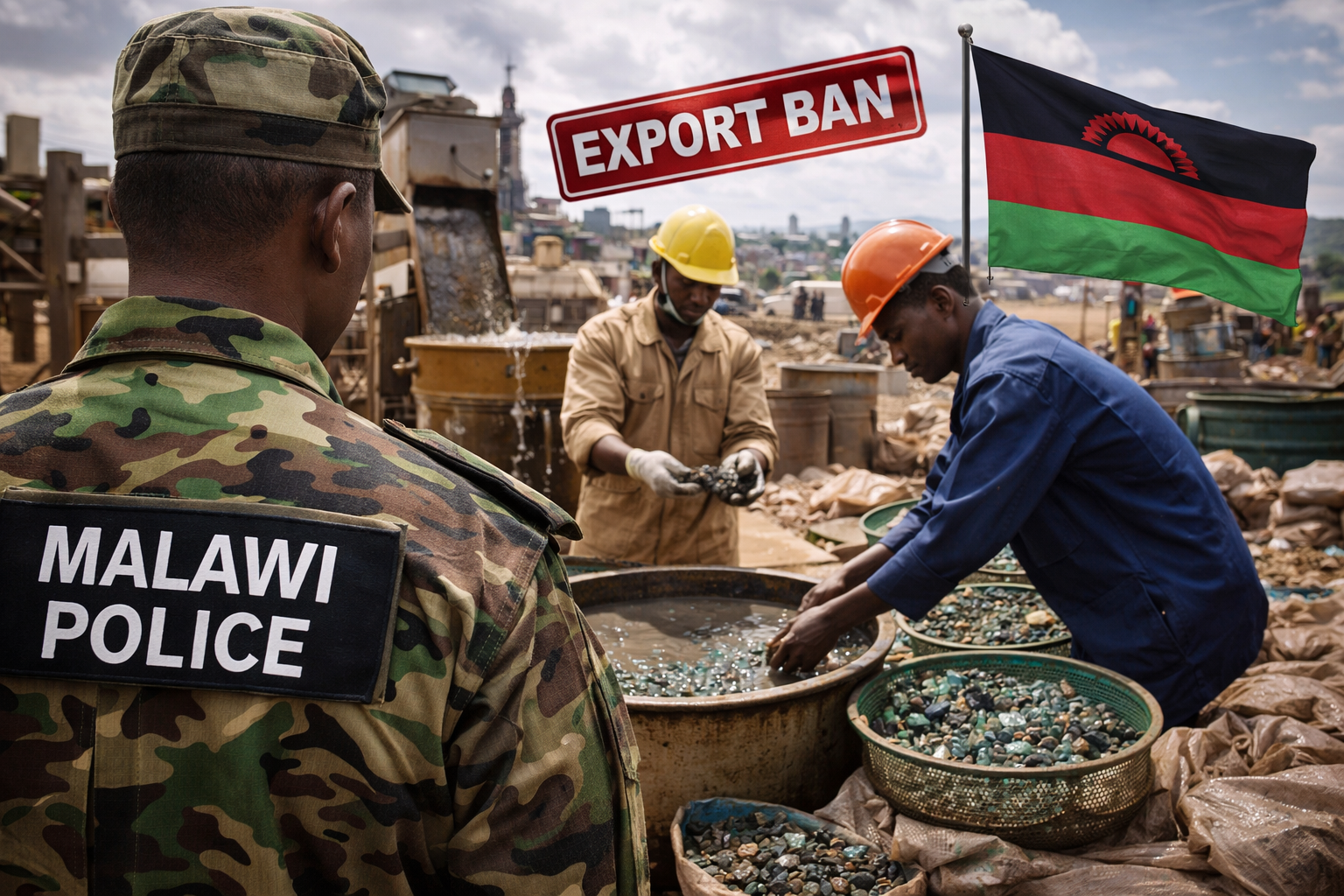
Where will the impact be felt most? Regions rich in mineral resources are expected to see increased industrial activity. New processing plants, job opportunities, and supporting industries such as transportation and logistics are likely to emerge as the policy takes effect.
How will this boost the economy? By processing minerals locally, Malawi can increase export value, generate higher revenues, and create jobs. It also reduces dependence on foreign processing systems and strengthens the country’s industrial base.
This move aligns with a broader trend across Africa. Countries like Zimbabwe, Tanzania, and the Democratic Republic of Congo have introduced similar policies to encourage value addition and reduce the export of raw resources. The continent is gradually shifting from being a supplier of raw materials to a producer of finished goods.
However, challenges remain. Building processing infrastructure requires investment, technical expertise, and stable policies. There is also the risk of short-term revenue losses if exports slow down during the transition period.
Despite these challenges, Malawi’s decision marks a significant turning point. It reflects a growing understanding that true economic growth comes not just from what a country produces, but from how it processes and adds value to its resources. If successfully implemented, the policy could reshape Malawi’s mining sector and serve as a model for other nations.
Malawi Bans Raw Mineral Exports to Boost Local Processing and Economic Growth