Five African Men Showing What Lasting Achievement Looks Like
Five African men whose sporting milestones and work beyond business open a conversation about achievement, opportunity and lasting legacy.
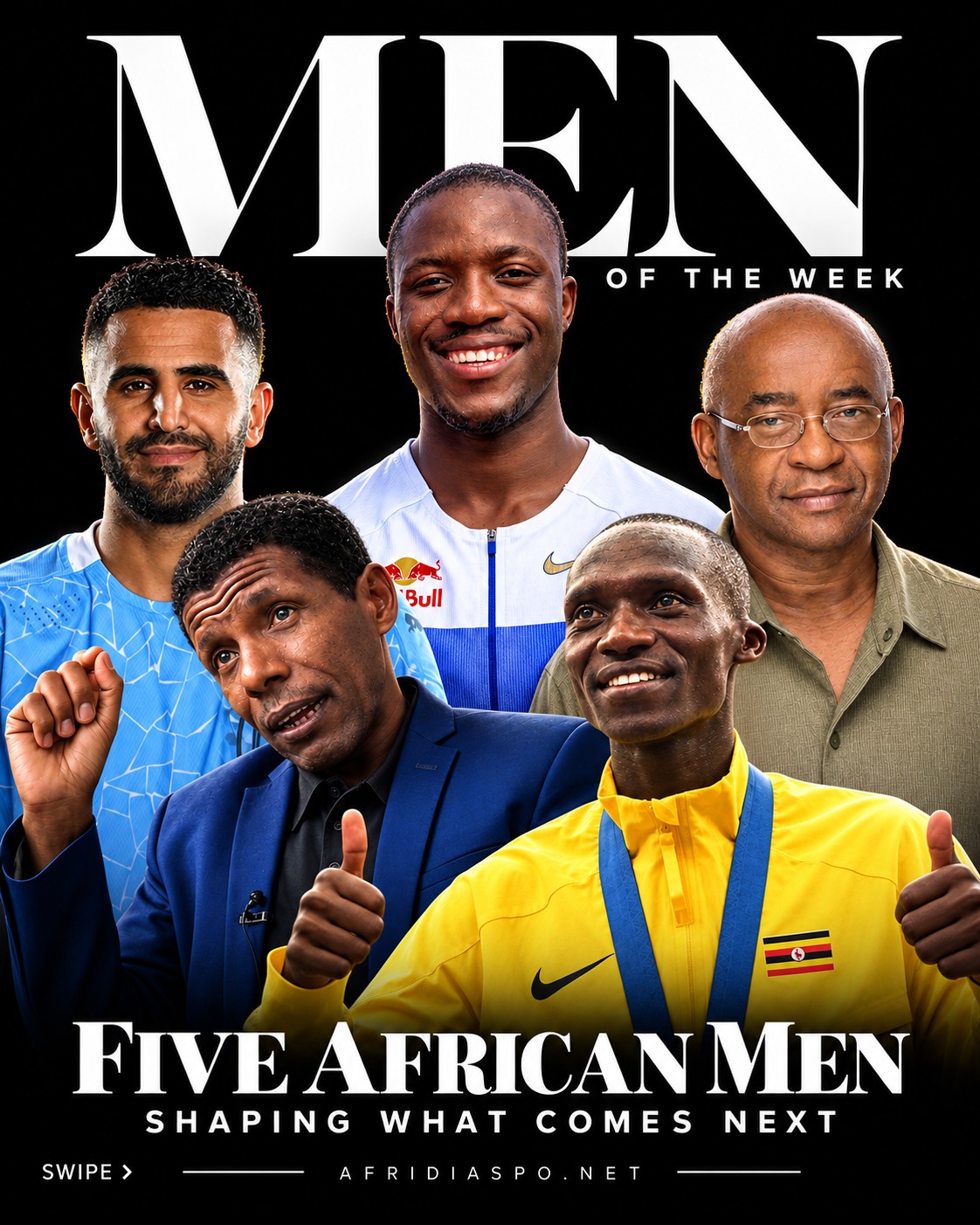
Men of the Week | November 9, 2026
Nineteen point four six seconds. At the Paris Olympics on August 8, 2024, that was enough for Letsile Tebogo to win the men's 200 metres and secure Botswana's first Olympic gold medal. The result was brief enough to watch twice in a minute. Its place in the country's sporting history will last much longer.
Our November 9 selection considers different kinds of lasting achievement. Riyad Mahrez's football career crosses teams and competitions. Tebogo and Joshua Cheptegei have written distinct chapters in Olympic history. Haile Gebrselassie's rivalry with Paul Tergat still rewards revisiting decades later. Strive Masiyiwa's work beyond business opens another question: how can people help build opportunities they will not be the ones to use?
These are established milestones, rather than a claim that five fresh breakthroughs happened this week. Together, the profiles offer a conversation about achievement over time: the moment of arrival, the discipline of returning, and the institutions that can outlast an individual career.
Riyad Mahrez: excellence across different teams


When Manchester City announced Mahrez's departure for Al-Ahli in July 2023, its account recorded five years, 236 appearances, 78 goals and 11 major trophies. He left after the club's treble-winning 2022–23 season. Those figures describe a particular chapter, not a running total of his career.
The club's departure announcement also places his arrival from Leicester City in 2018. Moving between clubs involves more than changing a shirt. A player's skill must function within different combinations of teammates, expectations and tactical demands. Sustained contribution is a different test from a single spectacular performance.
Mahrez's significance to Algerian supporters also extends beyond club football. His place in Algeria's 2019 Africa Cup of Nations-winning team belongs to a separate national story, documented in FIFA's profile of his career. Club honours and international achievement can meet in one player without becoming the same experience for supporters.
For diaspora readers, that overlap is familiar: attachment can travel across borders without erasing national belonging. Mahrez's career gives the conversation a concrete sporting shape. The value lies in the work recorded across those settings, rather than in treating geography as a barrier that must be dramatically overcome in every retelling.
Letsile Tebogo: Botswana's place in sprint history
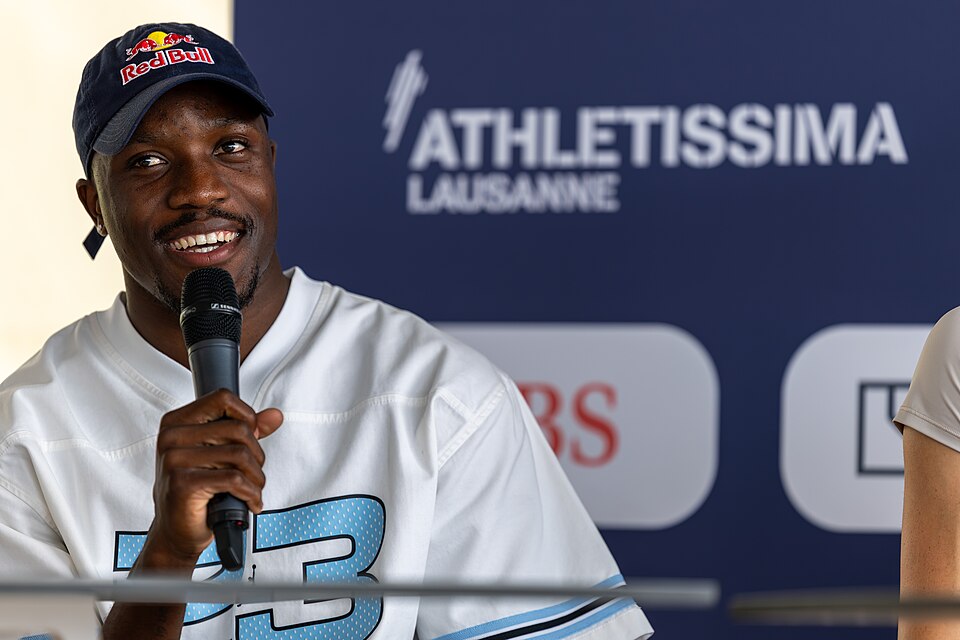

Tebogo won the Paris 2024 Olympic 200 metres in 19.46 seconds, an African record at the time. More importantly for Botswana, he became the nation's first Olympic champion in any sport. World Athletics' race report records the result and its historical significance.
There are two different facts here. A fast time places a performance in the history of an event. A first gold medal changes a country's Olympic record. Neither requires us to diminish the athletes who came before Tebogo or to suggest that Botswana only became visible when an international audience noticed it.
His result also broadens the picture of African athletics. The continent's sporting stories include sprinting as well as endurance events, and many distinct national traditions. Placing Tebogo alongside Ugandan and Ethiopian distance champions should make that variety clearer, rather than flatten it into a claim about a single African sporting identity.
The practical question after a historic medal is how opportunity can deepen: who has access to coaching, competition and facilities, and how can promising athletes continue developing? A champion can make the possibilities vivid. The work of widening access requires more people and a longer timetable than one final. Tebogo's gold offers a starting point for that discussion, not a substitute for it.
Strive Masiyiwa: opportunity beyond a business biography
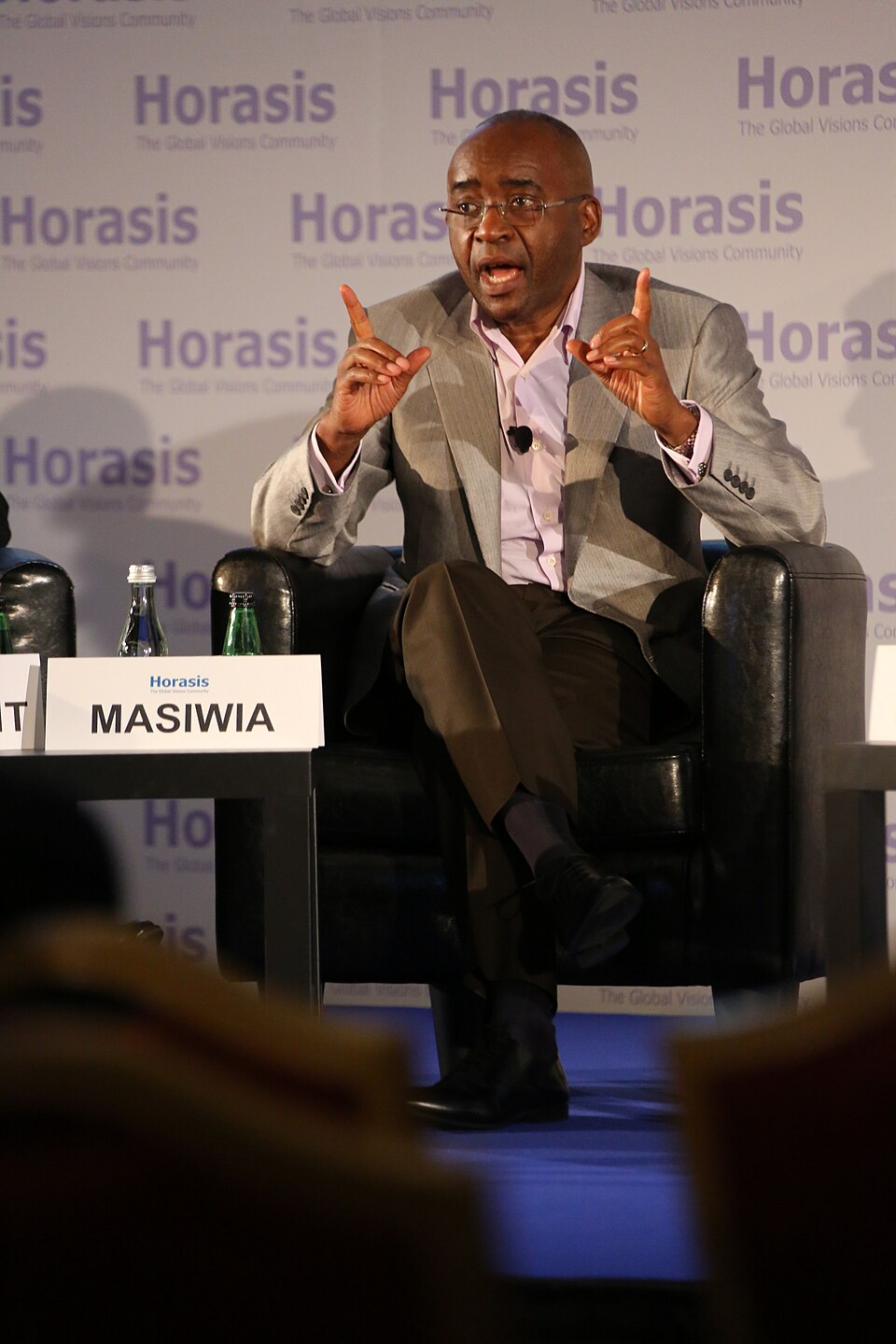

Masiyiwa appeared in our October 12 selection through his technology and infrastructure work. This edition returns to a different part of his record: education and the coordination of public-health efforts.
Higherlife Foundation states that Tsitsi and Strive Masiyiwa founded it in 1996, during Zimbabwe's HIV/AIDS epidemic. Its stated work connects education, health and communities. Naming both founders matters: the institution's history should not be rewritten as a solitary businessman's achievement.
A separate chapter emerged during the coronavirus pandemic. The World Bank's biography records his May 2020 appointment as an African Union special envoy to help coordinate private-sector efforts to procure medical supplies. That was a specific role in a particular emergency; it is not a claim that one person managed the continent's entire response.
These examples shift the focus from personal success to the organisation of support. A foundation and an emergency procurement effort involve partners, staff and institutions. Their goals and results should be examined on that basis. Public profiles can identify a leader, but they should not make the collective work disappear.
For diaspora communities, the relevant question is how a contribution becomes dependable. Supporting education or health can require continuity, clear priorities and accountable organisations. A prominent founder may attract attention; the lasting test concerns what people can access after that attention moves elsewhere.
Joshua Cheptegei: the clock and the championship
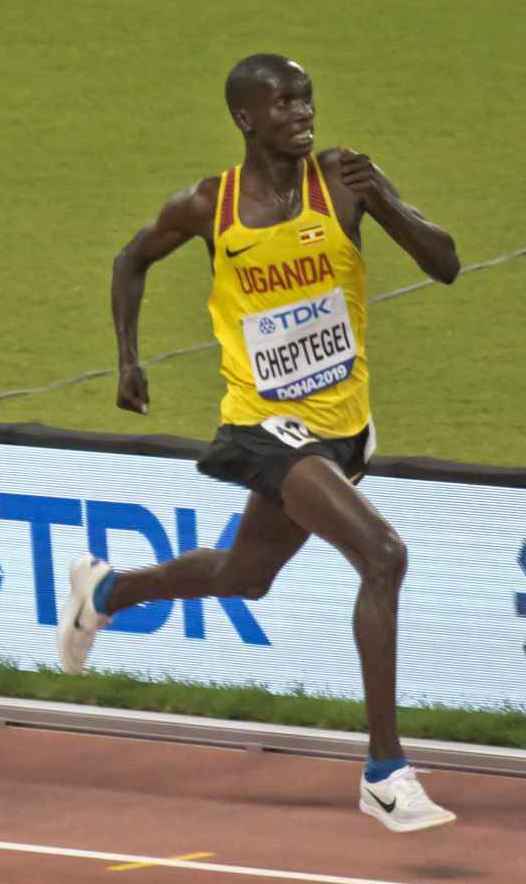

On October 7, 2020, Uganda's Joshua Cheptegei ran 26:11.00 for 10,000 metres in Valencia. World Athletics subsequently ratified the performance as a world record. Four years later, a different race added a different distinction.
At the Paris Olympics on August 2, 2024, Cheptegei won 10,000 metres gold in 26:43.14, setting an Olympic record. The official race report records that he had already won three world titles before securing this Olympic crown.
The two times help explain why a career cannot be understood through a personal-best list alone. A record performance measures speed over a distance. A championship places an athlete against a particular field under the conditions of that race. Winning and running one's fastest are related ambitions, but they are not identical achievements.
Cheptegei's record allows readers to appreciate both. His Paris victory did not need to be faster than Valencia to matter. It answered a different competitive question. That is a useful corrective to the habit of demanding a new record whenever an outstanding athlete competes.
His story also deserves its Ugandan specificity. It belongs alongside other African achievements without being absorbed into somebody else's national tradition. Recognition becomes stronger when it names the athlete, the country, the event and the date accurately.
Haile Gebrselassie: why a rivalry still matters
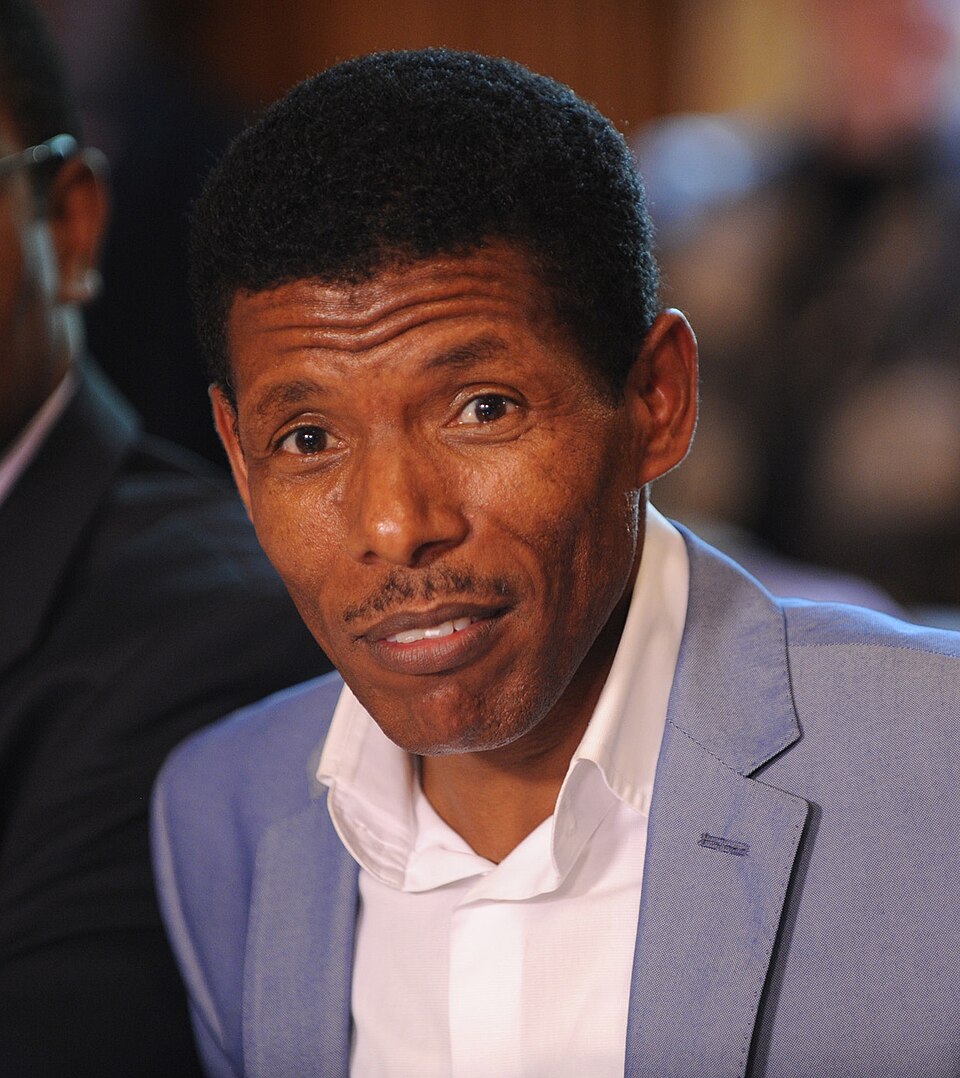

On September 25, 2000, Ethiopia's Haile Gebrselassie and Kenya's Paul Tergat finished the Olympic 10,000 metres separated by just 0.09 seconds. Gebrselassie retained the title he had won at Atlanta in 1996. World Athletics' historical account revisits the Sydney finish and the rivalry behind it.
The margin is small enough to make the result feel precarious even with the outcome long settled. Yet reducing the race to a number would miss why it endures. Two exceptional competitors forced each other towards a finish that neither could control comfortably. The runner who took silver remains essential to understanding the winner's achievement.
That makes this a richer legacy than a solitary legend. Sporting excellence develops in competition, and a rival can help define the level a champion must reach. Remembering Tergat alongside Gebrselassie preserves the contest rather than turning history into a one-person victory speech.
Placed beside Tebogo and Cheptegei, Gebrselassie offers a sense of time. The athletes compete in different events and eras; there is no need to rank their importance against one another. Each performance can invite a new generation to discover an older race, and remind long-time supporters that African sporting history contains many chapters worth keeping visible.
A chronology worth keeping
| Date | Milestone | Why it matters |
|---|---|---|
| 1996 | Tsitsi and Strive Masiyiwa establish Higherlife Foundation | An institutional approach to education and community support |
| September 25, 2000 | Gebrselassie retains Olympic 10,000m gold | A rivalry decided by 0.09 seconds |
| October 7, 2020 | Cheptegei runs 26:11.00 in Valencia | A ratified 10,000m world record |
| 2023 | Mahrez leaves Manchester City after its treble-winning season | The close of a documented five-year chapter |
| August 2, 2024 | Cheptegei wins Olympic 10,000m gold | A championship victory with an Olympic record |
| August 8, 2024 | Tebogo wins Olympic 200m gold | Botswana's first Olympic title in any sport |
The Afridiaspo takeaway
A great moment can be measured in seconds. A career takes years, and an institution's value may take longer to establish. These men invite us to look at all three timescales without confusing them.
For Africans and the diaspora, the strongest recognition holds onto the details: Botswana's first gold, Uganda's championship victory, an Ethiopian–Kenyan rivalry, Algeria's connection to a travelling football career, and the shared founding of a Zimbabwean institution. The stories become more powerful when they remain specific. What lasts is not just a famous name, but a record that others can revisit, question and build upon.
Editorial note: This selection recognises established careers and dated milestones, not achievements all made during this week. Featured cover: supplied Afridiaspo illustrative editorial composite, not a documentary group photograph. Individual photographs and their licences are credited above.
Five African Men Showing What Lasting Achievement Looks Like