Nicolas Batum’s Long Way Home After 18 NBA Seasons
— Afridiaspo Sports Desk
Nicolas Batum retires after 18 NBA seasons. Explore the Cameroon–France family story, seven international medals and adaptability behind his career.
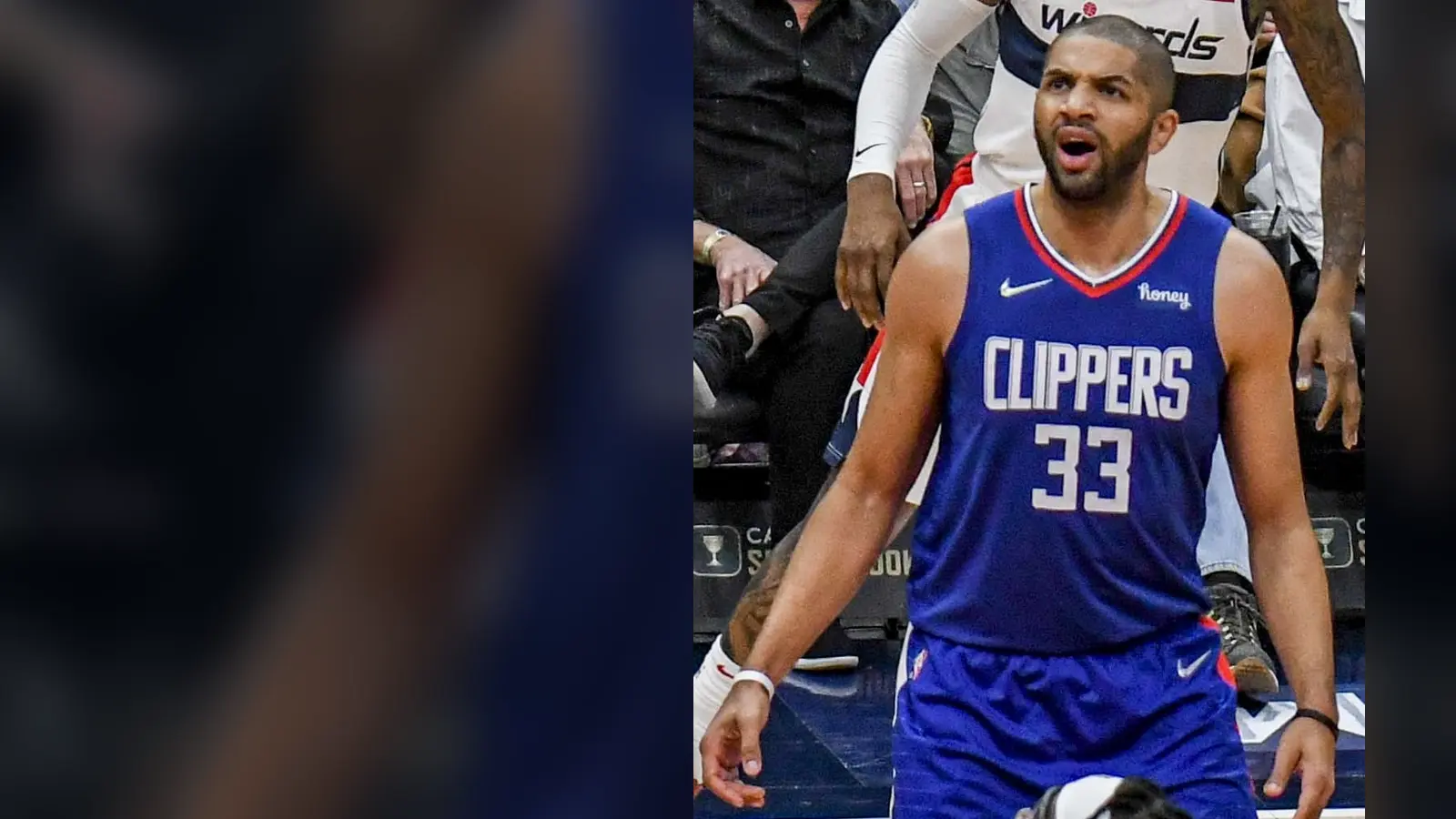
When Nicolas Batum said it was time to go home, the word carried more than one address.
Home was France, where he grew up, learned the game and wore the national jersey for 15 years. It was the family he thanked after a professional life that had kept him moving since adolescence. It was also the Cameroonian line running through his father, Richard—the basketball player whose journey to France began the family story Nicolas would carry across Europe, four NBA franchises and four Olympic Games.
On September 21, 2026, Batum announced his retirement at 37. “After 21 years, it’s time for me to go home,” he said in a farewell video. The numbers explain the length of the journey: 18 NBA seasons, 1,205 games, 1,842 three-pointers and seven senior medals for France.
But the numbers do not fully explain why coaches kept finding a place for him. Batum lasted because he learned how to be useful when the ball was not in his hands—and how to change before the game forced him out.
The career in one view
| Milestone | Record | Why it matters |
|---|---|---|
| Professional career | 21 years | From Le Mans in France to nearly two decades in the NBA. |
| NBA career | 18 seasons, 1,205 games | Longevity across changing teams, roles and eras. |
| Career averages | 9.6 points, 4.7 rebounds, 3.0 assists | A versatile contribution rather than a scoring-only career. |
| Three-pointers | 1,842 | Tied for 29th in NBA history when his retirement was announced. |
| France senior career | 15 years, seven medals | A defining international career across Olympics, World Cups and EuroBaskets. |
Before the NBA: the son of a Cameroonian professional
Batum was born in Lisieux, France, in December 1988. His father, Richard, had moved from Cameroon to play professional basketball in France. In 1991, Richard died after collapsing during a game. Nicolas was two years old and was present with his mother.
That loss could easily be reduced to a dramatic origin story. Batum himself described something more complicated: basketball connected him to his father, but it also carried the memory of the day his father died. In a 2025 interview with People, he explained that the subject was difficult at home and became harder to confront as he pursued the same profession.
His rise was nevertheless rapid. Batum developed at Le Mans, became one of Europe’s leading young prospects and entered the 2008 NBA Draft. Houston selected him with the 25th pick, then traded his rights to Portland on draft night.
The young forward arriving in Oregon already represented a layered basketball geography: born and trained in France, connected to Cameroon through his father and preparing to build his adult career in the United States. Those identities did not cancel one another. Together, they shaped the route.

Portland: where versatility became a profession
Portland gave Batum his first NBA platform. He was not built around one spectacular skill. Instead, his value came from doing several jobs well enough to hold a lineup together: defending wings, moving the ball, rebounding, cutting, finishing in transition and stretching the floor.
That profile can be difficult to summarize in a highlight reel. It is also the kind of profile that helps a player survive. Stars are paid to control games; complementary players last when they can improve a possession without demanding control of it.
Batum spent seven seasons with the Trail Blazers, from 2008 to 2015. His Portland years included playoff basketball and a growing reputation as a connector—the player who could make the extra pass, guard across positions and cover a weakness elsewhere in the lineup.
His most memorable Portland contribution may even be an assist: the pass to Damian Lillard before Lillard’s famous series-winning shot against Houston in 2014. The final shot belonged to Lillard. Batum’s touch was the bridge that made it possible.
Charlotte: the responsibility—and weight—of a larger role
In 2015, Batum moved to Charlotte, where his responsibilities expanded. He handled more of the offense, created for teammates and became a higher-paid central figure rather than a developing piece.
The move produced some of his strongest all-around seasons. It also exposed the unforgiving side of NBA expectation. When a player receives a major contract, every injury, slump and team failure can become attached to his name, even when the reasons are shared.
By the end of his Charlotte tenure in 2020, Batum’s reputation had fallen sharply. His contract was discussed more often than his skill set. For many veterans, that is the point where the league quietly moves on.

The Clippers reinvention
Los Angeles offered Batum a smaller role and, eventually, a second basketball life.
With the Clippers, he no longer had to justify a franchise-sized contract or carry a large scoring burden. He could defend, space the floor, pass quickly and understand what a possession needed. The change revealed a useful truth about long careers: reinvention is not always about adding more. Sometimes it is about identifying the few things a team still needs and performing them without ego.
His later NBA years included a 2023 trade to Philadelphia and a 2024 return to the Clippers. In his final season, NBA.com lists him at 4.0 points, 2.5 rebounds and 0.9 assists per game. Those modest box-score numbers do not explain why an 18th-season veteran still appeared in 74 games. His value was situational: defensive positioning, rapid decisions, trusted spacing and the experience to recognize a play before it fully developed.
Batum’s NBA route
- 2008–2015: Portland Trail Blazers
- 2015–2020: Charlotte Hornets
- 2020–2023: Los Angeles Clippers
- 2023–2024: Philadelphia 76ers
- 2024–2026: Los Angeles Clippers
France: the jersey he called his greatest honour
The NBA explains Batum’s employment. France explains a different part of his identity.
He played four FIBA World Cups, four EuroBaskets and four Olympic Games. His senior medal collection reached seven: EuroBasket gold in 2013, silver in 2011 and bronze in 2015; World Cup bronze in 2014 and 2019; and Olympic silver in Tokyo and Paris.
FIBA described his international role simply: guard the opponent’s best player, rebound, block shots and do whatever coach Vincent Collet required. After the Paris 2024 Olympic final, Batum retired from international basketball and called wearing the French jersey the most beautiful experience of his career.
That Paris run captured his enduring usefulness. At age 35, he averaged 7.7 points, 4.2 rebounds and 2.7 assists. In the final against the United States, he finished with five points, eight rebounds and four assists. France lost, but Batum left the national team with a second consecutive Olympic silver medal.
Seven medals, one international career
| Year | Competition | Medal |
|---|---|---|
| 2011 | EuroBasket | Silver |
| 2013 | EuroBasket | Gold |
| 2014 | FIBA World Cup | Bronze |
| 2015 | EuroBasket | Bronze |
| 2019 | FIBA World Cup | Bronze |
| Tokyo 2020 | Olympic Games | Silver |
| Paris 2024 | Olympic Games | Silver |
The Cameroon–France story must be told carefully
Batum played internationally for France, not Cameroon. His national-team record belongs to France and should not be rewritten to make a simpler African claim.
But it would also be incomplete to erase the Cameroonian father whose migration and basketball career formed part of Batum’s life. Diaspora identity is often held in layers: citizenship, upbringing, family origin, cultural memory and professional opportunity do not always point to one place.
Batum’s career is therefore not evidence that African systems produced an NBA veteran they can claim entirely. It is evidence of what becomes possible when talent meets organized youth development, professional coaching, stable competition and access to international scouting. The lesson for African basketball is institutional, not merely emotional.
Young players across the continent should not need an exceptional migration story to find high-level development. Domestic leagues, academies, school competitions, coaching pathways and player welfare must be strong enough to turn potential into a career at home—and prepare those who move abroad without disconnecting them from where their stories began.
Why his style matters to the next generation
Basketball culture naturally celebrates points. Batum’s longevity offers a different curriculum.
- Learn more than one position. Versatility creates options when athletic advantages narrow.
- Make fast decisions. Passing, spacing and reading the floor can keep a player valuable without high usage.
- Defend without needing applause. Coaches trust players who solve problems away from the ball.
- Accept a changing role. A smaller assignment can extend a career when it is performed with precision.
- Separate identity from statistics. A difficult season or contract dispute does not have to become the final definition.
The long way home
Batum leaves without an NBA championship and without the scoring totals that usually dominate farewell montages. His legacy is built differently: 18 seasons of adaptation, seven medals for France, a place among the league’s most prolific three-point shooters and a reputation for making talented teams function more smoothly.
For Africans and the diaspora, the emotional centre sits deeper. Richard Batum left Cameroon to play in France. His son inherited both the game and the grief attached to it, then carried that inheritance through a career long enough for his own children to watch him play.
Going home does not close that circle neatly. Real family stories rarely do. But Nicolas Batum has reached the end on his own terms—after giving basketball far more years than the two-year-old boy in that French gym could ever have imagined.
Sources and image credits
- Reuters: Nicolas Batum announces retirement, September 21, 2026
- NBA.com: Nicolas Batum career profile and statistics
- FIBA: Nic Batum’s international career and seven medals
- FIBA: Paris 2024 player statistics
- People: Batum on his father Richard and the family story, April 24, 2025
- Featured photograph: All-Pro Reels, CC BY-SA 2.0
- 2011 photograph: PierreSelim, CC BY 3.0
- 2019 photograph: Erik Drost, CC BY 2.0