OIL SHOCK EXPOSES AN OPPORTUNITY FOR LIBYA
— Mary Ene
The Iran war and the closure of the Strait of Hormuz have triggered the worst oil supply shock in history, with prices surging above $115 per barrel and global energy markets in crisis. Analysts and policymakers are now arguing that Libya — sitting on Africa's largest proven oil reserves and produc…
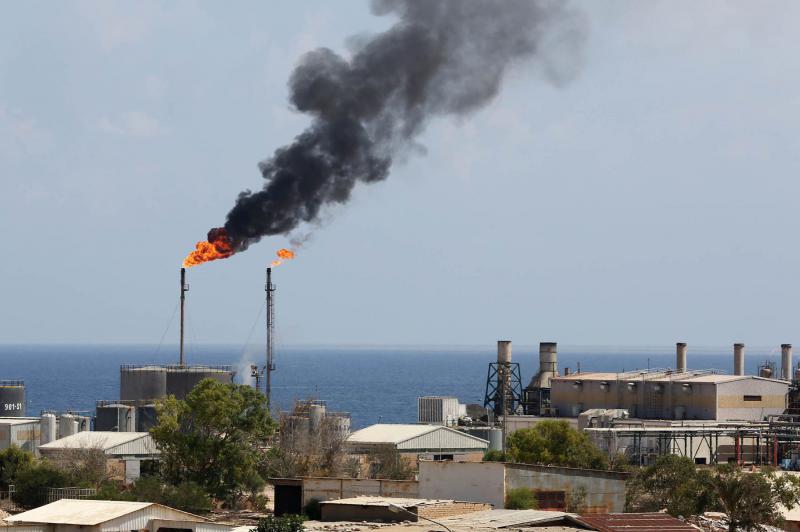
While the world scrambles for oil, Africa's largest reservoir of untapped crude sits largely idle and the Iran crisis may be exactly the shock needed to finally unlock it.
Libya holds 48 billion barrels of proven oil reserves, the largest in Africa, and before years of post-Gaddafi instability was producing roughly 1.6 million barrels per day. With renewed political stability and international investment, analysts argue production could exceed 2 million barrels per day. In today's market where oil surged above $115 per barrel following the Strait of Hormuz closure, which has cut off roughly a fifth of global oil supply that kind of incremental supply would be genuinely market-moving.
The case for a Libyan diplomatic push is not merely economic. Libya offers what neither Iran nor Venezuela can in the current geopolitical moment: the absence of ideological hostility to American engagement. Its fragmented rival factions share one powerful common interest restoring oil production and the revenue it generates. That shared incentive, analysts writing in The Hill have argued, creates the foundation for a pragmatic diplomatic breakthrough that Washington has so far failed to pursue.
The United States has deployed its Strategic Petroleum Reserve aggressively since the conflict began, releasing approximately 172 million barrels as part of a coordinated 400-million-barrel drawdown with IEA members. But SPR releases are finite. US reserves have already been depleted to roughly 243 million barrels. Temporary sanctions relief for other oil producers has also been explored. None of these measures address the underlying supply gap created by the Strait of Hormuz closure.
Libya's geography amplifies its strategic value. Unlike Gulf oil, which must transit the Strait of Hormuz or take expensive alternative routes, Libyan crude is Mediterranean-facing. It connects directly to European refiners without passing through any warzone or contested chokepoint. At a moment when European energy security is under its most severe strain since the 1970s, and with the ECB warning of stagflation risks across the continent, a reliable proximate supply source would be strategically transformative.
The obstacle is Libya itself. Since NATO's 2011 intervention ended the Gaddafi era, rival governments and militia forces have repeatedly disrupted production and deterred investment. A durable political settlement has proven elusive. But the cost of that failure measured now in oil above $115 per barrel, in diesel shortages spreading from Asia to Europe, in the IMF's downgraded global growth projections may finally be creating the conditions under which all parties, internal and external, have enough reason to try again.