Suspected Methanol Poisoning Kills at Least 48 in Ondo
— Afridiaspo Editorial Desk
At least 48 people have died in Ondo State after drinking suspected methanol-tainted local alcohol. Authorities say 182 people were affected.
AKURE — At least 48 people have died in Ondo State after consuming a locally brewed alcoholic mixture suspected of containing methanol, authorities said, in one of Nigeria’s deadliest recent incidents involving contaminated drink.
The illnesses were reported in the Odigbo and Irele areas. Ondo State health commissioner Banji Ajaka said 182 people were affected and about 100 had received treatment. Victims reportedly consumed a herbal alcoholic drink commonly known as “Monkey Tail.”
The exact source of the contamination remains under investigation. Police and Nigeria’s food-and-drug regulator are testing samples, while authorities have arrested 15 people in connection with the production or sale of the drink. An arrest is not proof of guilt, and investigators have not yet publicly established how methanol entered the product.
Why methanol is so dangerous
Methanol is a toxic form of alcohol used in industrial products. It can be difficult for consumers to detect because contaminated liquor may look and taste similar to ordinary alcohol. Once metabolized by the body, it can cause severe acidosis, visual damage, organ failure and death.
Symptoms may be delayed and can include headache, vomiting, abdominal pain, dizziness, confusion, blurred vision or sudden blindness. Anyone who drank a suspected product and develops symptoms should seek emergency medical care immediately. Treatment is time-sensitive and should not be attempted at home.
A market built beyond formal oversight
Locally prepared herbal drinks are widely sold in parts of Nigeria and often circulate through informal markets. Many are produced safely as part of longstanding cultural and commercial traditions. The danger rises when manufacturing is unregulated, ingredients are substituted, or toxic industrial alcohol is added deliberately or accidentally.
The scale of the Ondo incident points to more than individual wrongdoing. It raises questions about supply-chain monitoring, rapid public warnings, access to toxicology testing and the ability of local hospitals to recognize and treat mass poisoning quickly.
What authorities must establish
The immediate priorities are to identify every production and distribution point, remove suspected stock from circulation and notify communities in language they can act on. Investigators must also determine whether the contamination was confined to one batch or reflects a wider network.
For families, the investigation must provide accountability and a clear explanation of how so many people were exposed. For public-health officials, it is a test of whether lessons from this emergency can prevent the next one.
Until laboratory findings are complete, consumers in affected areas should avoid unsealed or untraceable alcoholic mixtures and follow advisories from Ondo State health authorities and the National Agency for Food and Drug Administration and Control.
Source: Associated Press, September 17, 2026, citing Ondo State authorities and the continuing investigation.
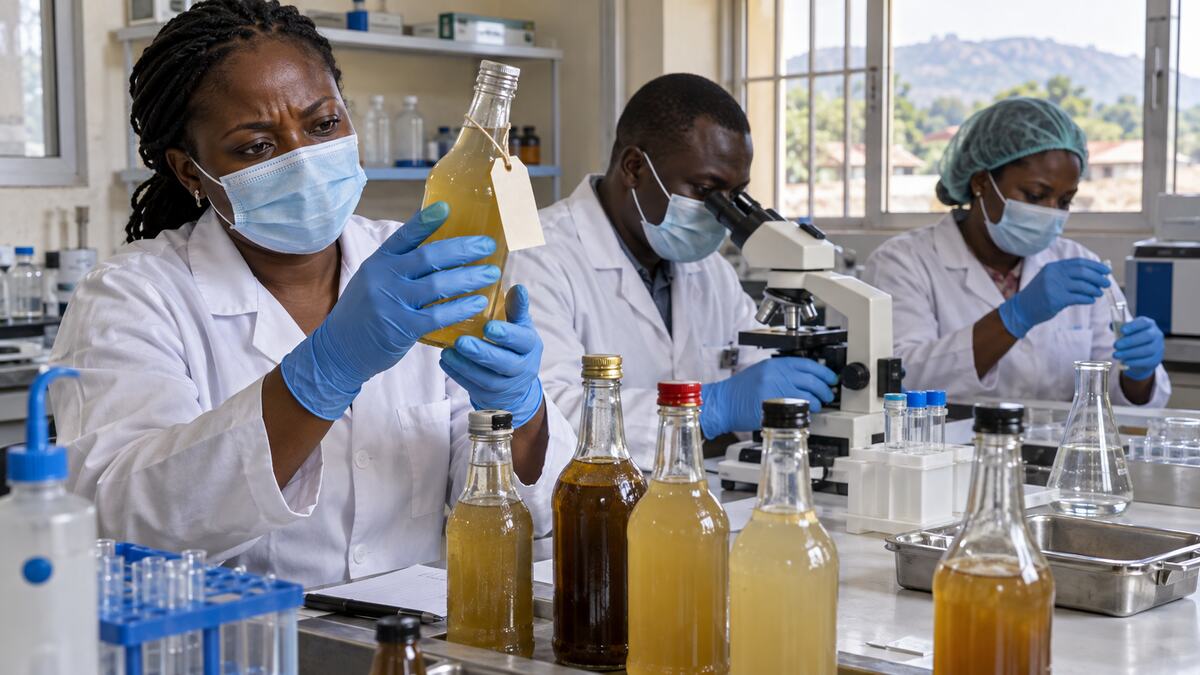
Image credit: Original Afridiaspo editorial illustration. The laboratory scene is representative and does not depict the Ondo investigation or named personnel.