Pain During Sex Is Not a Price You Owe
— Afridiaspo Wellness Desk
If sex hurts, it's a health signal needing care. This guide helps recognize sexual pain, talk to partners, and seek respectful care.
Pain is not the price of intimacy. If sex hurts, the answer is not to endure it quietly, perform through it or assume that marriage, age, childbirth or menopause has cancelled your right to comfort. Pain before, during or after sex is a health signal. It deserves curiosity, consent and care—not shame.
That message matters across African and diaspora communities, where conversations about sexual pain can be trapped between cultural privacy, fear of judgment, marital expectations and limited access to respectful care. Silence may protect a family image, but it does not protect the person in pain.
What “pain during sex” can mean
Clinicians often use the term dyspareunia for recurring or persistent pain connected with sexual activity. The experience is not one single condition. Pain may happen at the vaginal opening, with deeper penetration, during arousal, after sex or only in certain positions. It may feel like dryness, burning, tightness, pressure, aching or stabbing.
Although much of the medical guidance is written about vaginal or pelvic pain, anyone can experience genital or pelvic pain. Pain involving the penis, testicles, anus or pelvis also deserves assessment, especially when it is new, severe or accompanied by swelling, fever, discharge, sores or urinary symptoms.
A pattern guide—not a diagnosis
| What you notice | What may be worth discussing | A practical next step |
|---|---|---|
| Dryness, rubbing or surface soreness | Not enough arousal time; breastfeeding; perimenopause or menopause; some medicines; hormonal contraception; irritation | Pause. Try a fragrance-free water- or silicone-based lubricant. Ask a clinician about persistent dryness or medication effects. |
| Burning, itching, unusual discharge, odor, sores or pain when urinating | Infection, sexually transmitted infection, skin condition or irritation | Avoid repeated guesswork with over-the-counter treatments. Seek testing and a clinical assessment. |
| Involuntary tightening, fear of penetration or penetration feeling impossible | Vaginismus or another pelvic-floor response; pain anticipation; prior painful experiences | Ask about pelvic-health physiotherapy and psychosexual or trauma-informed support. Do not force penetration. |
| Deep pelvic pain, especially with periods or bowel symptoms | Conditions such as endometriosis, pelvic inflammatory disease, ovarian problems or fibroids may need to be considered | Book a medical evaluation and record timing, location and related symptoms. |
| Pain or bleeding after sex | Friction, infection, cervical or vaginal changes, or another cause that needs evaluation | Arrange care, particularly if it recurs. Seek urgent help for heavy bleeding, severe pain, faintness or possible pregnancy. |
| Pain linked with fear, pressure or a past traumatic experience | The nervous system, pelvic muscles and emotional safety can all affect pain | Choose trauma-informed care. You control what happens to your body, in the bedroom and in the clinic. |
This table helps organize a conversation; it cannot identify the cause. Similar symptoms can come from different conditions, and more than one factor can be present at the same time.
What you can do tonight
- Stop when it hurts. Pushing through can increase irritation and teach the body to anticipate pain.
- Remove the deadline. Intimacy does not have to mean penetration. Touch, conversation, massage and other forms of closeness can preserve connection without repeating pain.
- Slow down and add lubrication. Use a plain, fragrance-free lubricant. Oil-based products can damage latex condoms, so check compatibility.
- Skip irritants. Douching, scented washes, deodorants, essential oils and “warming” or “cooling” products may worsen irritation.
- Write down the pattern. Note where the pain occurs, what it feels like, when it began, whether it follows a cycle and what makes it better or worse.
These steps are about comfort, not self-diagnosis. If pain keeps returning, interferes with intimacy or causes worry, arrange care even if the pain is not severe.
How to prepare for an appointment
A useful consultation begins with a history, not an assumption. The American College of Obstetricians and Gynecologists explains that clinicians may ask about medical and sexual history, symptoms and medicines before deciding whether an examination or testing is needed.
Bring these notes if you can
- Where the pain is: at the entrance, deeper in the pelvis or afterward
- How it feels: dry, burning, tight, aching, sharp or cramping
- When it began and whether it happens every time
- Your menstrual pattern, menopause symptoms, pregnancy history, recent birth or breastfeeding
- Bleeding, discharge, odor, sores, urinary symptoms, fever or bowel symptoms
- Medicines, contraception, recent antibiotics and any products used on the genitals
- Past surgery, pelvic conditions or infections
- Any fear, pressure or past experience you want the clinician to understand—shared only to the extent that feels safe
You retain consent in the examination room
An assessment may include questions, an external examination, a pelvic examination, swabs, urine or STI tests, or imaging, depending on the symptoms. None of those steps should happen without explanation and consent.
You can ask what the clinician plans to do, why it is needed and what alternatives exist. You can request a chaperone, a smaller instrument, more lubrication or a different position. You can ask to insert an instrument yourself where clinically appropriate. Most importantly, you can say “pause” or “stop.” A respectful clinician should respond immediately.
If you have experienced trauma, you may say: “I need you to explain each step before touching me.” You do not have to disclose the full history to request trauma-informed care.
What treatment might involve
Treatment depends on the cause. It may include changing an irritating product or medicine, treating an infection, addressing a skin condition, using vaginal moisturizers or lubricants, discussing local vaginal estrogen for menopause-related symptoms, pelvic-health physiotherapy, or psychosexual support. Persistent vulvar pain may need specialist evaluation.
Be cautious with expensive “rejuvenation” or laser treatments marketed directly to consumers. The UK’s National Institute for Health and Care Excellence says vaginal laser treatment for genitourinary menopause symptoms should not be offered outside a randomized controlled trial. A polished advertisement is not the same as evidence.
When not to wait
Seek urgent medical help for severe or rapidly worsening pelvic or lower-abdominal pain; fainting or marked weakness; heavy bleeding; fever with pelvic pain; persistent vomiting; sudden testicular pain or swelling; or pain and bleeding when you are pregnant or could be pregnant. These signs do not prove a particular emergency, but they deserve prompt assessment.
For new discharge, sores, burning urination or STI concern, pause sexual contact or use barriers until you can be tested and advised. The U.S. Centers for Disease Control and Prevention notes that many sexually transmitted infections have mild or no symptoms, so appearance alone cannot rule them out.
Words for a partner
“I want closeness, but this hurts. I need us to stop and find another way to connect.”
“Pain is not rejection. Listening to it is how I protect my health.”
“I am getting this checked. Until then, penetration is off the table.”
A caring partner does not bargain with pain, demand proof or use culture, religion, money or marital status to override consent. If saying no could put you at risk, prioritize safety and contact a trusted local support service when it is safe to do so.
The Afridiaspo takeaway
Sexual wellness is not measured by how much discomfort a person can hide. It is built through safety, communication, accurate information and access to care. Pain may have a straightforward explanation or require patient investigation. Either way, you deserve to be believed—and you do not owe anyone a performance while you search for answers.
Sources and further reading: American College of Obstetricians and Gynecologists: When Sex Is Painful; ACOG: Vulvodynia; NHS: Vaginal Dryness; NHS: Vaginismus; NHS: Vaginitis; CDC: Pelvic Inflammatory Disease; CDC: About Sexually Transmitted Infections; NICE Menopause Guidance.
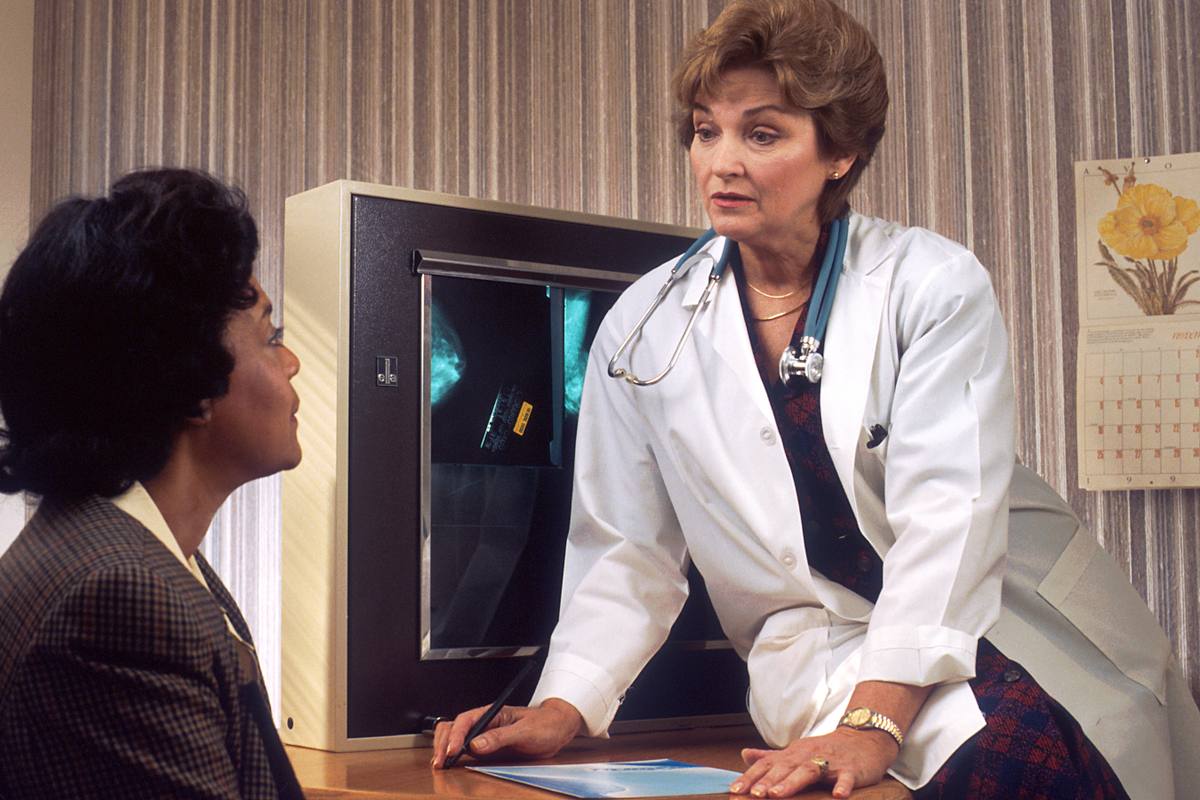
Image credit: Bill Branson / National Cancer Institute, November 1990, via Wikimedia Commons. Public domain. This archival consultation photograph is illustrative; the people shown are not identified as having sexual pain or any condition discussed in this article.
This article provides general education and is not individualized medical advice or a diagnosis.