South African Protesters Reject ‘Nigerian King’ Installation Amid Rising Tensions
South African protesters have rejected the reported installation of a Nigerian traditional leader. The situation reflects tensions around immigration, identity, and cultural authority. It highlights broader challenges of balancing diaspora communities with local systems.
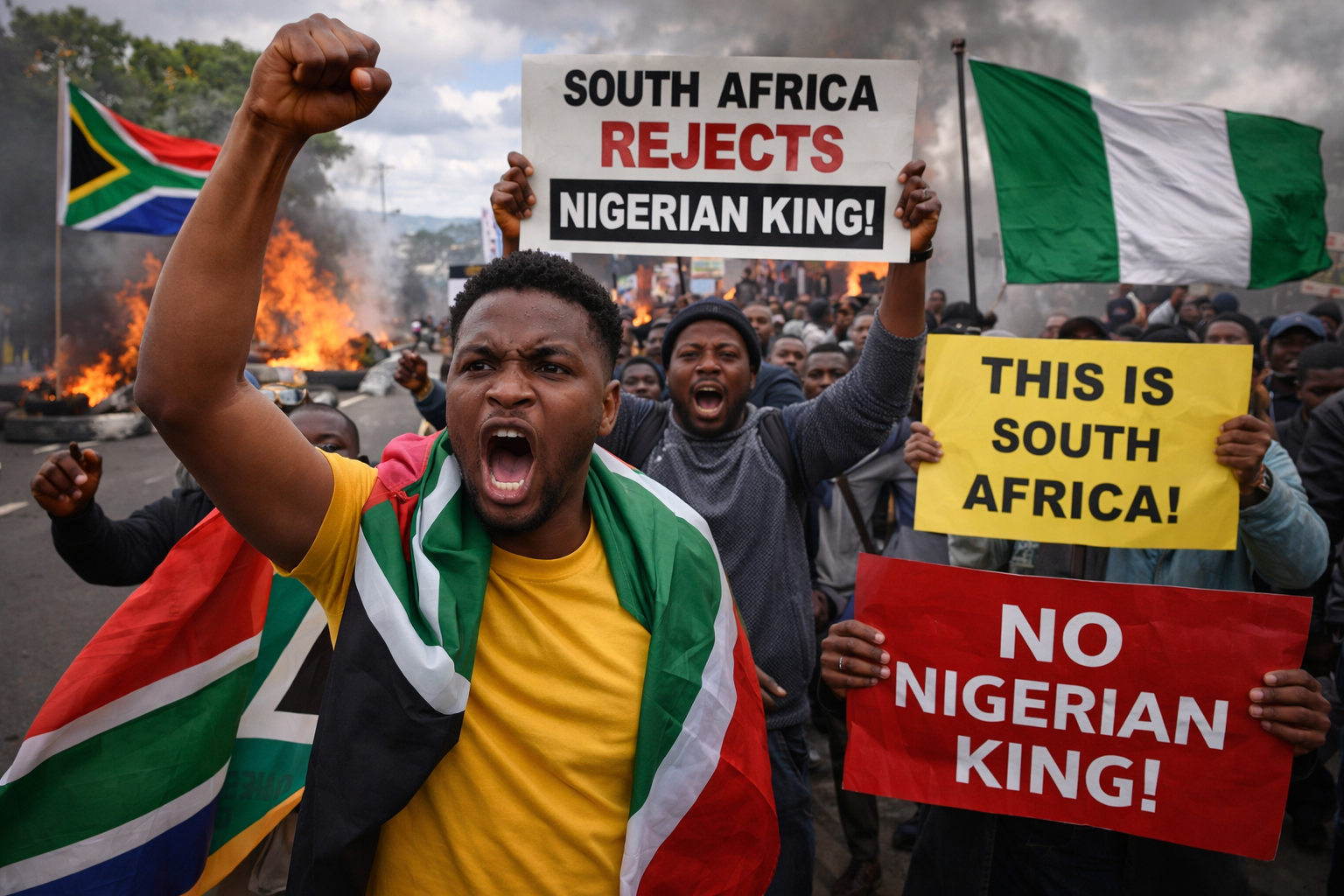
Tensions flared in South Africa as local protesters strongly opposed the reported installation of a Nigerian traditional leader, widely referred to as a “Nigerian king,” in parts of the country. The development has sparked debate around immigration, cultural identity, and the role of foreign communities within South Africa. The situation unfolded in South Africa, where members of local communities gathered to protest what they described as an attempt to establish foreign traditional authority on South African soil. The protests quickly gained attention, reflecting deeper concerns about sovereignty and cultural boundaries. At the center of the controversy is the claim that a Nigerian community sought to install a traditional ruler to represent its members. While such structures are common within diaspora communities for cultural and organizational purposes, the idea has been met with resistance from some South Africans who view it as inappropriate.

Why are people protesting?
Many protesters argue that South Africa already has its own recognized traditional leadership systems. They believe that introducing a foreign “king” could undermine local structures and create parallel systems of authority that do not align with national laws or traditions.
Who is involved?
The issue involves local South African residents, Nigerian diaspora groups, and traditional leadership structures. It also touches on broader government oversight, as authorities may need to clarify the legality and recognition of such installations.
What is actually happening?
Reports suggest that the proposed “king” is not intended to function as a political authority but rather as a cultural leader within the Nigerian community. However, this distinction has not eased tensions, as many protesters remain concerned about the symbolism and long-term implications.
Where does this tension come from?
South Africa has experienced periodic tensions related to immigration and foreign-owned businesses, particularly involving African migrants. Incidents of xenophobia in the past have created a sensitive environment, where issues like this can quickly escalate.
How is the government responding?
Authorities have yet to fully formalize their position, but such matters typically fall under cultural and traditional affairs regulations. The government may need to step in to clarify whether such installations are permitted and under what conditions.
What does this mean for African unity?
This situation highlights a broader challenge within the continent. While Africa promotes unity and free movement, local realities often involve competition, economic pressure, and identity concerns. Balancing these factors remains complex.
Ultimately, this is more than a local dispute. It reflects ongoing questions about identity, belonging, and coexistence in modern Africa. As migration increases and diaspora communities grow, similar situations may become more common, requiring clear policies and mutual understanding.
South African Protesters Reject ‘Nigerian King’ Installation Amid Rising Tensions