Uganda Exported More Vanilla Than Ever—So Why Did Each Kilogram Earn Less?
— Afridiaspo Business Desk
Uganda exported a record 604 tonnes of vanilla in 2024, but unit values fell. Afridiaspo examines the value-addition opportunity for farmers and investors.
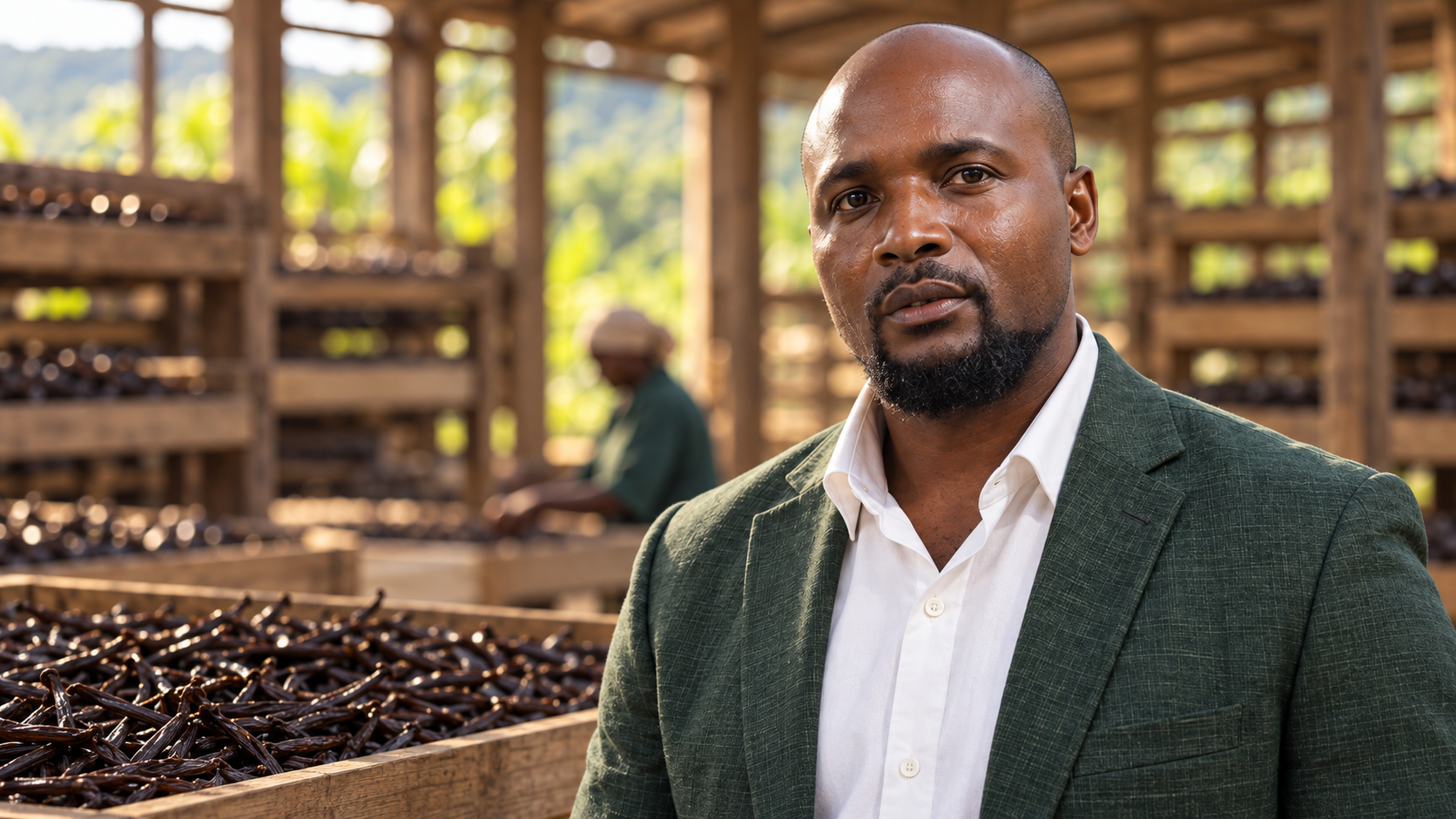
Vanilla is everywhere: in ice cream, chocolate, cakes, coffee, perfume and thousands of other consumer products. Yet the people who grow the crop often capture only a small part of the value created after the beans leave the farm.
Uganda’s latest export numbers make that contradiction difficult to ignore. The country shipped roughly 604 metric tonnes of vanilla in 2024, more than twice the 266 tonnes reported for 2023. It was a record year by volume and another sign that Uganda is becoming an important alternative source of natural vanilla for global buyers.
But volume tells only half the story.
Uganda exported more vanilla—but the value per kilogram fell
Ugandan authorities announced that the 2024 crop generated approximately $16.6 million. Meanwhile, World Bank WITS data sourced from UN Comtrade records about $21.95 million from 603,292 kilograms of vanilla exports.
The totals differ, likely because of reporting methods, product classifications or later customs revisions. But both sources point toward the same economic warning: Uganda’s export volume rose much faster than its earnings.
UN Comtrade-based figures indicate that Uganda exported about 265,830 kilograms worth roughly $25.57 million in 2023—an average of about $96 per kilogram. In 2024, the average fell to approximately $36 per kilogram. Using the government’s $16.6 million figure would put the average even lower, at roughly $27.50 per kilogram.
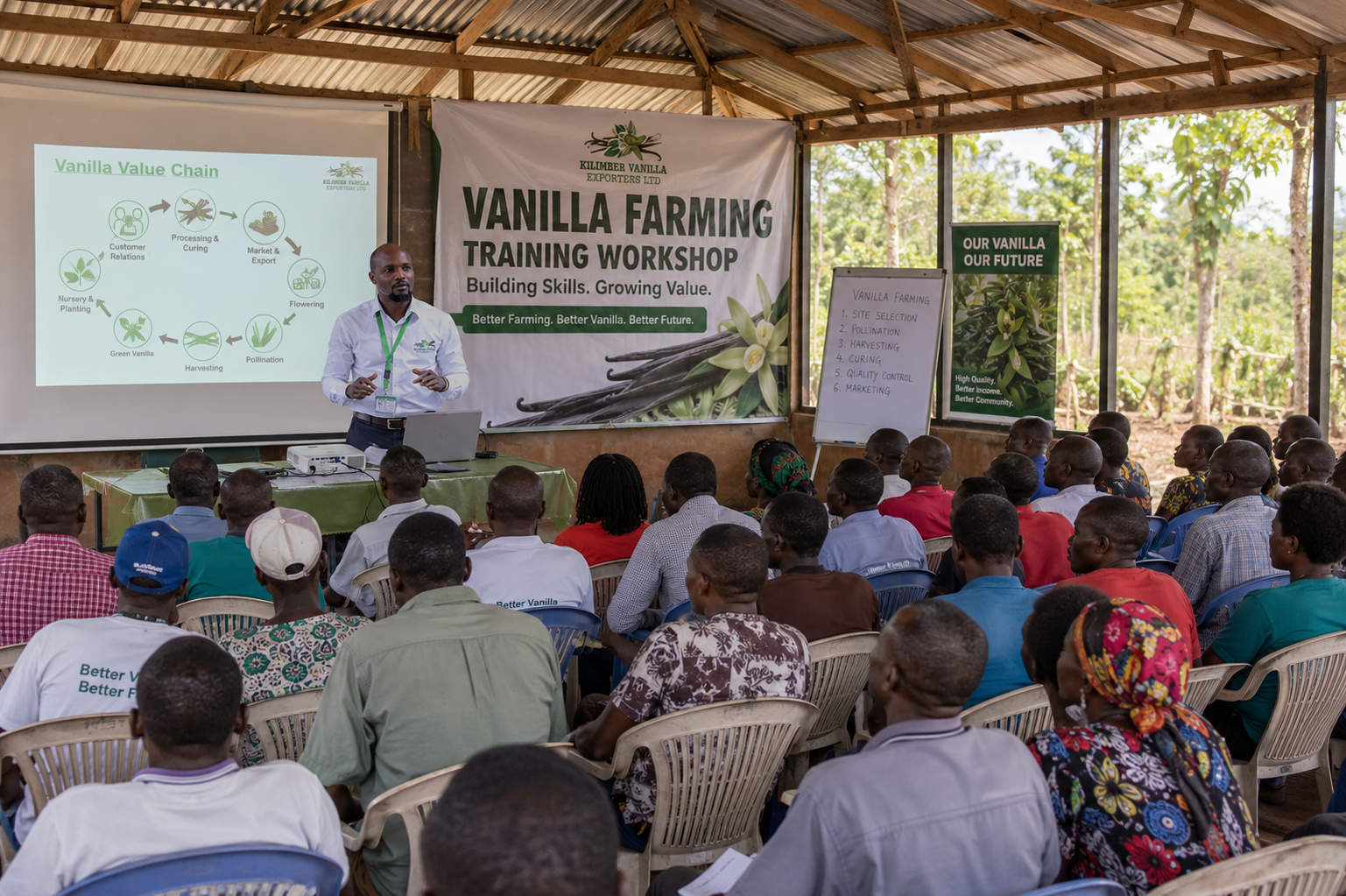
Uganda produced and exported far more vanilla, but each kilogram generated substantially less export value.
That does not mean the sector is failing. It means production growth alone will not guarantee higher farmer incomes, stronger companies or more foreign exchange. Uganda must decide whether it wants to remain mainly a supplier of beans—or capture more of the value created after those beans are processed, branded and sold.
Why vanilla requires so much labour
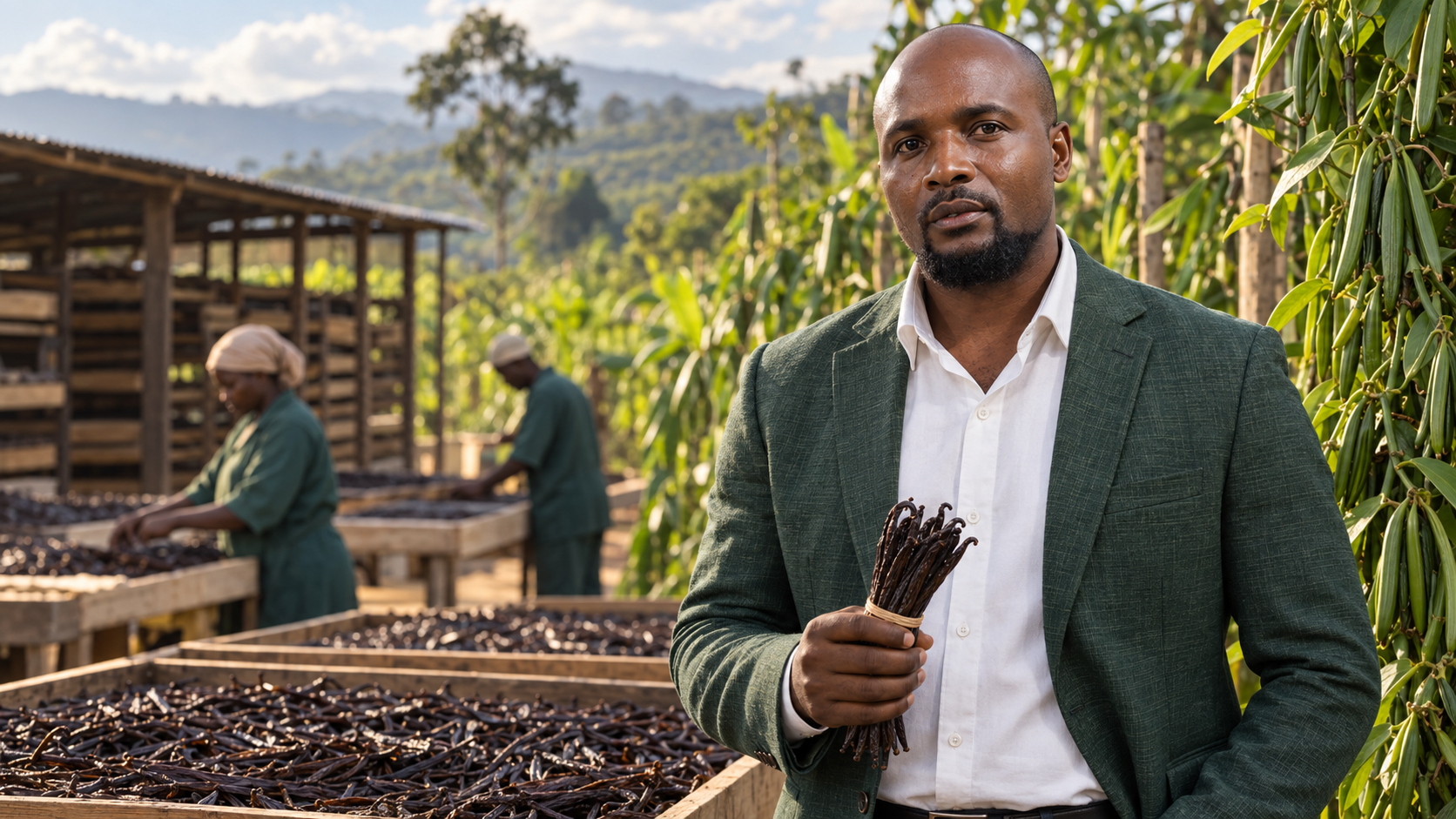
Vanilla comes from an orchid, and producing a market-ready bean is slow, skilled work. In Uganda, the flowers are commonly pollinated by hand. Farmers use a small tool to lift the membrane separating the flower’s reproductive parts and press them together. Miss the short flowering window and that flower will not produce a pod.
The crop then requires months of care. Uganda’s Ministry of Agriculture has advised farmers to harvest only after about nine months from pollination. After harvesting, the beans must be sorted, cured, dried, conditioned and graded before they develop the aroma consumers recognize as vanilla.
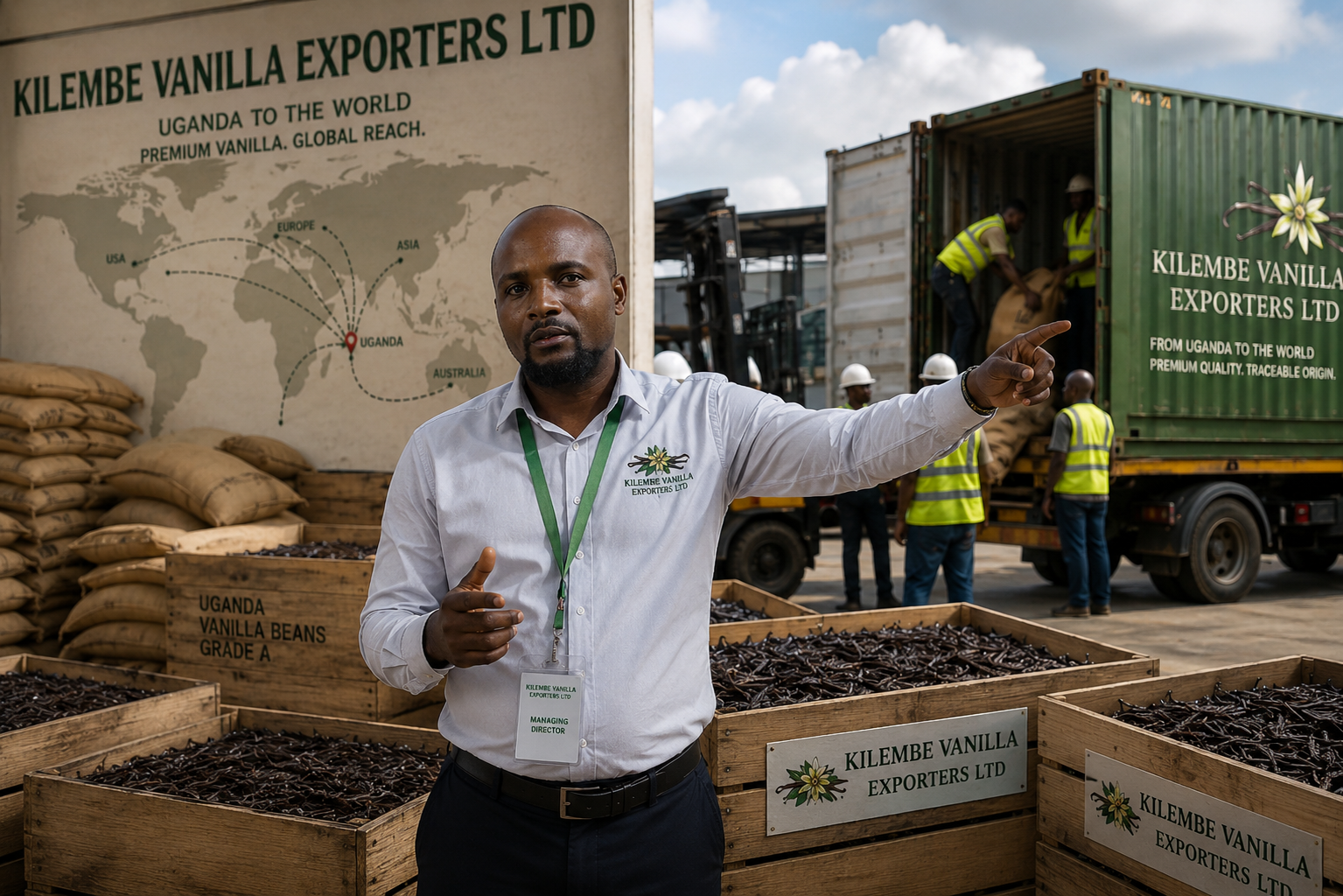
This labour intensity helps explain why natural vanilla can command high prices. It also creates risks. Farmers face premature harvesting, inconsistent quality, crop theft and sudden price changes. Uganda’s vanilla sector has previously struggled with nighttime raids and farmers harvesting early out of fear that thieves would reach the crop first.Uganda’s natural advantage
Uganda has fertile soils, dependable rainfall and a tropical climate suitable for Vanilla planifolia. It can also harvest vanilla in two seasons, giving buyers a supply option outside the main Madagascar cycle.
The Association of Vanilla Exporters of Uganda says Ugandan vanilla is increasingly developing its own identity in the global market. Buyers describe it as creamy and sweet, with flavour notes that can include cacao, fig and leather. Its strong profile can work particularly well alongside chocolate and other bold flavours.
This matters because the global vanilla market is worth billions of dollars, while the supply of natural vanilla remains concentrated in relatively few countries. Food and flavour companies want more reliable, traceable sources. Uganda has a real opportunity to become one of them.
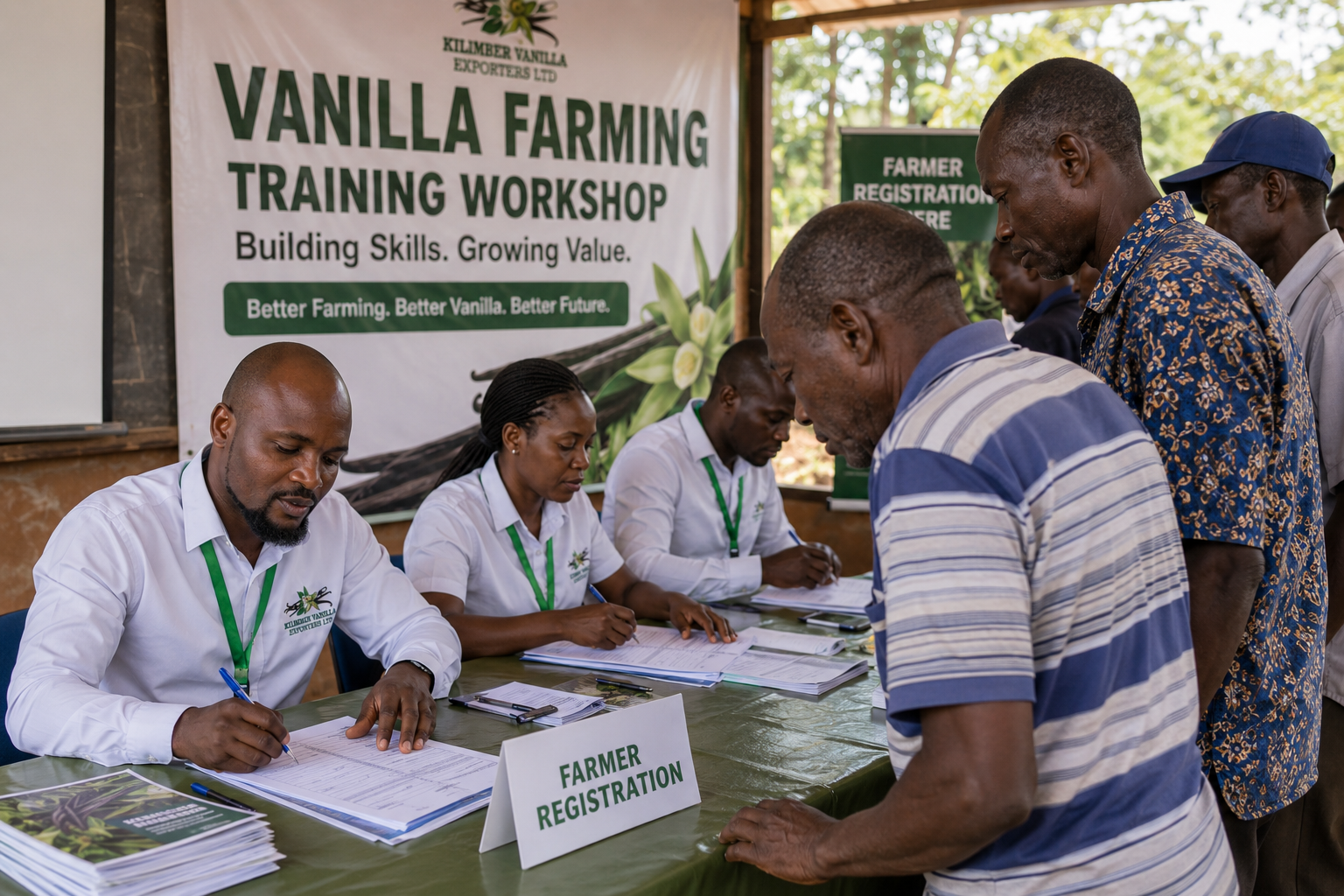
The opportunity is not simply to grow more
In the video that inspired this report, a Ugandan exporter explains that his company worked directly with farmers, registered its suppliers and provided training on quality. He argues that the goal should not merely be to become the biggest exporter, but to become a reliable supplier that meets African, European and American standards.
That dist
inction is important. Reliability means mature beans, consistent curing, traceability, laboratory testing, dependable volumes and delivery schedules that international manufacturers can trust. It also means moving beyond whole beans. Uganda could retain more value by expanding local production of:
- Vanilla extract
- Vanilla paste
- Vanilla powder
- Vanilla sugar and other retail ingredients
- Branded, traceable single-origin products
These products require investment in food-grade processing facilities, quality laboratories, packaging, certification, cold and dry storage, farmer aggregation and export logistics. They can also create jobs for young people in processing, testing, sales, logistics and international distribution—not only on farms.
What investors must understand
Uganda’s vanilla opportunity is real, but it should not be sold as effortless money. Vanilla prices are notoriously volatile. Natural vanilla competes with much cheaper synthetic vanillin. Exporters must comply with strict food-safety rules, and a processing plant is valuable only if it has reliable buyers.
Serious investment should therefore begin with purchase agreements, traceable farmer networks, quality control and realistic market research—not with speculative planting based on yesterday’s high prices.
The strongest opportunities may be partnerships that solve a specific weakness in the value chain: professional curing centres, extraction facilities, certified laboratories, crop-security systems, export finance or direct contracts between Ugandan producers and global food companies.
A record harvest should create more than a record shipment
Uganda has already proved that it can grow and export vanilla at scale. The next question is whether farmers and Ugandan businesses can keep a larger share of the value created from it.
The country does not need to beat Madagascar by producing the most vanilla. It needs to build a sector known for quality, reliability, traceability and locally processed products.
If Uganda can make that transition, its vanilla boom will become more than an export statistic. It could become a model for how African countries move from supplying raw commodities to owning more of the industries built around them.
Editorial note: This article was developed from the video “The Spice Worth More Than Gold | Uganda’s Vanilla Crisis” and independently checked against Uganda Ministry of Agriculture material, exporter-industry reporting and UN Comtrade-based trade data. Afridiaspo could not independently verify the video’s claim that armed men stole $50,000 worth of vanilla from a Ugandan farm in 2024, so that allegation has not been presented as fact.
Uganda Exported More Vanilla Than Ever—So Why Did Each Kilogram Earn Less?