Women of the Week: Five Women Expanding the Frame of African Film
— AfriDiaspo Editorial
From writing the story to financing the production and commanding the screen, Danai Gurira, Genevieve Nnaji, Yvonne Nelson, Charlize Theron and Leïla Bekhti show that influence in film takes more than one form.
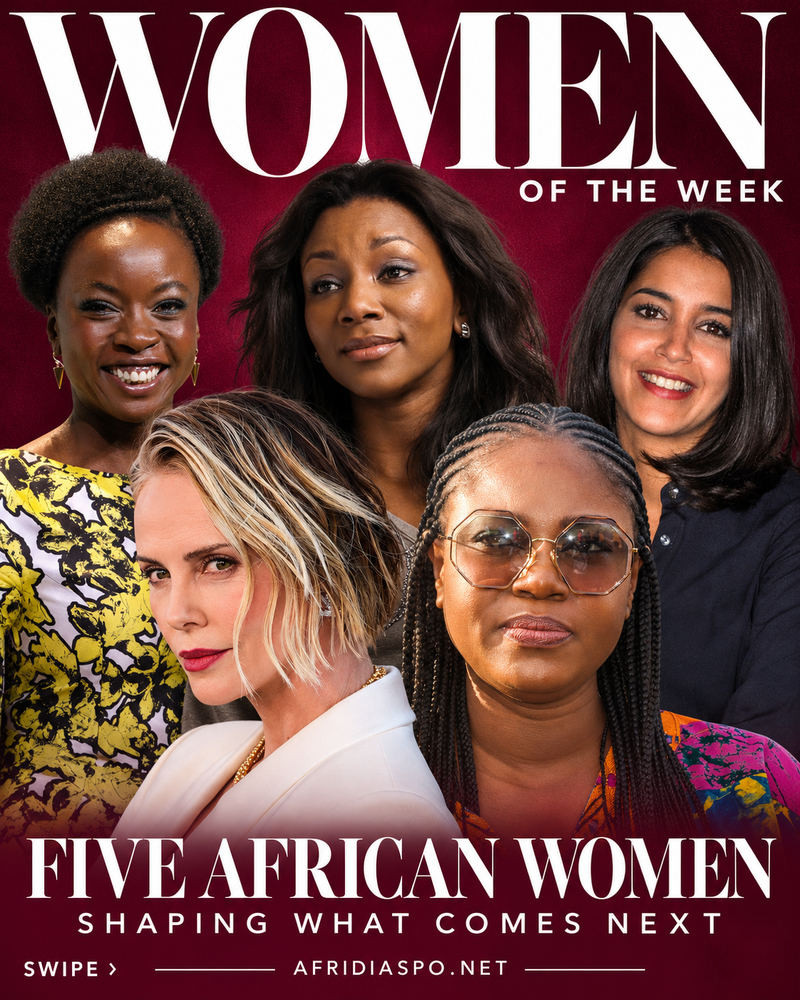 Women of the Week · November 18, 2026
In September 2018, the announcement of Netflix's acquisition of Lionheart named Genevieve Nnaji as director, cast member and co-screenwriter. One film carried several kinds of creative work. It is a useful place to begin this edition: who appears on screen is only part of the story of who shapes cinema.
Danai Gurira brings the playwright's authority to a career audiences also know through television and film. Nnaji and Yvonne Nelson make directing and production visible. Charlize Theron and Leïla Bekhti demonstrate how much room a performer can claim across roles, genres and audiences. Their work asks us to look at the credits, not only the faces on a poster.
These five careers connect Zimbabwe, Nigeria, Ghana, South Africa and Algerian heritage in France. They do not form a ranking, and the milestones below occurred in different years. For African and diaspora readers, their value lies in the different possibilities they make tangible: writing the part, financing the film, directing the story and choosing what to perform.
Zimbabwe and the diaspora: Danai Gurira writes as well as performs


Danai Gurira's work asks audiences to look beyond the familiar division between actor and writer. Her plays include Eclipsed, The Convert and Familiar. They place African lives and histories at the centre of the drama rather than treating them as background for someone else's story.
Eclipsed, set during Liberia's civil war, reached Broadway in 2016 and received a Tony nomination for Best Play. Gurira's screen recognition as Okoye in Black Panther and Michonne in The Walking Dead sits alongside that writing career, not in place of it.
Her publisher also records an MFA from New York University's Tisch School of the Arts and her co-founding of Almasi Collaborative Arts, which supports opportunities for African dramatic artists. Those details add preparation and institution-building to the account of a recognisable performer.
For emerging African creatives, that combination offers an important possibility: a career can involve entering an existing story and creating the next one. Visibility on screen and authority over the page are different forms of influence, and both deserve attention.
Nigeria: Genevieve Nnaji moves behind the camera
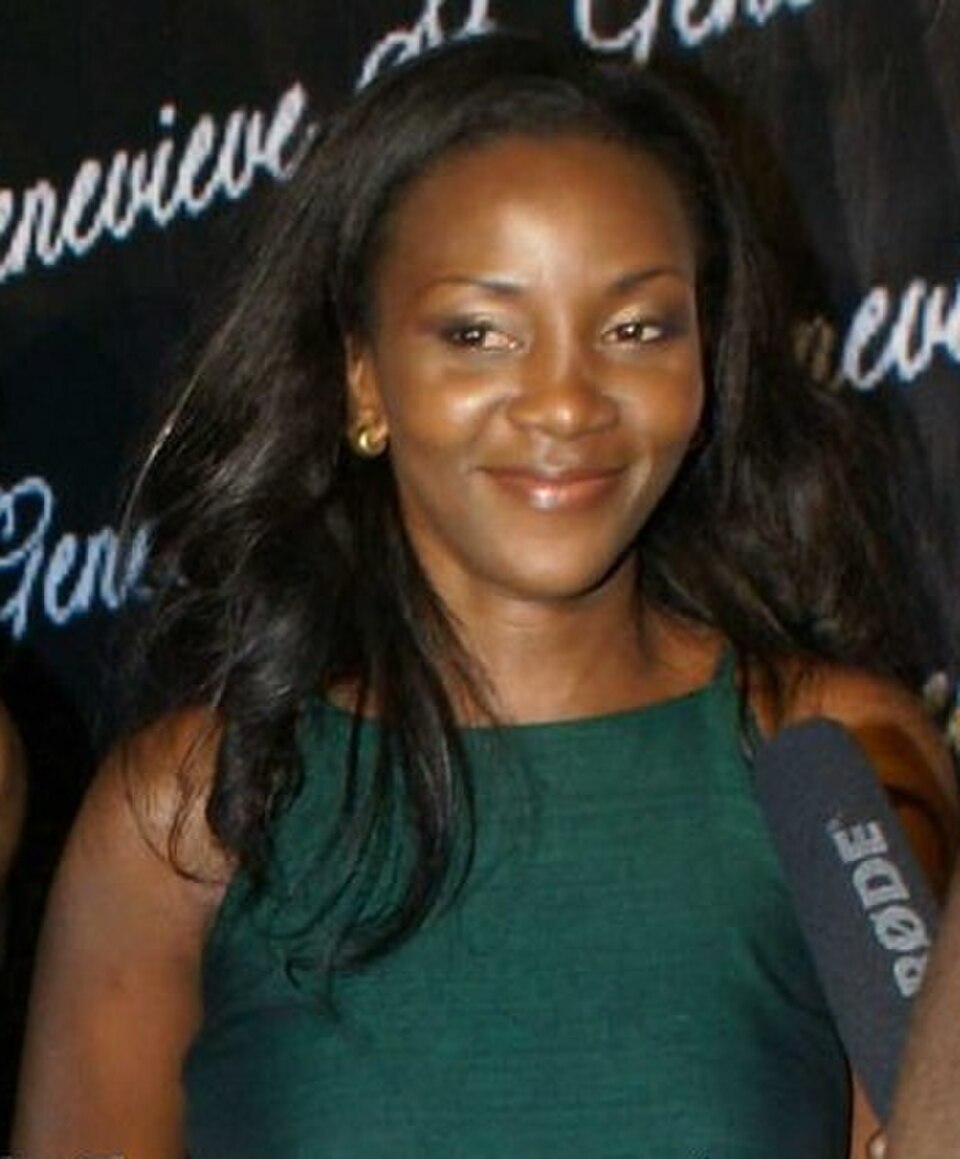
With Lionheart, Genevieve Nnaji added a directorial debut to her established acting career. Netflix's September 2018 announcement credits her as director, performer and one of the film's screenwriters. The company acquired worldwide rights ahead of its Toronto International Film Festival premiere.
The story itself centres on Adaeze, a woman trying to prove her capability in a family company while working alongside the uncle appointed to help run it. The credited cast includes Nkem Owoh, Pete Edochie and Onyeka Onwenu; the screenplay has five credited writers. Nnaji's achievement sits within a collaborative production, not a solitary act.
That distinction matters. Lionheart was a Nigerian film acquired for international distribution, not a story that only began to exist when a global platform noticed it. Its journey invites a more useful conversation about African cinema: how can locally developed productions reach audiences abroad while retaining recognition for the people who made them?
Nnaji's inclusion celebrates the creative decision to direct and the work of building a film around a Nigerian setting and perspective. For diaspora viewers, supporting that work means looking past the platform logo to the filmmakers, writers and production teams behind the title.
Ghana: Yvonne Nelson makes the case for production

Yvonne Nelson's career brings the economics of filmmaking into the picture. In a 2022 interview with Joy Prime, reported by MyJoyOnline, she discussed financing her own films through YN Productions while calling for stronger distribution and more cinemas in Ghana. She was promoting The Men We Love at the time.
The distinction between making a film and finding its audience is central to that interview. Self-financing may enable one production, but it does not provide a whole industry with a dependable route to viewers. Nelson's comments are useful because they connect a personal business decision with a structural problem, rather than presenting enthusiasm as a substitute for distribution.
Her account does not make the industry's funding problems disappear. It makes them visible. Audiences see a finished film; producers also face the less glamorous questions of how it will be paid for, screened and sustained as a business.
That is why Nelson belongs in a conversation about women shaping cinema. Performing can create recognition, but producing involves turning an idea into work for an entire team. Her example encourages us to celebrate the people creating opportunities behind the camera as seriously as the people appearing in front of it.
South Africa: Charlize Theron demonstrates range

Charlize Theron won the Academy Award for Actress in a Leading Role for Monster at the 2004 Oscars. The award is a precise milestone in a much broader screen career.
The South African-born actor's filmography also includes North Country, Young Adult and Mad Max: Fury Road. Those titles span markedly different characters and kinds of filmmaking.
Watching across those titles changes the emphasis from a star's image to her choices as a performer. An awards profile and an action film ask audiences to notice different things. A fuller appreciation of her career leaves room for both, rather than using one prestigious performance to stand in for all the work that followed.
Her place in this edition is not about presenting one Hollywood path as the standard everyone else must follow. It is about allowing African women the same breadth of artistic possibility afforded to other performers: difficult drama, action, comedy and roles that do not have to explain an entire continent. Range is valuable precisely because it resists a single prescribed identity.
Algeria and the diaspora: Leïla Bekhti refuses a narrow frame

Leïla Bekhti is French-born with Algerian parents, a connection she has described in interviews. Identifying that heritage accurately matters: diaspora representation should not require rewriting someone's birthplace or flattening a layered identity.
She won the 2011 César for Most Promising Actress for Tout ce qui brille. The French film academy also records subsequent nominations, including supporting-actress recognition for Le Grand Bain.
A breakthrough award is a moment of recognition, while subsequent nominations document a continuing professional presence. The distinction is worth making for young diaspora performers: being noticed and sustaining a working life are different challenges. Reading Bekhti's film-academy record as a sequence, rather than as one headline, gives her craft and continuity their proper weight.
Bekhti's career helps widen this edition's geographical and cultural view. African screen influence includes work made on the continent and work made by people connected to it across generations. Celebrating that influence should leave room for individual craft rather than expecting every performance to serve as a statement about identity.
Five careers at a glance
Name | Connection / field | Documented milestone |
Danai Gurira | Zimbabwean diaspora / writing and acting | Eclipsed reached Broadway and earned a Best Play Tony nomination, 2016 |
Genevieve Nnaji | Nigeria / acting and directing | Lionheart acquisition announced by Netflix, 2018 |
Yvonne Nelson | Ghana / acting and production | Discussed self-financing films through YN Productions, 2022 |
Charlize Theron | South Africa / acting | Leading-actress Oscar for Monster, 2004 |
Leïla Bekhti | Algerian diaspora / acting | César for Tout ce qui brille, 2011 |
Who gets to shape the picture?
The connections here are practical as well as symbolic. A screenplay establishes whose experience leads a story. Financing determines whether it can be made. Distribution helps decide who can see it. Performance gives those decisions a human presence. None of these functions cancels out the others, and a film's achievements belong to collaborators as well as its most recognisable name.
For AfriDiaspo's readers, the opportunity is to become more attentive audiences. Seeking out a Nigerian director's work, following a Ghanaian production company or reading a Zimbabwean playwright extends the conversation beyond whether an African face has entered an international franchise. It asks what kind of work is being made and who has the authority to make it.
These women offer different answers, not a single model of success. The strongest tribute is to watch beyond one celebrated role, learn the names behind the production and make space for the next story to be surprising.
Cover artwork: AfriDiaspo. Illustrative editorial composite; the subjects were not photographed together. The individually credited archival photographs and video stills were made at different dates and events from the milestones discussed.
Women of the Week: Five Women Expanding the Frame of African Film