The Red Sea Route Is Reversing Toward Africa
— Afridiaspo Immigration & Diaspora Desk
Thousands are crossing from Yemen into Djibouti and Somalia as conflict escalates. Afridiaspo explains the reverse route, host pressures and protection risks.
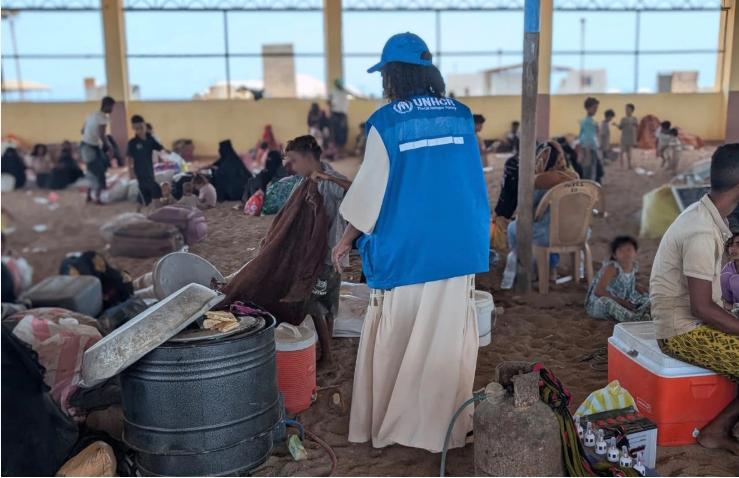
For years, the eastern Red Sea migration story was told in one direction: people leaving Ethiopia and Somalia, reaching Djibouti or Puntland, then boarding overcrowded boats for Yemen and the Gulf. Renewed fighting in Yemen is now pushing a significant movement the other way. Boats are arriving on the African shore carrying people escaping a conflict that has already displaced millions.
The reversal matters because Djibouti and Somalia are not empty transit points. They are countries with their own displaced populations, fragile public services and long experience receiving refugees. The latest arrivals are testing whether the region can protect people moving in both directions across the same dangerous water.
Key numbers
- About 128,000: people newly displaced inside Yemen after the September 2026 escalation, according to UNHCR.
- 5.2 million: people already internally displaced across Yemen before the latest movement.
- 2,935: arrivals from Yemen recorded in Djibouti over eight consecutive days through September 17.
- About 60%: the share of those Djibouti arrivals who were women and children.
- Up to 5,000: additional people Markazi settlement near Obock could accommodate, although UNHCR warned that a sustained pace could strain that capacity.
The language matters: “arrivals from Yemen” is not one nationality
Movement across this corridor is mixed. A boat leaving Yemen can carry Yemeni families seeking refuge, Somali or Ethiopian nationals returning from danger, people who had been working in Yemen, and migrants whose original journey toward the Gulf was interrupted. Some may qualify for refugee protection; others may be returning citizens or people with different legal needs.
That distinction is not bureaucratic hair-splitting. It determines whether a person needs asylum registration, voluntary-return support, family tracing, documentation, child-protection services or help reintegrating in a country they left years ago. Treating everyone as simply “Yemeni refugees” could obscure the protection needs of people who have already been displaced more than once.
A corridor that now runs both ways
The Eastern Route has long carried migrants from the Horn of Africa through Djibouti and Somalia toward Yemen and, for many, onward to Saudi Arabia and other Gulf states. UNHCR reported that roughly 36,700 people departed from Somalia’s Bossaso coast between January and September 2025. The International Organization for Migration says the wider route remains among the busiest and most dangerous in the world, with more than 506,000 migratory movements recorded across the Horn of Africa, Yemen and Southern Africa in 2025.
The danger is not abstract. In March 2026, IOM reported that nine people died and 45 were missing after a boat capsized off Djibouti. Smuggling, trafficking, detention, sexual violence, dehydration and drowning remain risks whichever direction a vessel travels.
| Dimension | Long-established Eastern Route | Growing reverse movement |
|---|---|---|
| Direction | Ethiopia and Somalia through Djibouti or Puntland, then to Yemen and often the Gulf | Yemen toward Djibouti and Somalia |
| Main pressures | Livelihoods, insecurity, persecution and family migration | Conflict flight, interrupted migration and return to country of origin |
| Protection needs | Safe pathways, anti-trafficking protection and rescue at sea | Reception, registration, asylum screening, return support and family tracing |
| Shared risks | Smugglers, drowning, exploitation, detention, missing documents and separation from family | |
Djibouti: a small state carrying a regional responsibility
Djibouti’s geography has made it both a departure point and a place of refuge. UNHCR says the country hosts around 32,000 forcibly displaced people, including more than 23,000 refugees and about 8,000 asylum seekers, mainly from Somalia, Ethiopia and Yemen. Its data portal recorded 3,934 refugees and asylum seekers of Yemeni origin as of March 31, 2026.
The new arrivals are landing near Obock, where Markazi settlement has housed people displaced from Yemen since the conflict escalated in 2015. The settlement’s remaining space is valuable, but beds alone do not make a reception system. Water, sanitation, health care, food, registration, schooling, interpretation and protection staff must all grow with the population.
Djibouti deserves recognition for keeping access open. It also needs international financing that supports nearby host communities. When local clinics, classrooms and water systems are stretched, aid that reaches only a settlement can create resentment. A durable response strengthens the public services used by refugees and residents together.
Somalia is an origin country, a return destination and a place of asylum
Somalia’s role is equally complex. UNHCR recorded 7,634 refugees and asylum seekers from Yemen in Somalia as of June 30, 2026. At the same time, Somali nationals who had lived as refugees in Yemen are returning home. On August 5, UNHCR helped 155 Somali refugees travel voluntarily from Aden to Mogadishu.
Those facts capture the two-way reality better than a simple “in” or “out” migration map. A Somali family may have fled war at home, built a life in Yemen, then faced conflict again and returned to a country where housing, work and services remain difficult. Return is a journey, not proof that displacement has ended.
Reception at ports must therefore be linked to longer-term reintegration: civil documents, safe transport onward, school enrolment, livelihoods and referrals for survivors of violence. Without that bridge, a person can be counted as “returned” while remaining effectively displaced.
The funding gap moves with the people
UN agencies have warned that the response to the latest Yemen displacement is severely underfunded. Reuters reported that UNHCR’s relevant plan was funded at less than 20 percent as of September 22. IOM’s 2026 regional appeal says 1.7 million people across the Horn of Africa, Yemen and Southern Africa require assistance.
Shortfalls force uncomfortable choices: register new arrivals or follow up on vulnerable cases; expand shelter or protect water supply; support returnees or maintain services for refugees already present. Those are operational decisions with human consequences, especially for children travelling without parents, pregnant women, older people, people with disabilities and survivors of trafficking or abuse.
African host states should not be expected to absorb a regional emergency because they are geographically closest. Gulf states, major donors and the wider international system have an interest in keeping protection available on both shores of the Red Sea.
What families and diaspora networks can do safely
Diaspora networks are often the first source of money and information during displacement. That support can be lifesaving, but urgency also creates openings for smugglers and scammers.
- Verify before paying. Confirm a relative’s identity and location through a second trusted contact whenever possible.
- Use official channels. Seek current registration, protection and voluntary-return information from UNHCR, IOM or the relevant national authorities.
- Preserve documents securely. Keep encrypted digital copies of passports, identity cards, birth records and case numbers where possible.
- Do not circulate vulnerable people’s locations publicly. Share details only with organizations or relatives who need them.
- Be suspicious of guaranteed passage. No smuggler can guarantee a safe sea crossing, admission, asylum or onward travel.
This guidance is general information, not individualized immigration or legal advice. Status and available services depend on a person’s nationality, history and location.
What happens next
- Crossing numbers: agencies will watch whether arrivals accelerate as insecurity and sea conditions change.
- Registration: authorities must distinguish asylum seekers, returnees, unaccompanied children and people with urgent medical or protection needs.
- Reception capacity: Markazi and Somali arrival points will need water, shelter, health care and transport support.
- Family links: tracing and documentation will be essential for people separated during flight.
- Financing: donor commitments will determine whether emergency reception becomes a stable regional protection system.
The Afridiaspo takeaway
The Red Sea is not a clean border between one crisis and another. It is a corridor carrying conflict, aspiration, danger and return in both directions. The present reversal should end the habit of seeing Djibouti and Somalia only as places people leave.
They are also places of refuge—and they are being asked to provide that refuge while managing displacement of their own. A serious response must protect each person according to their circumstances, support the communities receiving them, and build legal, safe alternatives to a sea route that has already taken too many lives.
Sources and further reading
- UNHCR: Yemen displacement overview, September 2026
- UNHCR: New arrivals in Djibouti from Yemen
- UNHCR: Djibouti operational overview
- UNHCR Refugee Data Finder: Djibouti
- UNHCR Refugee Data Finder: Somalia
- UNHCR: Somali refugees return from Yemen
- UNHCR: Journeys from Somalia to Yemen and the Gulf
- IOM: 2026 Regional Migrant Response Plan appeal
- IOM: March 2026 shipwreck off Djibouti
- Reuters: Yemen displacement and expected Red Sea crossings